

Uniquely increased PTH-amino acids to be easily identified.


Protein Sequencer

Edman degradation is used to successively cleave one amino acid (PTH-amino acid) at a time from the N-terminus of a protein, each of which is then analyzed by HPLC to determine the amino acid sequence.
This diagram illustrates the process from Edman degradation to HPLC analysis of PTH-amino acids. This process is referred to as one cycle. By repeating this cycle and arranging the PTH–amino acids in the order they are obtained, the amino acid sequence of proteins and peptides can be easily and reliably determined. This process can also determine protein amino acid sequences not registered in a database. Therefore, in addition to basic research, the system can be used for a variety of other applications, such as analyzing proteins and peptides in foods or antibody therapeutics.

Two elution methods, isocratic and gradient, can be selected.
Easy to Use and Ideal for Routine Analysis

Excellent Sensitivity Enables Analysis of Small Sample Quantities
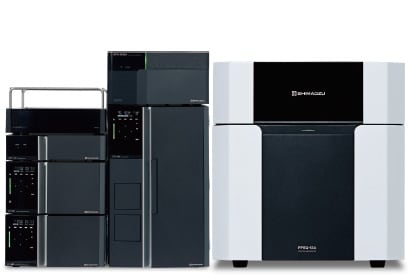


Analysis Basics of Protein Sequencers Now Available
Protein sequencers are used in a wide range of applications, from basic research to the analysis of antibody therapeutics and proteins and peptides in food products. This page introduces the features and principles of protein sequencers.
"What Is Microchip Electrophoresis?" Now Available
Microchip electrophoresis uses a quartz substrate (microchip) with integrated channels and electrodes to separate DNA and RNA by nucleotide size.
Release of PPSQ-51A/53A - Protein Sequencer
Shimadzu Corporation released the PPSQ-51A/53A SPD-40 model protein sequencers. These instruments can be used to analyze the amino acid sequences in proteins, such as for quality control of antibody drugs or peptide drugs and has " suitable for routine operations " and " offer accurate and reliable analytical performance.".
Release of CellTune Ver.2 — AI Proposes Optimal Cell Culture Conditions
CellTune Ver.2 streamlines the optimization of complex cell culture conditions using statistical analysis and AI.
It helps achieve both cost reduction and improved quality in bioproduction.
CASE STUDIES: "Lipid research at UT Southwestern could revolutionize diabetes treatment" is now available.
Can the science of fats unlock a new avenue in diabetes care? UT Southwestern researchers are finding out.
New IMAGEREVEAL MS, Mass Spectrometry Imaging Data Analysis Software
Automatically uncover important information from large amounts of data with IMAGEREVEAL MS.

3 Good health and well-being