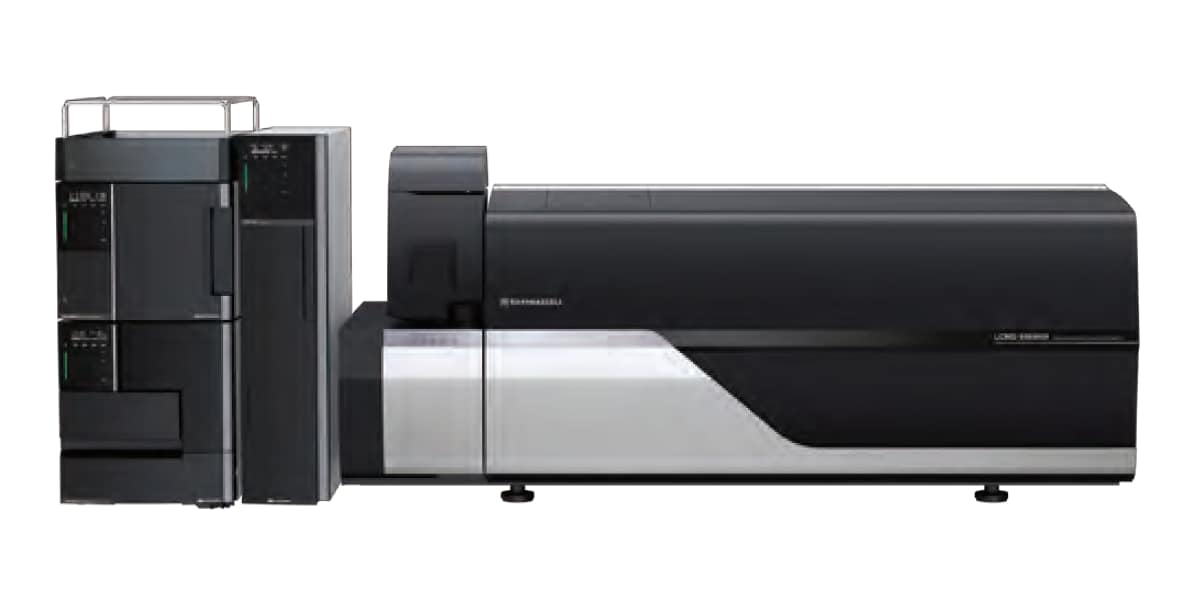


ESI (Electrospray ionization) and APCI (Atmospheric pressure chemical ionization) dual ionization source (DUIS-2010) is a new generation method which enables to generate ESI and APCI ions simultaneously.The combination of DUIS-2010 and LCMS-2010EV (or LCMS-2010A) is widely applicable not only for molecular weight confirmation of synthetic compounds in the field of pharmaceutical and chemical industries but also for a wide screening analysis of compounds from low to high polarity. DUIS-2010 offers enhancement of efficiency and reliability for LC/MS analysis.
DUIS-2010 enables a simultaneous analysis in both sample which is appropriate for ESI ionization and APCI ionization respectively.
DUIS-2010 performs simultaneous ionization without switching ESI and APCI and that results in high throughput analysis. This unique technology enhances productivity of simultaneous screening analysis for diversified compounds including synthetic compounds, and analysis for potential unknown compounds.
The control and data processing are available with LCMSsolution software for LCMS-2010 series.
Simple mechanism of DUIS-2010 attributes to easy maintenance of the dual ion source.
DUIS-2010 is a new generation dual ion source to perform simultaneous ionization with ESI and APCI respectively, enabling to cope with a wide range of compounds from low to high polarity.
Samples that are transported to the dual source are subjected to electrospray ionization (ESI) by the ESI probe, followed by a forward-mounted corona discharge needle that provides atmospheric-chemical ionization (APCI).
Streptomycin providing protonated molecules has good responsiveness in detection under ESI mode while being detected slightly in APCI mode. Acetophenone has protonated molecules detected under APCI mode but is not enough to be ionized under ESI mode. In this case, DUIS-2010 enable to have well-balanced and good chromatogram for both of streptomycin and acetophenone.
Furthermore, compounds providing deprotonated molecules like butylparaben can be identified with positive and negative simultaneous analysis mode, that results in further workload saving in analysis.