



Um sicherzustellen, dass bei Zehntausenden von Neugeborenen kein einziges Anzeichen übersehen wird
Drei Unternehmen der Shimadzu-Gruppe widmen sich lebensrettenden Tests
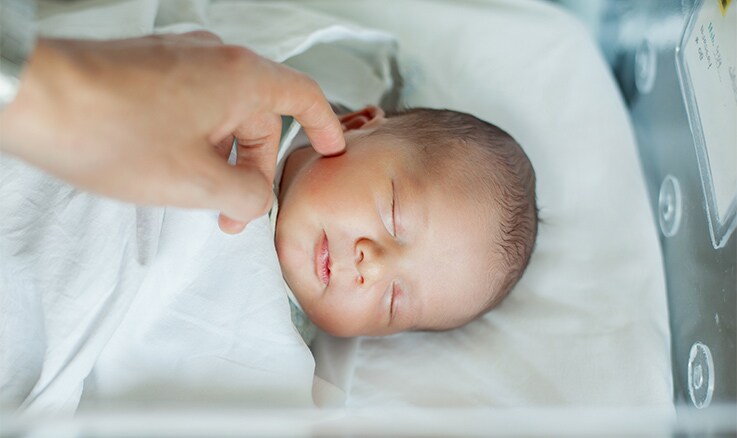
Laboranten behandeln die von etwa fünf Tage alten Neugeborenen entnommenen Trockenblutproben mit äußerster Sorgfalt. Der Test beginnt mit der Auswertung minimaler numerischer Veränderungen in der schwachen, getrockneten Spur, die ein einzelner Blutstropfen aus der Ferse hinterlässt. Es folgt eine angespannte Phase, da das Ergebnis direkte Auswirkungen auf das Leben des Neugeborenen haben kann.
- Was ist das Neugeborenen-Massenscreening?
- Neue Tests zur Früherkennung seltener Krankheiten
Erweitertes Neugeborenen-Massenscreening - Drei Unternehmen arbeiten an einer nahtlosen, durchgängigen Implementierung
- Überwindung von Herausforderungen in der Reagenzienentwicklung: Lösungen auf Basis von Ursachenanalysen
- Einrichtung eines Hygieneprüflabors für den Markteintritt
- Stellungnahme der verantwortlichen Person
Was ist das Neugeborenen-Massenscreening?
In Japan werden fast alle Neugeborenen im Rahmen des staatlich finanzierten Neugeborenen-Screening-Programms auf 20 Erkrankungen untersucht. Ziel des Systems ist es, angeborene Stoffwechselstörungen und andere Erbkrankheiten frühzeitig zu erkennen und die Babys umgehend der entsprechenden Behandlung zuzuführen. Wie der Name schon sagt, handelt es sich um einen Screening-Test. Bei Verdacht auf eine Erkrankung werden weitere Untersuchungen und eine Diagnose durchgeführt, bevor eine Behandlung eingeleitet wird.
Neue Tests zur Früherkennung seltener Krankheiten
Erweitertes Neugeborenen-Massenscreening
Fortschritte in der Forschung haben neue Behandlungsmöglichkeiten für Krankheiten hervorgebracht, die einst als extrem schwer zu behandeln galten.
Schwere kombinierte Immundefekte (SCID), spinale Muskelatrophie (SMA) und lysosomale Speicherkrankheiten sind selten, doch Stammzelltransplantationen, Gentherapie und Nukleinsäuretherapeutika ermöglichen heute Behandlungen. Das erweiterte Neugeborenen-Screening-Programm ist eine Initiative zur Früherkennung dieser Erkrankungen.
Das erweiterte Neugeborenen-Screening-Programm bietet derzeit keine landesweite, öffentlich finanzierte Testung aller Neugeborenen wie das herkömmliche Neugeborenen-Screening. Für SCID und SMA leitet die Regierung jedoch ein Pilotprojekt, um die Rahmenbedingungen für die Aufnahme dieser Erkrankungen in das landesweite, öffentlich finanzierte Screening-Programm zu evaluieren und zu entwickeln. Kommunen können sich freiwillig beteiligen. Das Projekt dient der Validierung des Systems und bereitet es auf die flächendeckende Implementierung vor.
Die Präfektur Kyoto und die Stadt Kyoto schlossen sich diesem Versuch im April 2025 an und etablierten ein System, das es ermöglicht, alle Neugeborenen einem Neugeborenen-Massenscreening auf SCID und SMA zu unterziehen.
Drei Unternehmen arbeiten an einer nahtlosen, durchgängigen Implementierung
Die Shimadzu-Gruppe arbeitet in drei Bereichen zusammen – Instrumente, Reagenzien und Testverfahren –, um sowohl das Neugeborenen-Massenscreening als auch das erweiterte Neugeborenen-Massenscreening voranzutreiben.
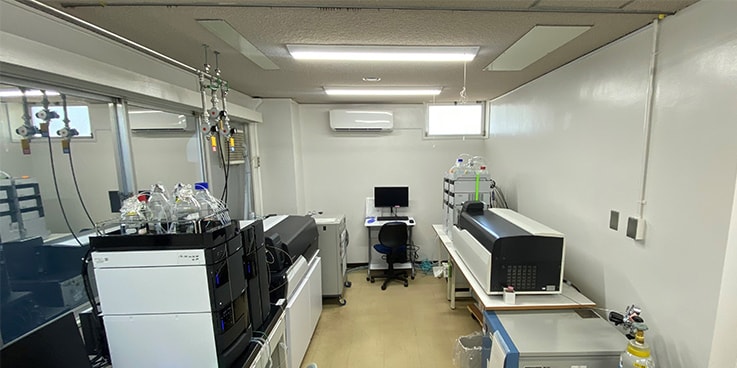
Die Shimadzu Corporation liefert seit Langem Analysegeräte, darunter LC-MS-Systeme (Hochleistungsflüssigkeitschromatographie-Massenspektrometer), für das Neugeborenen-Screening. Darüber hinaus entwickelte und vermarktete sie während der COVID-19-Pandemie das vollautomatische PCR-System AutoAmp sowie PCR-Reagenzien für COVID-19 und verbesserte so die Testeffizienz an den Testzentren.
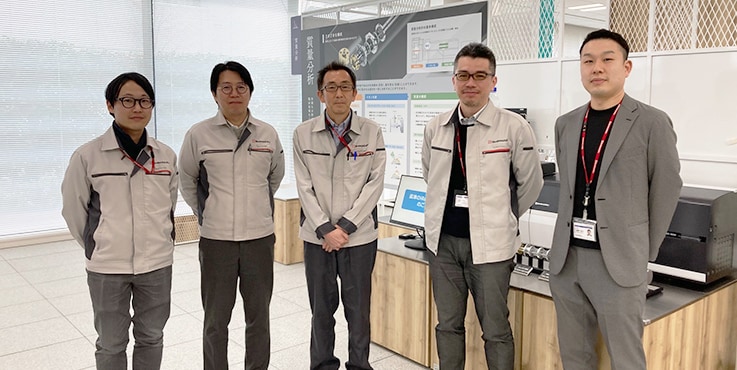
Teammitglieder der Shimadzu Corporation
Shimadzu Diagnostics hat das TKSneoFinder PCR-Reagenzienkit für das erweiterte Neugeborenen-Massenscreening entwickelt.
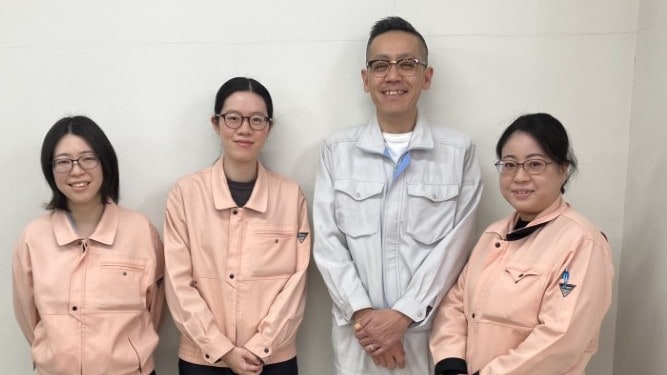
Teammitglieder von Shimadzu Diagnostics
Shimadzu Techno-Research verfügt über umfangreiche Expertise im Bereich PCR-Tests, die während der COVID-19-Pandemie aufgebaut wurde, und unterhält als zertifiziertes Hygiene-Testlabor ein qualitativ hochwertiges Testumfeld.
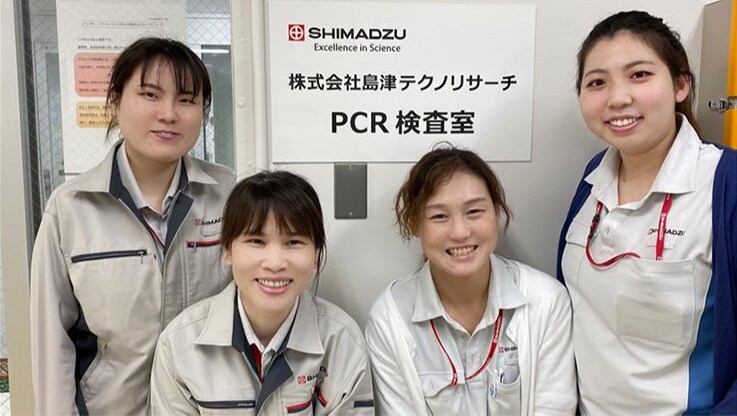
Mitglieder des Shimadzu Techno-Research-Teams
Überwindung von Herausforderungen in der Reagenzienentwicklung: Lösungen auf Basis von Ursachenanalysen
Mitglieder des Reagenzienentwicklungsteams von Shimadzu Diagnostics blicken auf diese Zeit zurück.
Die Teststellen, die die Reagenzien evaluierten, gaben umfangreiches Feedback und äußerten zahlreiche Verbesserungsvorschläge. Viele bemängelten: „Es gibt zu viele falsch-positive Ergebnisse (positive Befunde bei Säuglingen ohne Erkrankung) bei Krankheiten, die nur eines von zehntausend oder eines von hunderttausend Neugeborenen betreffen“ und „Die Testergebnisse weisen zu große Schwankungen auf“. Manchmal verschlimmerten unsere Verbesserungsversuche die Situation sogar, und wir waren unsicher, wie es weitergehen sollte.
Das Team nahm sich daher Zeit, die Ursache in Ruhe und gründlich zu untersuchen. Durch die Verbesserung der Qualität der in der Reagenzienherstellung verwendeten Rohstoffe und die Intensivierung der Qualitätskontrollen während des Versands konnten wir stabile Reagenzien liefern.
Einrichtung eines Hygieneprüflabors für den Markteintritt
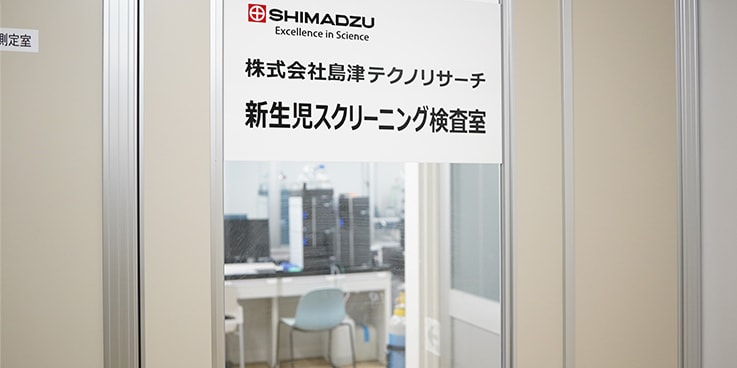
Um am erweiterten Neugeborenen-Screening-Programm teilnehmen zu können, musste Shimadzu Techno-Research die 20 Erkrankungen abdecken, die bereits durch das öffentlich finanzierte Screening erfasst wurden, und zusätzlich die Anforderungen der lokalen Behörden erfüllen. Diese Anforderungen, die sicherstellen sollten, dass unter Zehntausenden von Tests kein einziger Fall übersehen wurde, waren äußerst anspruchsvoll.
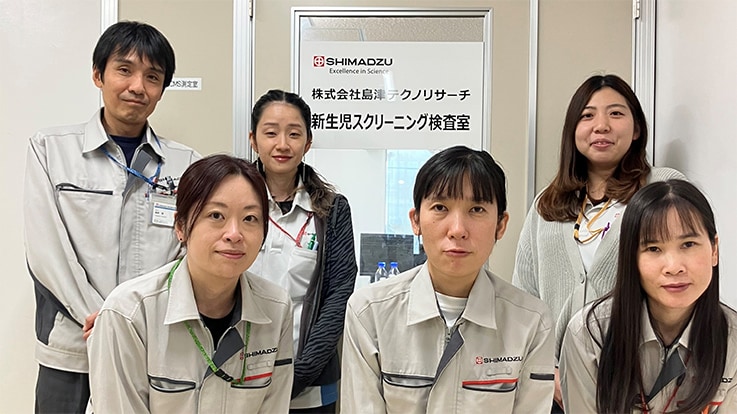
Durch die Nutzung der im Rahmen der COVID-19-Testungen gewonnenen Expertise im Bereich PCR-Tests und die Erlangung der Registrierung als Hygienetestlabor erfüllte Shimadzu Techno-Research die Anforderungen der Präfektur Kyoto und der Stadt Kyoto und konnte erfolgreich in den Markt für Neugeborenen-Massenscreening einsteigen.
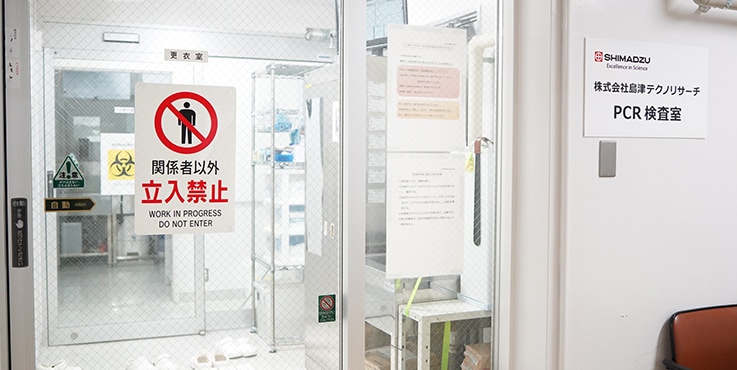
Einer der zuständigen Mitarbeiter erinnerte sich an den Vorfall und erzählte davon.
Zur Vorbereitung des von der Präfektur Kyoto in Auftrag gegebenen Neugeborenen-Massenscreenings stellten wir die notwendigen Einrichtungen, Geräte und Verfahren bereit und implementierten Daten zur Genauigkeitskontrolle, um die fachliche Kompetenz unseres Testpersonals und die Qualität der Tests sicherzustellen. Dennoch waren weitere Schritte erforderlich, bevor die Tests tatsächlich beginnen konnten.
Beim Neugeborenen-Screening werden getrocknete Blutstropfen (bei denen das Blut des Neugeborenen auf Filterpapier aufgesaugt wird) als Probe verwendet und per Post an das Testlabor geschickt. Da jedes Labor unterschiedliche Reagenzien und Geräte für diesen Test verwendet, gibt es keine national standardisierten Referenzwerte. Jedes Labor muss seine eigenen Grenzwerte (die Schwellenwerte für die Beurteilung) selbst festlegen.
Daher haben wir in Zusammenarbeit mit der Präfektur Kyoto 1.787 Trockenblutproben, die zuvor innerhalb eines Monats von Neugeborenen entnommen worden waren, gemessen und analysiert. Dadurch konnten wir in unserer Einrichtung einen geeigneten Grenzwert bestimmen und schließlich das Testsystem etablieren.
Während dieser Vorbereitungen wurde uns immer wieder vor Augen geführt, dass das Vertrauen, das für Tests erforderlich ist, die den gesamten Lebensweg eines Neugeborenen beeinflussen können, strenge und konsequente Sorgfalt erfordert.
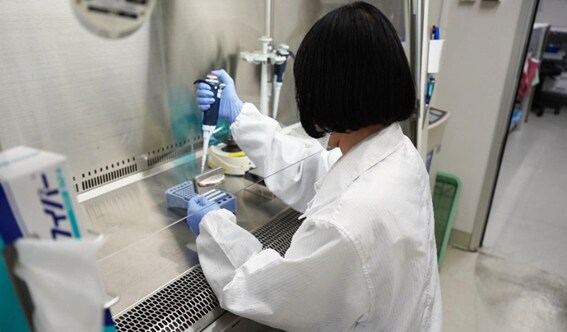
„Wir testen weiterhin täglich mit großem Verantwortungsbewusstsein – um die seltenen Anzeichen zu erkennen, die nur bei einem von Zehntausenden Kindern auftreten, und diesem Kind rechtzeitig medizinische Hilfe zukommen zu lassen.“ Vor diesem Hintergrund führt Shimadzu Techno-Research die öffentlich finanzierten Tests für die Präfektur Kyoto durch und entwickelt ein System, das dem Vertrauen der lokalen Bevölkerung gerecht wird. Zukünftig will Shimadzu die Zusammenarbeit seiner drei Unternehmen weiter stärken und die Genauigkeit und Stabilität der Tests durch die Integration von Erkenntnissen aus der Praxis in seine Geräte und Reagenzien weiter verbessern.
Diese Initiative, bei der jedes der drei Unternehmen seine jeweiligen Stärken einbrachte, um lebensrettende Tests zu entwickeln, wurde als Teamleistung, getragen von Visionen und Zielen, hoch gelobt. Sie setzte unsere Unternehmensphilosophie und Managementprinzipien aktiv in die Praxis um. Daher wurde das Projekt mit dem internen Shimadzu-Preis „First a Dream Award“ ausgezeichnet.
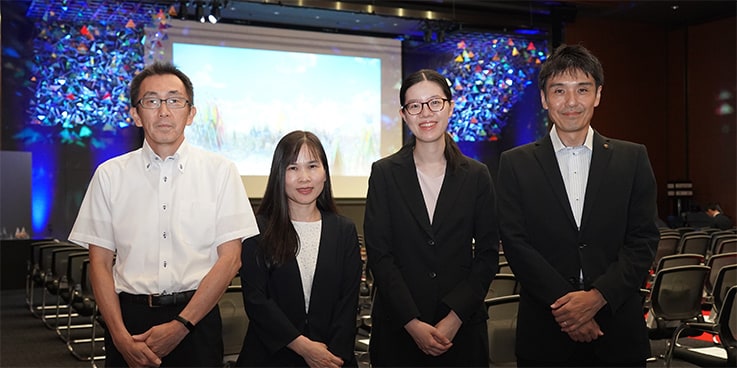
Teammitglieder bei der Verleihung des First a Dream Awards
Stellungnahme der verantwortlichen Person
Die Fähigkeit, eine nahtlose Komplettlösung von der Reagenzienentwicklung bis zur Testung anzubieten, ist eine besondere Stärke der Shimadzu-Gruppe. Am Testzentrum von Shimadzu Techno-Research führen wir täglich Tests an Neugeborenen durch, deren Leben uns anvertraut ist. Die dabei gewonnenen Erkenntnisse fließen in die Instrumente und Analysesysteme der Shimadzu Corporation ein, während Shimadzu Diagnostics die Bedürfnisse vor Ort in verbesserte PCR-Reagenzien umsetzt. Wir hoffen, mit Produkten und Reagenzien, die auf dem in diesem Projekt gewonnenen Know-how basieren, einen Beitrag zur Gesundheitsversorgung von Neugeborenen weltweit leisten zu können.
Verwandte Links
- Shimadzu Techno-Research startet Vertragsangebot für Neugeborenen-Massenscreening-Tests – Verbesserung der Neugeborenengesundheit durch konzernübergreifende Synergien
- Technologie für eine gesunde Zukunft von Neugeborenen: Entwicklung einer neuen Technik zur Früherkennung erblicher Stoffwechselstörungen | SHIMADZU TODAY
 Seitentitel und URL kopiert.