



100 años desde el nacimiento del maniquí Shimadzu
Exposición de los maniquíes domésticos más antiguos que se conservan en Japón.
El Museo Conmemorativo de la Fundación Shimadzu presenta actualmente una exposición especial que conmemora el centenario del nacimiento de los primeros maniquíes de fabricación japonesa.
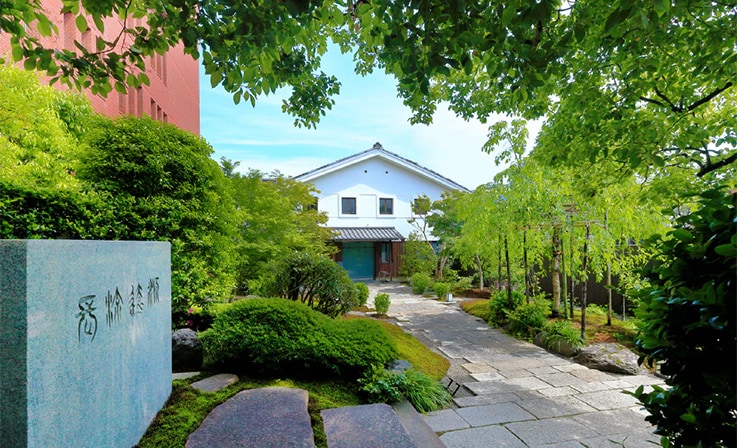
Una vista del museo
Los comienzos de los maniquíes fabricados en Japón
Puede que sorprenda, pero Shimadzu llegó a fabricar maniquíes. Aprovechando la tecnología de "fibra Shimadzu", desarrollada a partir de la década de 1890 mediante la producción de especímenes didácticos de historia natural, Shimadzu comenzó a producir los primeros maniquíes de estilo occidental de Japón en 1925.
Muy apreciados por su calidad, los maniquíes Shimadzu alcanzaron su máximo esplendor alrededor de 1937, llegando a acaparar más del 80 % del mercado nacional. Sin embargo, con la intensificación de la guerra, la producción se detuvo y el negocio de los maniquíes no se reanudó tras el conflicto. Cabe mencionar que la empresa que se fundó cuando los empleados que dirigían el negocio de los maniquíes en aquel entonces se independizaron es Nanasai Co., Ltd., un fabricante de maniquíes con sede en Kioto.
Los maniquíes expuestos en esta ocasión son las piezas más antiguas de Shimadzu que se conservan. Esta obra, titulada «Hermana mayor / Hermana menor», fue creada en 1925 por el escultor Yasuji Ogishima y forma parte de la colección de Nanasai. Ogishima comenzó a crear maniquíes tras conocer a Ryozo Shimadzu, hijo de Genzo Shimadzu hijo y fundador de Shimadzu Mannequin. Ogishima y Ryozo fueron compañeros de estudios en la Escuela de Bellas Artes de Tokio (actualmente Universidad de las Artes de Tokio).
Han transcurrido 100 años desde que Shimadzu comenzó a fabricar maniquíes en Japón, pero se sabe muy poco sobre sus inicios debido a la escasez de documentos que se conservan. Sin embargo, esta exposición de los maniquíes más antiguos que se conservan fue posible gracias a una donación especial.
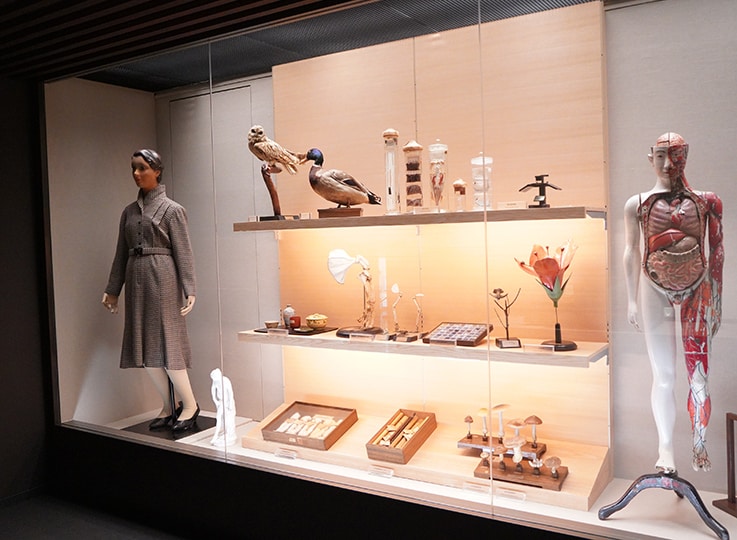
Extremo izquierdo: Un maniquí Shimadzu fabricado en 1929, actualmente expuesto en el museo.
Una exposición especial posible gracias a una donación.
«Mi abuelo recibió una muñeca directamente de Genzo Shimadzu hijo Todavía la conservamos en casa. ¿Le gustaría venir a verla?». Tras esta invitación, un residente local donó una pequeña figura de unos 35 centímetros de altura al museo de Kiyamachi-Nijo en Kioto. Su expresión digna y la belleza de su forma resultaron especialmente impactantes.
Sin embargo, presentaba grietas importantes desde los hombros hasta la parte posterior, lo que dificultaba su manejo e incluso que se mantuviera en pie. Una inspección de la placa de identificación indicó que databa de principios del siglo XX.
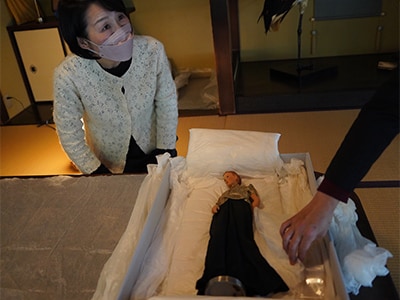
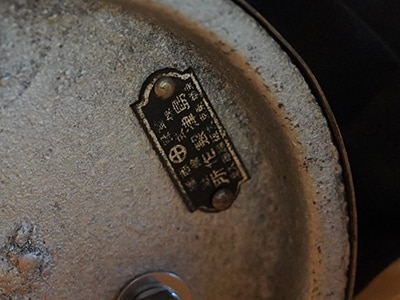
Al reconocer que se trataba de una pieza muy antigua e importante, el conservador decidió restaurar el pequeño maniquí y exhibirlo junto al "maniquí Shimadzu" que ya se encuentra expuesto en el museo.
“Queremos exhibirlo junto al maniquí Shimadzu”—Comienza la restauración
Dada su experiencia en maniquíes, se consultó a Nanasai sobre la restauración. Se decidió que Nanasai se encargaría de la restauración del cuerpo, mientras que la ropa sería restaurada por Atelier Goto en Kioto.
Esta solicitud también propició la planificación concreta de la exposición actual, que presenta los maniquíes más antiguos que se conservan. Shimadzu había obtenido una patente en 1911 para la "fibra Shimadzu", un material elaborado recubriendo papel con resina; sin embargo, la figura donada estaba hecha de yeso en lugar de este material patentado.
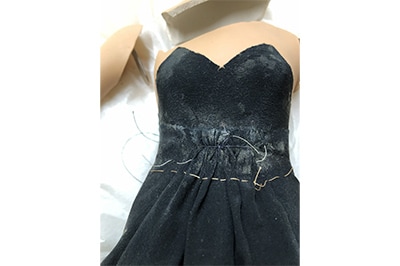
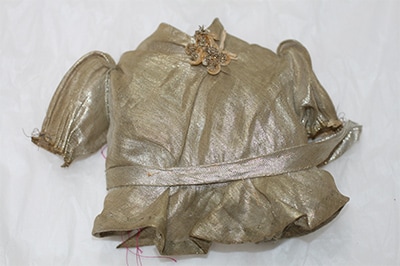
El proceso de restauración consistió primero en retirar el traje, reparar la figura y luego volver a colocar el traje. Los brazos estaban diseñados para ser desmontables e insertarse en el torso. En cambio, el corpiño y la falda estaban adheridos a la figura y no se podían quitar, por lo que se restauraron sin quitarlos del cuerpo. Finalmente, la chaqueta se terminó reforzándola con tela de refuerzo y cosiéndola por el reverso.
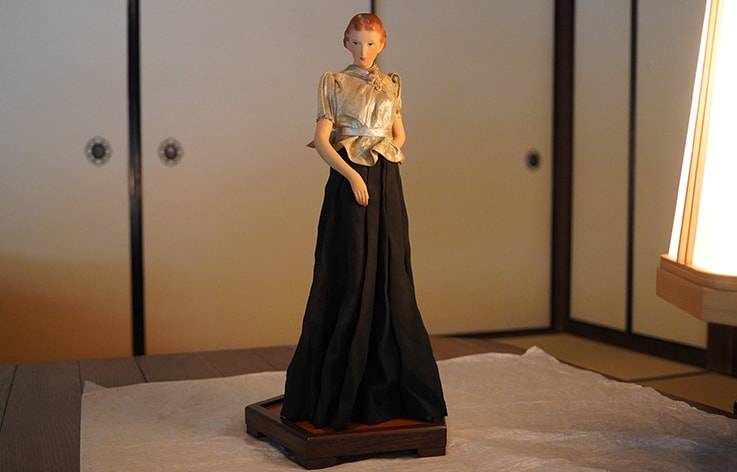
El maniquí aún no se ha expuesto, pero el curador señala: "Planeamos continuar nuestra investigación mientras lo exhibimos junto con el maniquí Shimadzu en el futuro".
■Información sobre la exposición (Exposición especial)
Periodo: Hasta el martes 7 de abril de 2026
Lugar: Museo Conmemorativo de la Fundación Shimadzu (vitrina de la entrada)
Exposición: Maniquíes de hermana mayor/hermana menor de Yasuji OgishimaAdmisión: Se requiere reserva (con hasta 3 días hábiles de anticipación).
Información para visitantes: Museo Conmemorativo de la Fundación Shimadzu
Estas figuras destacan por su dinamismo, sus expresiones pensativas y sus pies esculpidos con audacia. Al contemplar la obra, se percibe su presencia y la atmósfera de su época.
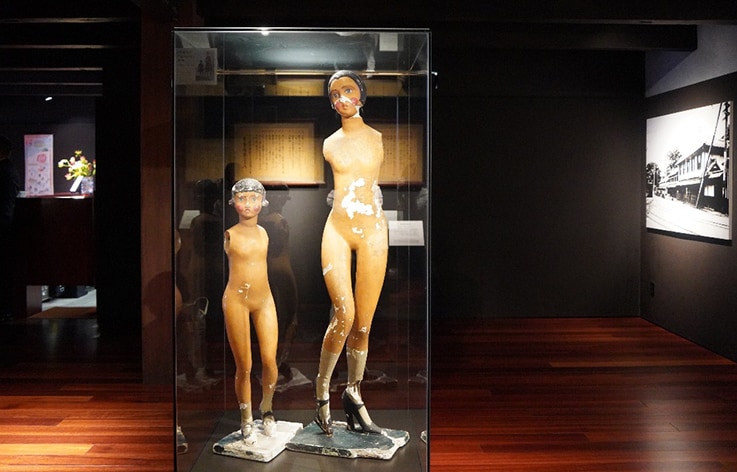
Maniquíes de Hermana Mayor/Hermana Menor de Yasuji Ogishima. La exposición especial consta únicamente de estas dos piezas. Los brazos desmontables ya no se conservan.
 Título de la página y URL copiados.