



Considering Sustainability from the Perspective of Food Products
“FoodTech” is a new word coined by combining “food” and “technology.” This is a field in which initiatives are progressing rapidly across the globe, against a background of various issues involving food, including food supply shortages, and increasing environmental load. Shimadzu Corporation recently hosted the Shimadzu 4th Global Food Summit 2025. This discussion about the latest food-related information and sustainability primarily involved our customers in Singapore who are working at the cutting edge of FoodTech.
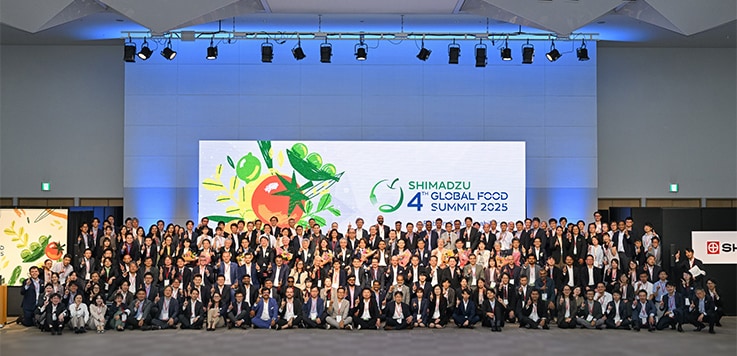
The event was attended by 209 experts in the food product industry, primarily from Singapore.
- Supporting the Future of Food with Shimadzu Technology
- Cultivated Meat: A Potential Solution to the “Protein Crisis”
- Compliance with Halal, the Key to Spreading of Cultivated Meat to the Muslim Market
- Introducing Solutions from Shimadzu in Support of the Future of Foods
- CULTIVATED MEAT JOURNEY 2025, Held at Expo 2025
Supporting the Future of Food with Shimadzu Technology
In accordance with population increases worldwide, issues such as the stable provision of food supplies and environmental protection have surfaced. Further, food-related needs are diverse. These include the development of functional foods, a response to increasing health consciousness, accommodating allergies, and the detection of toxic substances in foods.
Singapore depends on imports for 90 % of its food supply, so the nation is working together to construct a sustainable food supply system that is resilient to climate change and geopolitical risks. For this reason, food-related concerns are high there, and the nation is said to be at the forefront of FoodTech research.
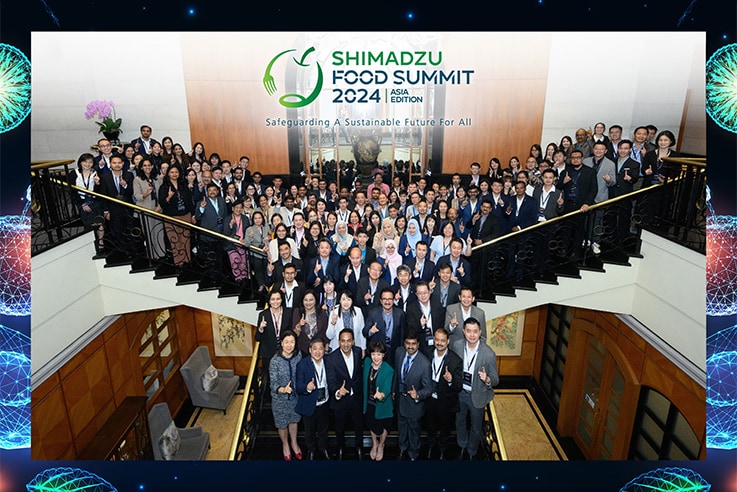
The food summit held in Singapore in 2024
Since 2011, Shimadzu (Asia Pacific) Pte Ltd. (SAP), the Shimadzu Group’s base of operations in Singapore, has held the Shimadzu Food Summit, thereby deepening ties with worldwide experts. This year, it was held for the first time in Japan in conjunction with Expo 2025 Osaka, Kansai, Japan, and discussions were held on the theme of “Reborn & Sustainability: Safeguarding Our Future.”
Cultivated Meat: A Potential Solution to the “Protein Crisis”
In accordance with population increases and changes in eating habits, the balance of supply and demand for protein has been lost, and a protein crisis is said to occur in the near future. One solution for that is cultivated meat. As a member of the Consortium for Future Innovation by Cultured Meat*, Shimadzu is promoting the social implementation of cultivated meat.
* The Consortium for Future Innovation by Cultured Meat was established in 2023 by the Graduate School of Engineering at The University of Osaka, Shimadzu Corporation, Itoham Yonekyu Holdings Inc., Toppan Printing Co., Ltd. (now TOPPAN Holdings Inc.), and SIGMAXYZ Inc. The objective is to promote practical initiatives for the social implementation of 3D bioprinted cultivated meat production technology. At present, with the addition of ZACROS Corporation, six parties are now promoting such activities.
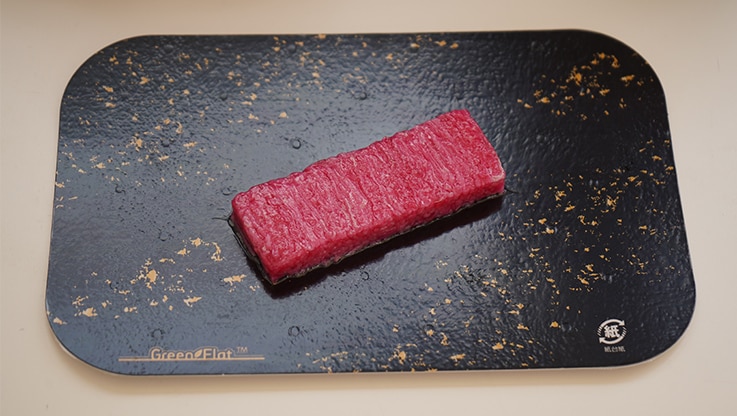
Cultivated meat utilizing 3D bioprinting technology
Cultivated meat is one type of meat alternative, created by cultivating cells harvested from animals. Creating food with cell cultures makes this different from other meat alternatives. Cultivated meat is a potential solution to food supply issues and environmental problems.
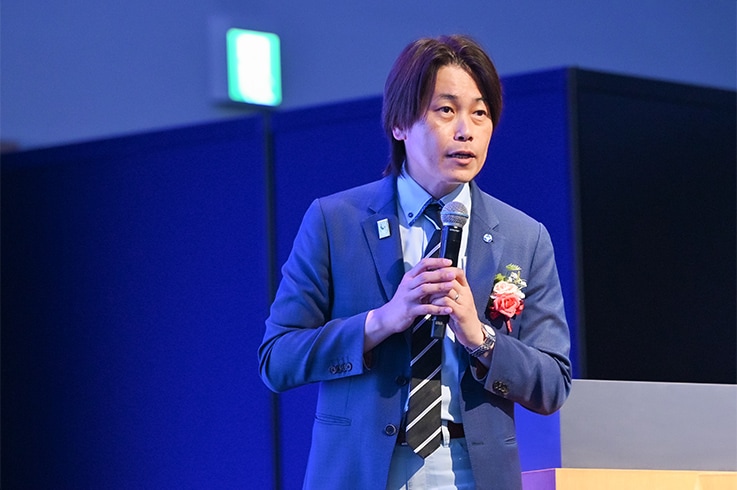
Professor Michiya Matsusaki (Division of Applied Chemistry, Graduate School of Engineering, The University of Osaka), who developed 3D bioprinting technology
At Shimadzu 4th Global Food Summit 2025, Professor Matsusaki, who developed 3D bioprinting technology, took the stage, where he talked about the significance of cultivated meat, and the exhibition at Expo 2025. The 3D bioprinting technology cultivates the muscles, fat, and blood vessels of harvested animal cells, and combines each fiber in a similar arrangement to that in actual meat.
Compliance with Halal, the Key to Spreading of Cultivated Meat to the Muslim Market
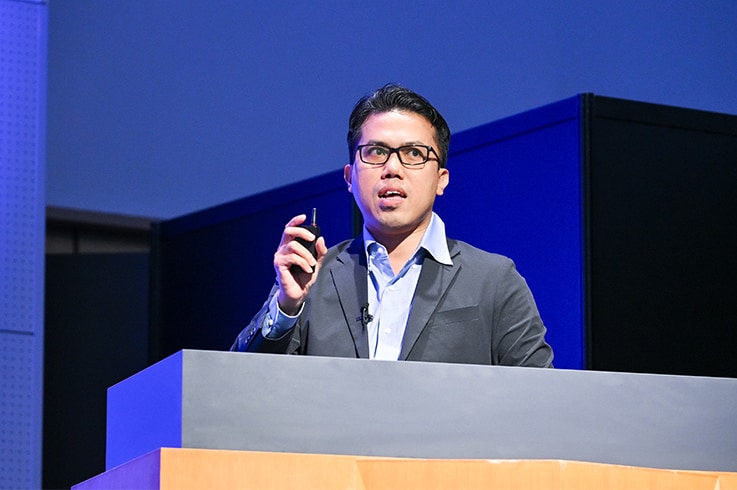
Professor Mohamad Hafizi Abu Bakar (Universiti Sains Malaysia)
Furthermore, Professor Mohamad Hafizi Abu Bakar took the stage and discussed halal compliance for cultivated meat. It is said that there are approximately 2 billion Muslims in the world. Cultivated meat has already hit the market as a food product in Singapore. However, for Muslims, the question of whether or not cultivated meat can be eaten (i.e., whether or not it is halal) is very important.
Professor Mohamad Hafizi Abu Bakar noted that the halal standards must be satisfied during the process of manufacturing cultivated meat to participate in the Muslim market. He emphasized that detailed precautions are needed, particularly regarding what animals the cells were collected from, and whether these animals were butchered in the permitted way.
Introducing Solutions from Shimadzu in Support of the Future of Foods
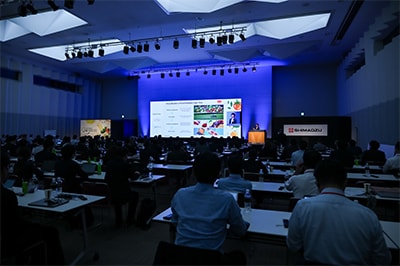
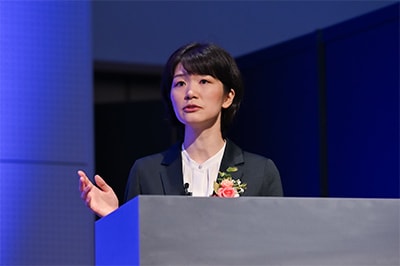
Natsuki Iwata (Food Group, Healthcare Solution Unit, Solutions COE, Analytical & Measuring Instruments Division, Shimadzu Corporation)
At the summit, solutions were also discussed utilizing high-performance liquid chromatographs (HPLC), which are a flagship product at Shimadzu and are widely used in the food industry. In addition to contributing to food safety and quality improvements, it was emphasized that such instruments automate the pretreatment required for analysis, and help researchers work more efficiently, based on examples of the quick, simultaneous measurement of 37 types of D/L amino acids.
CULTIVATED MEAT JOURNEY 2025, Held at Expo 2025
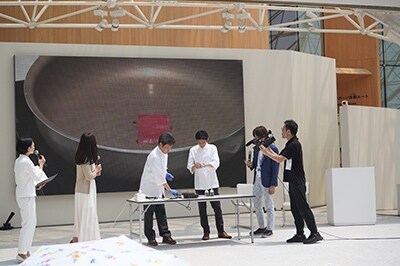
CULTIVATED MEAT JOURNEY 2025
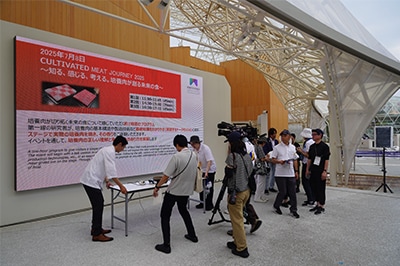
Many representatives from the press also attended
Participants at the Shimadzu 4th Global Food Summit 2025 visited Expo 2025 the following day. In addition, they toured CULTIVATED MEAT JOURNEY 2025, hosted by the Consortium for Future Innovation by Cultured Meat.
In one area at this event, to broaden and correct perceptions of cultivated meat, it was cooked on stage, and visitors got to enjoy the aroma. People who experienced the actual aroma reported that it was more real than they had imagined. Through this event, participants seemed to feel closer to a future featuring cultivated meat.
Comment from the Person in Charge of the Shimadzu 4th Global Food Summit
The Shimadzu Global Food Summit began in Singapore in 2011, and has grown as a platform event that draws experts in food safety and analytical technology. This year, the event was held in Japan, in celebration of Shimadzu’s 150th anniversary. It was an ideal opportunity to expand our network from Asia to the entire world. The theme this time was “Reborn & Sustainability: Safeguarding Our Future,” and we depicted a future with sustainable food products. Further, there were also links to the theme of “Nest for Reborn,” at the Osaka Healthcare Pavilion being held at Expo 2025, thereby creating a large-scale event connecting the summit with the Expo.
 Page Title and URL Copied.