



Developing Seabed Sensing Technology to Support Carbon Neutrality
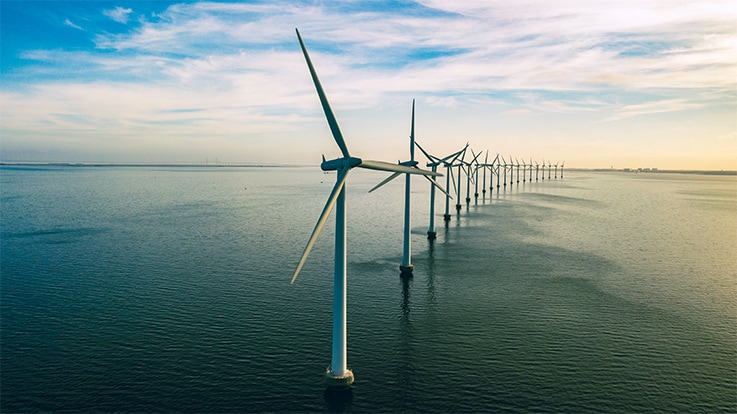
Around the world, efforts are currently underway to utilize renewable energy in pursuit of achieving carbon neutrality. Offshore wind power generation, in particular, is drawing significant attention. Deployment is advancing rapidly in Europe and China, and in Japan as well, where regulatory frameworks are being established to support practical application.
Electricity generated by offshore wind turbines is transmitted via subsea power-transmission cables laid beneath the seabed. Typically, these cables are buried several meters deep. However, if they rise to the surface and become exposed due to ocean currents or changes in seabed topography, the risk of damage or breakage from bottom trawling by fishing vessels or anchors from large ships increases. A single failure can result in substantial repair costs and pose serious risks to daily life. To ensure stable, long-term operation, regular maintenance and inspection—including measurement of burial depth—are essential.
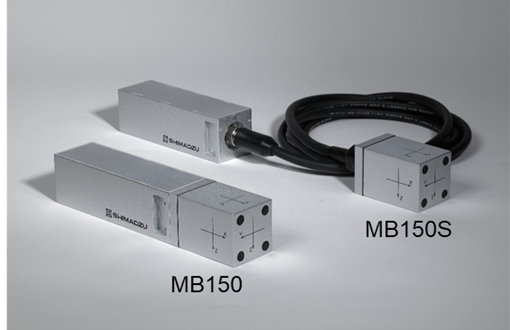
MB150 and MB150S generic magnetometer
Against this backdrop, the Geoscience Department of the Industrial Machinery Division at Shimadzu Corporation is developing magnetometers to precisely measure the burial depth and position of subsea power-transmission cables. Designed to be installed on underwater robots, these meters eliminate the need to deploy ships or people, reducing the burden of maintenance and inspection work.
Shinnosuke Seo of the Geoscience Department, who is leading the meter development, explains: “Our magnetometers are compact and energy-efficient, which is a key strength. The main challenge, however, is noise—unwanted data caused by the motion of underwater robots, rotation of propellers, and even the Earth’s own magnetism. By combining experimental data with machine learning, we were able to remove this noise and establish a system capable of measuring cable burial depth with high accuracy.”
Joint Research with the University of Edinburgh to Enhance Meter Sensitivity
To further improve meter sensitivity, a joint research project was launched in February 2026 with the University of Edinburgh in the United Kingdom. The project focuses on developing an algorithm that measures the burial depth and position of subsea cables by significantly eliminating and reducing magnetic noise generated by underwater robots and their components.
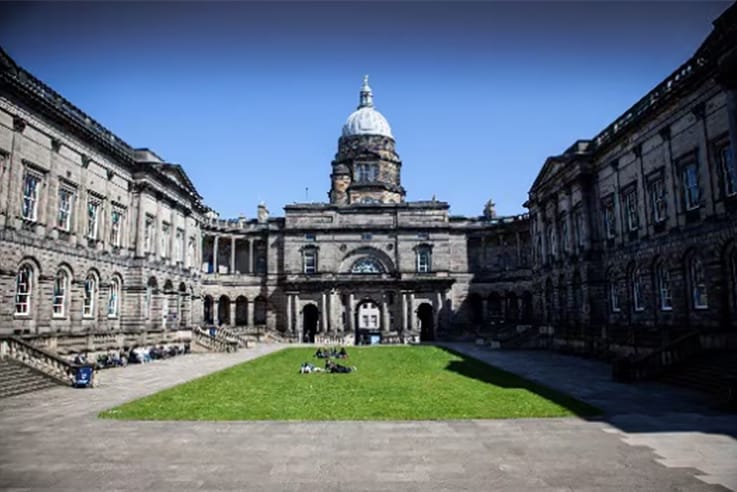
The University of Edinburgh (Scotland, UK)
The University of Edinburgh not only has a world-class track record in AI and machine learning, but also extensive expertise in marine robotics. By integrating Shimadzu’s magnetometer technology with the university’s capabilities, they aim to put the system into practical use by FY 2028.
Kyoji Kashiwao of the Business Planning Department, Industrial Machinery Division, who is responsible for planning and driving the project with the University of Edinburgh, was enthusiastic, saying, “The main market for marine technologies is overseas. Through collaboration with the University of Edinburgh, we intend not only to advance our technology development but also to establish a foothold in the European market.”
The Geoscience Department’s Challenge: “Science for the Earth”
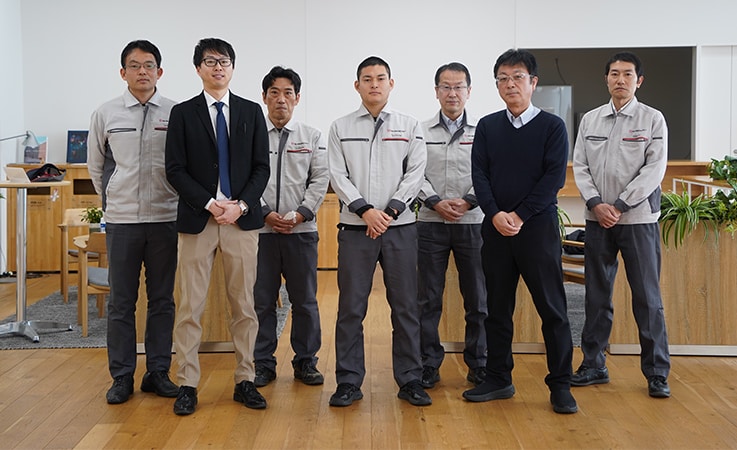
Front row, from left: Kyoji Kashiwao (Business Planning Department), Shinnosuke Seo, and Naoki Nishimura (Geoscience Department)
Set up in April 2024 as a department dedicated to Science for the Earth, the Geoscience Department currently comprises 14 members. In addition to magnetometers, the department offers a range of marine-focused products, including the MC500 underwater optical wireless communication device, which enables high-speed communication underwater, and the CF100 UEP measurement instrument, which detects corrosion in marine structures.
Naoki Nishimura, General Manager of the Geoscience Department, said that “In recent years, the development of offshore wind power and marine resources such as rare earth elements has progressed significantly. However, much of the work in the field still relies on manual operations—for example, inspections of marine structures still involve divers physically diving into the water, while measurement devices are simply lowered from work vessels. Going forward, the Geoscience Department will continue expanding its global marine business and aim to realize digital transformation (DX) in marine development.”
 Page Title and URL Copied.