



Putting People at the Heart of Technology
A Joint Program with Kobe University’s Graduate School of Humanities
Many Shimadzu employees have backgrounds in science and engineering. In fact, more than 70 percent of this year’s new hires are science and engineering graduates. However, turning technology into products and services that benefit society requires an understanding of the people who use it and the society in which it is used.
Since 2023, Shimadzu Corporation has partnered with Kobe University to offer the Shimadzu Liberal Arts Program, which exposes employees to a range of perspectives, including those of the humanities. To date, 300 employees have participated.
Bridging Different Areas of Expertise
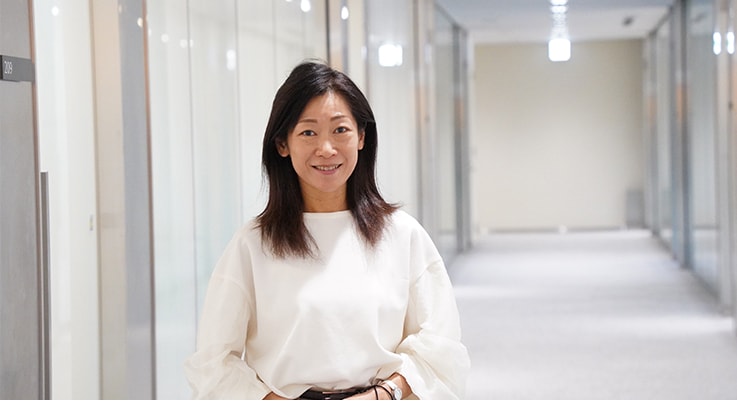
Yuki Matsumoto, Manager of the Global Government and Academic Collaboration Unit in the Sales & Marketing Division, is responsible for planning and running the program. Before joining Shimadzu, she had worked at several other companies and was surprised by how many science and engineering professionals worked at Shimadzu and by how differently they thought. “It was as if I had become an alien,” she recalls.
Matsumoto has worked in company-wide human resource development, planning and managing employee training programs. She has also worked closely with researchers in the R&D department. She believes that precisely because professionals have deep expertise, looking beyond their own fields and engaging with perspectives from the humanities and social sciences can lead to new ideas and value creation.
Drawing on her experience as a bridge between people with different perspectives and ways of thinking, she is creating opportunities for employees to learn and engage in dialog beyond their fields of expertise.
The Shimadzu Liberal Arts Program consists of a range of initiatives that examine the relationship between technology and society through the lens of the humanities, ethics, and cross-cultural understanding.
Examples of the Shimadzu Liberal Arts Program
| Program Name | Target Employee | Contents |
|---|---|---|
| Lectures by external speakers | All employees | Exploring the value of liberal arts education and the relationship between technology and society |
| Exchange with Oxford University students | Early-career employees, staff involved in overseas operations |
Developing cross-cultural understanding through dialog and fieldwork |
| SHIMADZU-KOIAS Atmosphere Studies Course | Early to mid-career employees, staff in charge of new business initiatives | Exploring how atmosphere is perceived and how it can be analyzed |
|
ELSI* Course |
Engineering staff | Examining the ethical, legal, and social issues involved in introducing technology into society |
| Humanities Cafe | All employees | Using architecture, design, and literature as starting points for wide-ranging discussions about topics ranging from the value of technology and products to individual work styles and approaches to learning |
*ELSI: Ethical, legal, and social issues in science and technology
Examining Atmosphere from a Humanities Perspective
The atmosphere or vibe of a place can influence how people behave and how organizations function. The academic discipline called Atmosphere Studies examines these elements—which cannot be fully captured by numbers or logic alone—from various viewpoints, particularly those offered by the humanities.
One of the programs run by Matsumoto is the SHIMADZU-KOIAS Atmosphere Studies Course. Through lectures by Associate Professor Yuho Hisayama and other researchers in the Graduate School of Humanities at Kobe University, which specializes in the study of atmosphere, the course explores the question “What is atmosphere?” from the standpoint of art, design, philosophy, and other disciplines.
After each lecture, employees have an opportunity to discuss what they have learned and gain insights into the context in which communication within the organization and the reception of products and services take place.
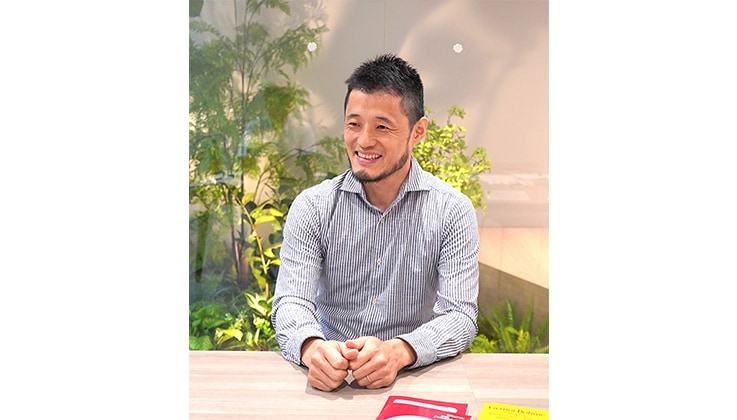
Associate professor Yuho Hisayama of the Graduate School of Humanities, Kobe University, and representative of the Kobe Institute for Atmosphere Studies (KOIAS)
Insight from Employee who Attended the Atmosphere Studies Lecture
Yoshihide Magari, who was then a manager in the Research & Development Department of the Medical Systems Division, attended a lecture by Associate Professor Hisayama on Atmosphere Studies at the kickoff event for the collaboration with Kobe University. He recalls the experience as follows.
Of course, the X-ray systems and other instruments we develop are ultimately intended for people—the users who operate them and the patients who are being examined. To ensure our products are well-received by them, it goes without saying that we listen to user needs and requests during the development process. However, studying the humanities has made me realize that there are important perspectives we cannot gain from user feedback alone.
Since then, Magari has continued to attend related events.
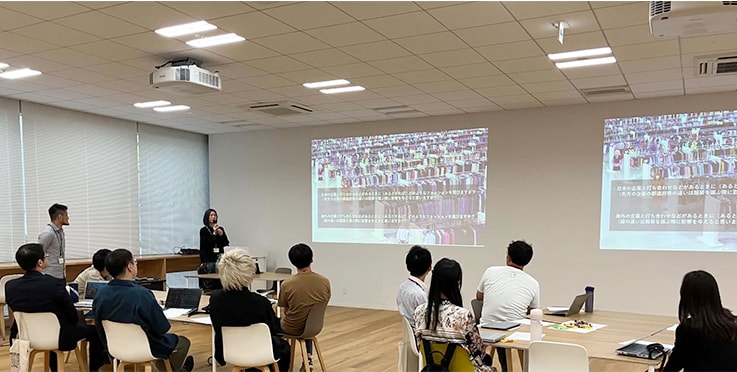
The theme for the day was fashion. Participants attended dressed in their favorite styles
Reexamining Shimadzu from an External Perspective
The Kobe-Oxford Japanese Studies Programme (KOJSP) is an exchange program between Kobe University and the University of Oxford. Students majoring in Japanese at the University of Oxford’s Faculty of Asian and Middle Eastern Studies study at Kobe University for about one year. As part of this program, Shimadzu accepts interested students as interns for one week.
In the summer of 2026, the internship was held primarily at the Shimadzu Foundation Memorial Museum. Eos Liao, one of the interns, learned about Shimadzu’s history and corporate culture. In her final presentation, she remarked, “What matters more than the fact that Shimadzu has been in business for 150 years is what the company has preserved and what it has changed over that time.”
She also observed that corporate museums should be “more than places that explain a company's history; they should convey that history and its values through experiences.” This provided an opportunity for us to take a fresh look at our values and history, which we often take for granted within the company, from the perspective of a student.
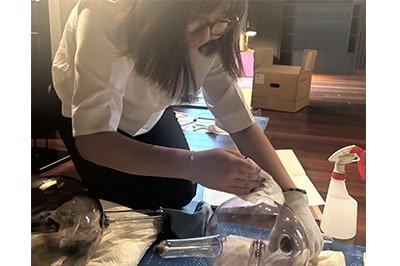
Eos Liao cleaning the DIANA medical X-ray apparatus at the museum
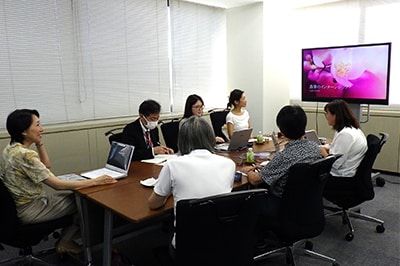
Interns presenting their findings
Turning New Perspectives into New Ideas
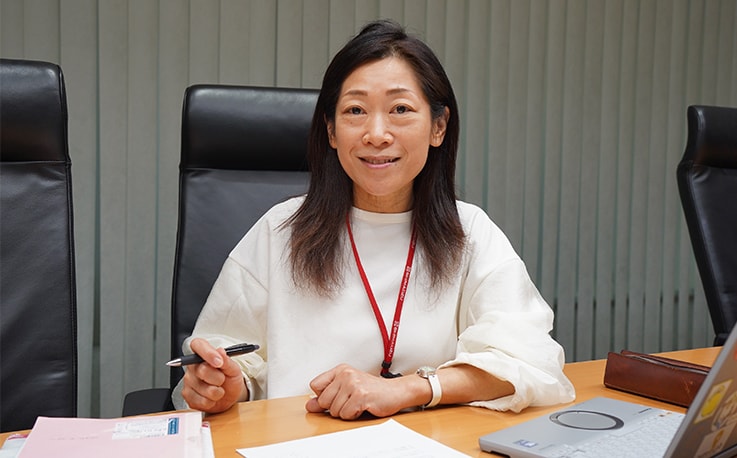
Matsumoto explained the thinking behind these initiatives:
Activities such as lectures, the Humanities Cafe, and exchanges with international students may not immediately produce visible results. However, I believe that the insights gained through exposure to different fields of study can lead to new ideas and create value over time.
I hope that dialog and interaction across fields will help each employee broaden their horizons and discover new possibilities.
We need to consider not only the technology itself, but also the society in which it is used and the values of the people who experience it. The aim of this program is to help employees develop this broader perspective.
 Page Title and URL Copied.