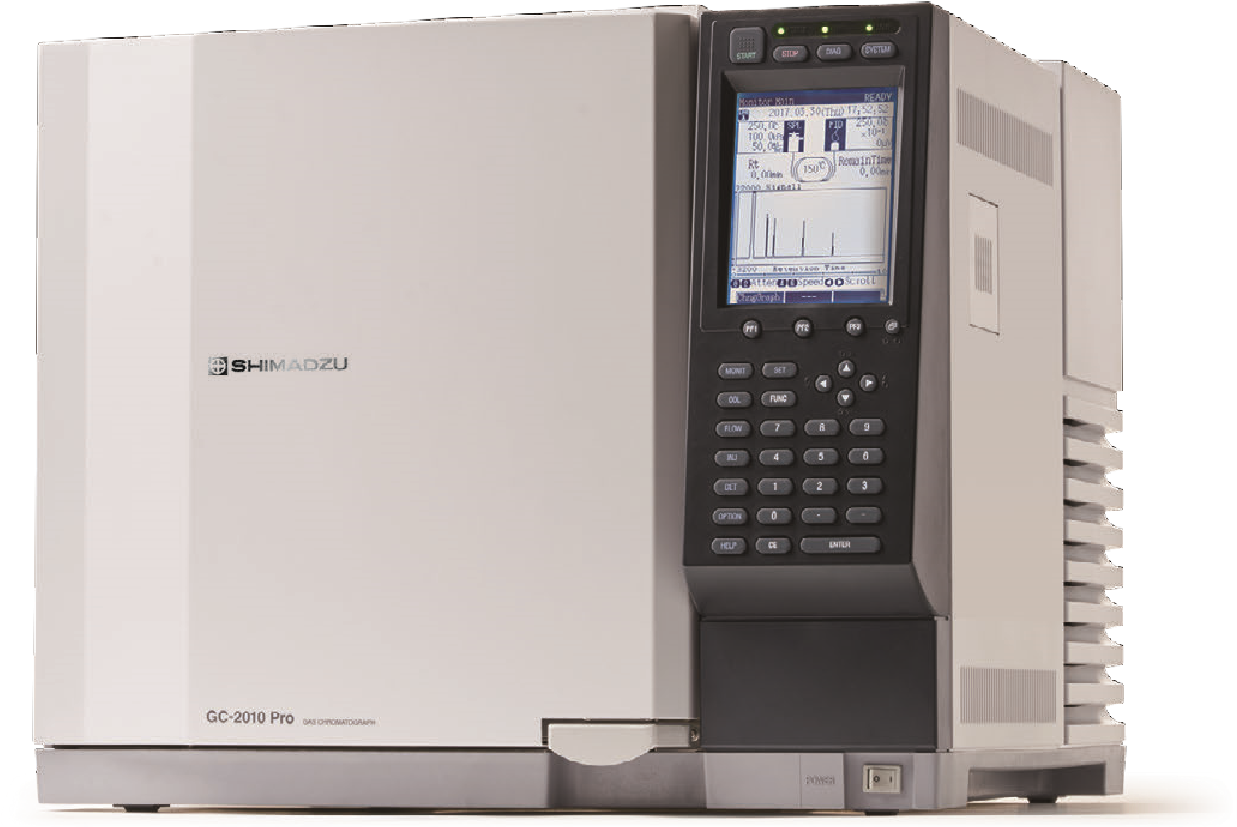
GC-2010 Pro


Fats and oils are parts of normal daily consumptions. As a major source of energy, fats and oils are considered as important nutrients in human diets. Lipids also provide insulation for our bodies, transport vitamins that are not soluble in the water, as well as supply the essential fatty acids. Fats and oils belong to a class of substance called lipids. Fats differ from oils only in the form they take at room temperature; fats are solid, whereas oils are liquid at room temperature. Almost all of commercially important fats and oils of animal or plant origin consist of the lipid class called triglycerides (or triacylglycerols), which are fatty acids linked by ester bonds to glycerol. Gas chromatography (GC) can be used for analysing the lipid or fatty acid content of a vegetable oil. Typically, GC is suitable for the analysis of organic, non-ionic comopounds that are vapourisable at 400℃ or less. Therefore, for the analysis of lipids in edible oils, normally derivatisation of the lipids into their more volatile derivatives is performed prior to GC analysis. However, GC can be used to analyse triglycerides or other components of oils that can be vapourised at 400° C or less, without prior derivatisation. Here we describe the analyses of a few vegetable oils by capillary gas chromatograph (GC).
July 9, 2026 GMT