


Molecular Ion Peak
What Is a Molecular Ion Peak?
Emission of an electron from an electrically neutral compound leads to production of a molecular ion. This ion provides information on molecular weight, because the electron mass is so small compared to the mass of a molecule that the mass of a molecular ion is regarded as the mass of the molecule.
How to Identify the Molecular Ion Peak
The molecular ion peak (M⁺) usually has the highest m/z value that still fits with expected fragmentation.
It may not always be the tallest peak (that’s typically the base peak).
Use the Nitrogen Rule:
Odd m/z = odd number of nitrogen atoms
Even m/z = even/no nitrogen atoms
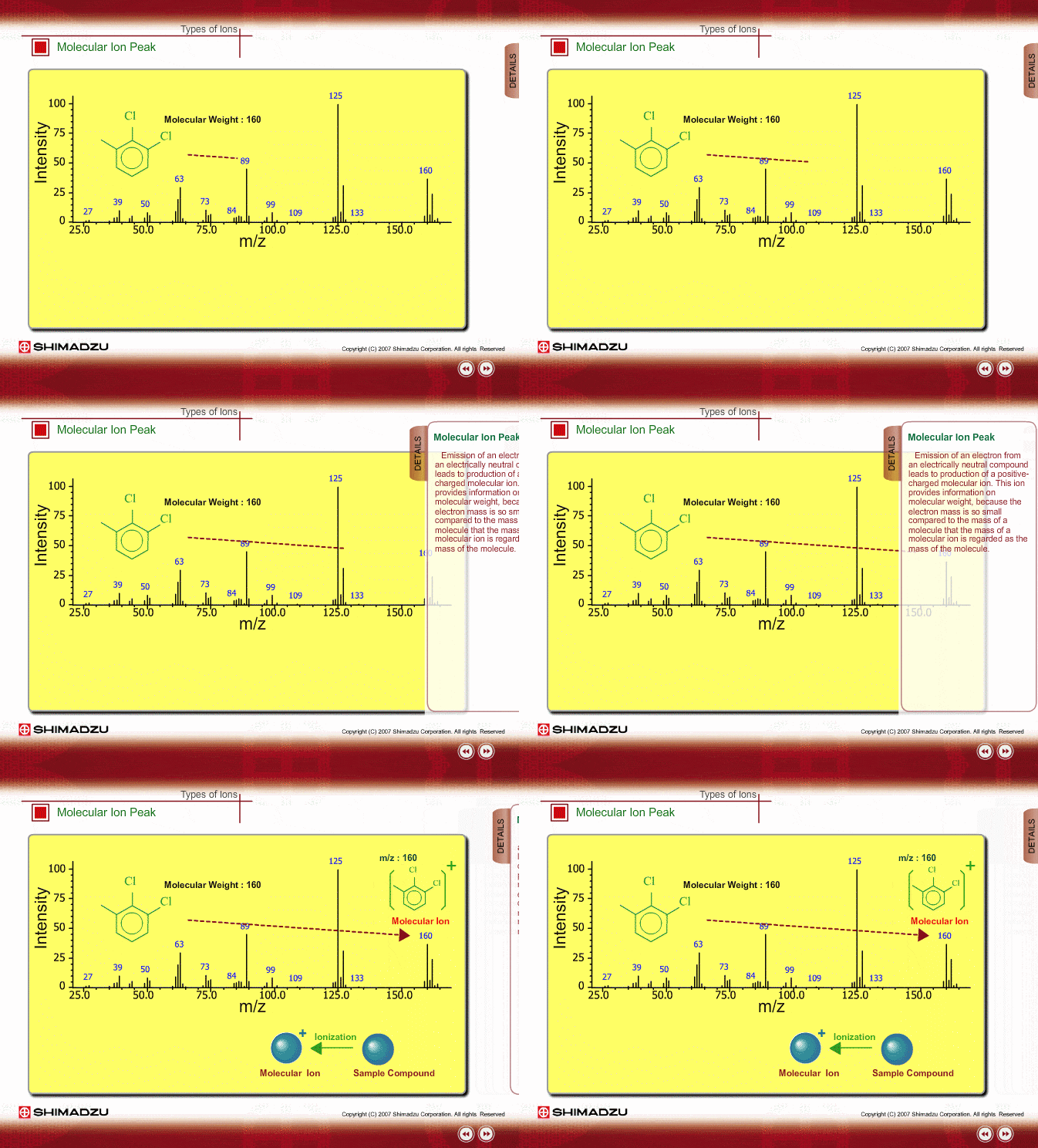
Figure: Illustration of a molecular ion peak in a mass spectrum
Frequently Asked Questions
What does the molecular ion peak represent?
The molecular ion peak (M⁺) represents the ion formed when a molecule loses one electron without fragmenting. It reflects the compound’s molecular weight, which is key for identifying unknown substances. This peak is especially important in mass spectrometry because it gives the most direct evidence of the compound’s intact mass before any breakdown occurs.
Is the molecular ion always the base peak?
Not necessarily. The base peak is the most intense peak in the mass spectrum, but the molecular ion peak might be smaller or even missing. In some compounds—especially those that are unstable or prone to fragmentation—the molecular ion quickly breaks down, so the base peak may instead be one of its fragments. In stable compounds, however, the molecular ion can sometimes be the base peak.
How does Shimadzu's GC-MS help identify the molecular ion peak accurately?
GC-MS systems, such as the GCMS-QP2050, are designed to deliver high sensitivity and excellent mass accuracy—key for detecting subtle molecular ion peaks, even in complex or low-concentration samples. The new interface, which minimizes the production of cold spots, enables the acquisition of favorable peak shapes and sensitivity, even for compounds prone to adsorption. Furthermore, the system offers high durability during consecutive analyses and features ultra-fast scanning technology that supports accurate measurements, delivers highly sensitive and stable results.