


Strength Test
Overview of Strength Test
The Importance of Quality Control Testing in Manufacturing
When a force is applied to an object, strength testing is performed to evaluate how the material deforms and at what point it fails. Understanding these quantified properties is essential for ensuring the safety of aircrafts, vehicles, buildings, machinery, and consumer products.
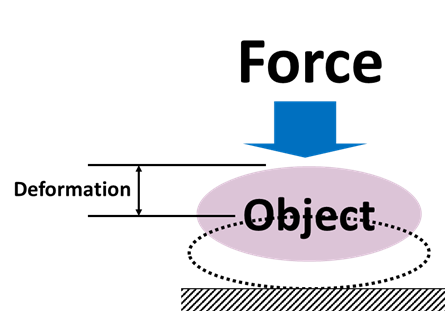
In the design and manufacture of machinery and buildings, it is important to understand their quantified properties by means of strength tests to ensure their safety.
Strength tests are performed at every stage of the process, from raw material to finished product, the purpose of which depends on the department responsible for the process. The quality control (QC) department conducts strength tests to ensure the incoming and outgoing materials, parts, and products meet manufacturing requirements. The test methods used for QC will follow standardized ISO, ASTM, and JIS methods, or company-developed standards for routine analysis. The research & development (R&D) department conducts strength tests to characterize the mechanical limits of materials and parts and to develop new materials and products. Unlike the lQC department, this department sometimes develops its own test methods and performs a variety of tests beyond routine analysis.
Testing Tensile Strength and Mechanical Properties
Comparison of Quality Control Testing vs. R&D Materials Testing
| QC and Manufacturing | R&D | |
|---|---|---|
| Purpose |
|
|
| Work Characteristics |
|
|
To perform these evaluations accurately, a universal tensile test machine is typically used. These systems allow engineers to automate testing tensile strength across various material types, ensuring adherence to ISO and ASTM standards.
FAQ’s
What is the primary purpose of strength testing?
Strength testing is used to determine how a material reacts under various forces, such as tension, compression, bending, or torsion. This process is critical for calculating mechanical properties like elastic modulus and yield points, ensuring that materials used in construction, manufacturing, and R&D meet safety and performance standards.
How is a tensile test machine used in quality control?
A tensile test machine (also known as a universal testing machine) is used in quality control testing to verify that manufactured products or raw materials meet specific industry standards. By applying controlled force to a specimen, the machine measures its breaking point and deformation, ensuring consistency across production batches.
Why is testing tensile strength important for product safety?
Testing tensile strength determines the maximum load a material can withstand before failing. This is vital for safety-critical applications, such as automotive parts or medical devices, where material failure could lead to catastrophic accidents. It confirms that the material has the structural integrity required for its intended use.
What is the difference between R&D and quality control testing?
In R&D, strength testing is focused on discovering new properties and developing innovative materials with higher performance. In contrast, quality control testing focuses on "pass/fail" criteria, ensuring that every batch of material produced adheres to the established benchmarks and remains consistent over time.
Which industries rely on strength testing materials?
Strength testing materials is essential across nearly all sectors, including aerospace, automotive, civil engineering, plastics, and electronics. Any industry that utilizes materials requires testing to ensure durability, longevity, and compliance with international standards like ASTM or ISO.