Flavors
Nutritional components of food, such as amino acids, organic acids, sugars, fats and oils, have umami, sweet, bitter, or sour tastes and their types and ratios largely determine the flavor of foods. In addition, various polyphenols and catechins taste bitter or astringent and are not only an important factor in flavor but are also widely known as functional components with antioxidant and metabolism-promoting properties.
Furthermore, in recent years, since primary metabolites such as amino acids, organic acids, and sugars are widely involved in the flavor and aroma of foods in complex ways, there has been a move to apply food metabolomics, a method for the comprehensive analysis of metabolites, to food development and quality control.
- Examples of
Analytical Instruments Used 
- High Performance Liquid Chromatograph

- Gas Chromatograph
- Quantitative Measurement of Nutritional and Functional Components
-
- Amino Acids
- Sugars
- Organic Acids
- Fats and Oils etc.

- Comprehensive Measurements of Multiple Items
-
- Simultaneous Multicomponent Measurement
- Food Metabolomic Analysis
- Examples of
Analytical Instruments Used 
- Various Mass Spectrometers
Quantitative Measurements of Nutrients
Amino Acids: Liquid Chromatographs
Amino acids are the smallest unit of components for protein synthesis. Many amino acids are known to have a flavor profile, such as glutamic acid, which is known to provide the umami taste. Recently, interest has also focused on the bioactivity of amino acids, which are also ingested as nutrients or functional foods. The chromatogram at the lower right shows an example of pre-column derivatization amino acid analysis using the automatic pre-processing function of the liquid chromatograph autosampler. The work of pre-column derivatization can be automated to save on labor while also enabling high-accuracy measurements.
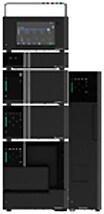
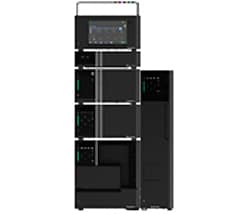
Nexera
(Pre-column Amino Acid Analysis)
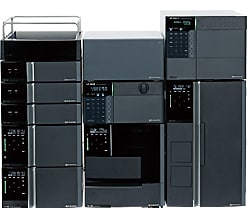
Nexera Post-column
Amino Acid Analysis System
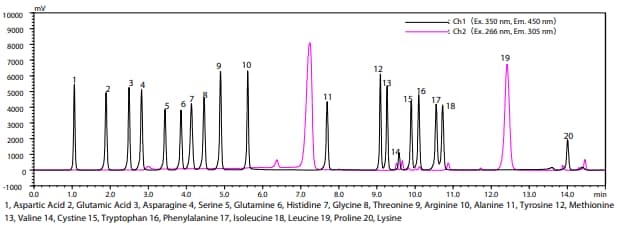
Quantitative Analysis of Pre-Column Derivatized Amino Acids by HPLC-Fluorescence Detector Using Automatic Pretreatment Function
Organic Acids
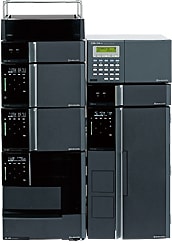
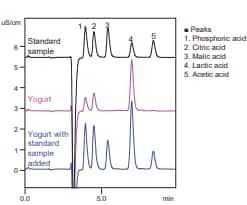
Organic acids in foods are important components for creating sourness and umami. Recently, they have also been discussed for their role in promoting digestion and their antibacterial properties. With organic acid analysis via HPLC, multiple selections are available not only for the separation mode but also for the detection method.
This section introduces an example of a rapid and highly selective analysis using the Shim-pack Fast-OA ion exclusion column and post-column pH buffered conductivity detection.
Monitoring Organic Acids during Fermentation with Shim-pack™ Fast-OA High-Speed Organic Acid Analytical Column
Sugars
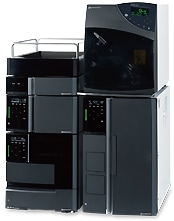
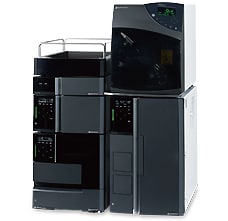
It is clear that sugars are related to factors leading to diabetes mellitus, obesity, allergies, and dementia. Limiting sugars is an effective approach to preventing and treating these conditions. One aspect that tends to be overlooked when dealing with sugar restriction is flavorings. In fact, flavorings are sometimes quite sugary. The lower right chromatogram shows an example of separation of 15 sugar components by hydrophilic interaction chromatography (HILIC) and detection by ELSD-LTIII.
Evaporative Light Scattering Detector
ELSD-LT Ⅲ
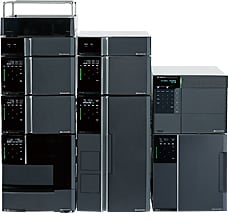
Nexera
Reducing Sugar Analysis System
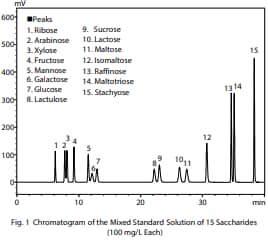
Simultaneous Determination of 15 Saccharides Without Interference by Salt in Seasonings
Fats and Oils
In addition to taste-related components, the fats and oils in meat and fish, which are components of adipose tissue that by their nature do not have a chemical taste, enhance the tastiness of food by the smooth sensation they create in the mouth. Fats and oils also play an important role in the physical structure of foods, making foods taste crunchier and incorporating tiny air bubbles to produce a creamy texture. This section introduces an example of analyzing fatty acid methyl esters in fish oil using gas chromatography. Besides enhancing tastiness, fatty acids such as EPA and DHA in fish are also known to be functional components.
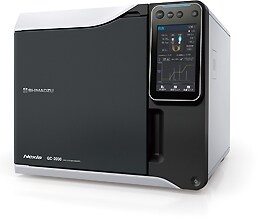
Gas Chromatograph Nexis GC-2030
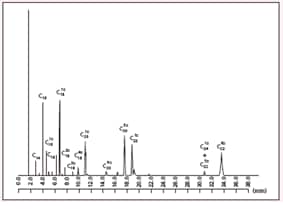
Analysis of Fatty Acids in Fish Oil
Sulfur Components
Volatile sulfur compounds are formed in beer during the brewing process and storage, affecting the beer's flavor. They also contribute to off-flavor, which degrades the quality. However, sulfur compounds have a very low threshold value and can impact the quality even at very low concentrations, so pretreatment such as concentration and high sensitivity analysis are required. In this section, we analyze volatile sulfur compounds in three commercially available types of beer using a chemical luminescent sulfur detector (SCD), a detector that is selectable for sulfur compounds, and a headspace sampler. The SCD is the most sensitive type of GC detector for measuring sulfur components. However, it has many units that require control, and complicated procedures are required to prepare it for analysis. The Nexis SCD-2030 has a wealth of automatic functions, making it capable of performing all operations from preparation to analysis with a single click.
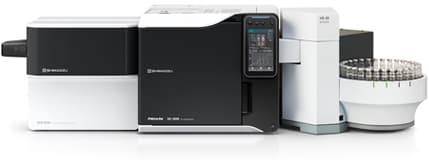
Nexis SCD-2030+HS-20
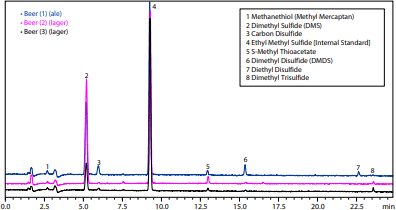
Chromatograms for Three Kinds of Beer
Complex Multicomponent Evaluations
Searching for Components that Contribute to Flavor and Food Metabolomic Analysis
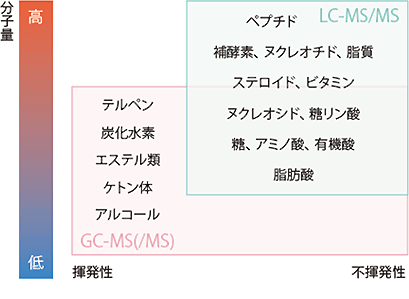
Many components contribute to the flavor of food. In addition to knowing what components are present, the ratio of each component has a significant impact on the taste. Multicomponent simultaneous analysis of multiple items such as amino acids, organic acids, sugars, oils and fats, which are important for food analysis, can be performed using a highly selective, high-sensitivity mass spectrometer. This section introduces an example of measurements using various mass spectrometer measurement conditions and databases, depending on the target components and analysis objective.

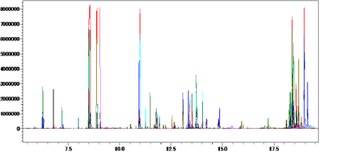
Example of the Analysis of Beer by GC-MS/MS
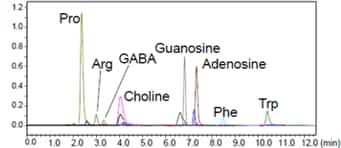
Example of the Analysis of Beer by LC-MS/MS
GC-MS (/MS)
- Enables the comprehensive analysis of hundreds of components
- High separation and a comprehensive database enable qualitative analysis
- Enables the measurement of aroma and metabolic compounds, especially volatile, low molecular components
LC-MS(/MS)
- Enables the comprehensive analysis of hundreds of components
- Enables the analysis of high polymer compounds, hydrophilic compounds, and nonvolatile metabolites, which are challenging to analyze using GC-MS (/MS).
Food Metabolomics
In recent years, metabolomics, a technique for the comprehensive analysis of metabolites in living organisms, has become a focus of attention. Metabolomics is a field of study in which amino acids, organic acids, and other low molecular weight metabolites produced through cellular activity are comprehensively analyzed to clarify the differences between multiple sample groups. When metabolomics is applied to food, it is called food metabolomics. It is used for various purposes, including food quality assessments, quality prediction, improving manufacturing and storage processes, and evaluating functionality. The data handled in metabolomics is “multidimensional x multidimensional,” and it is too complex for humans to analyze. Therefore, multivariate analysis, a statistical method for extracting useful information from large amounts of data, is very effective in obtaining important information.
Metabolites Method Package Suite
This multi-omics analysis package suite for metabolic engineering contains measurement conditions for the comprehensive analysis of more than 2000 metabolites. It can also display large volumes of mass spectrometry data in a metabolite map, and perform various data analyses. This single product enables the comprehensive analysis of metabolites with a wide range of physical properties.
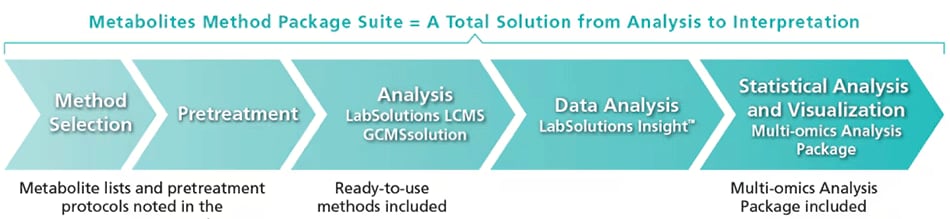
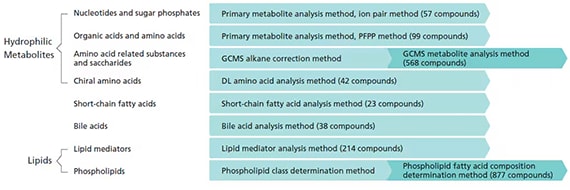
Various measurement conditions enable the comprehensive analysis of more than 2000 metabolites
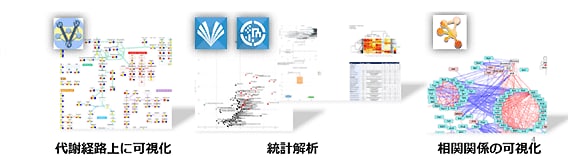
Multi-omics analysis package can perform a variety of data analyses
Example of the Analysis of Beer
