


October 15, 2025 | News & Notices
Development of New Method for Evaluating Ulcerous Colitis with Hyogo Medical University
Using a Shimadzu Liquid Chromatograph Mass Spectrometer for Quantitatively Evaluating Pathological Conditions from Dye Concentrations in Blood
Shimadzu Corporation and Professor Hirokazu Fukui, Department of Gastroenterology, Hyogo Medical University, developed a technique for evaluating the permeability of intestinal mucosa, which is used as an indicator for the status of ulcerous colitis or irritable bowel syndrome conditions, based on the concentration of indigo carmine, a dye, in blood, measured using a liquid chromatograph mass spectrometer (LC-MS) system. The technique that was developed reduces the burden on patients and enables a quantitative evaluation of pathological conditions, which is expected to contribute toward identifying causes or developing therapeutic methods. The research results were developed by the Department of Omics Medicine, established in 2019 at Hyogo Medical University as a Shimadzu industry-academia collaboration and were published in the academic journal “Endoscopy International Open” on September 29, 2025
There are reportedly about 200,000 cases of ulcerous colitis in Japan, with potentially 12 million cases of irritable bowel syndrome in Japan, which is about 10 % of the population. As symptoms become more severe, they can interfere with daily life due to intestinal pain and frequent bowel movements. Though the causes are not clear, one possible factor is leaky gut syndrome that is caused by increased permeability in the intestinal mucosal due to functional impairment to intestinal barrier functions. A leaky gut can allow food origin antigen, gut microbiota, or their products, which are being digested, to enter the body and cause diseases. However, previously there were no techniques available for quantitatively evaluating the permeability of mucous membranes inside living organisms, which has prevented progress in researching disease mechanisms and identification of pathological conditions. Previously, about the only procesure to evaluate mucosal permeability was the lactulose mannitol test, which involved measuring the concentration of internally administered sugars in urine. However, that method involved various problems, such as requiring the collection of urine from an entire day, which was a major burden on patients, and measurement values being affected by gastrointestinal functions, eating, kidney functions, and other factors.
Therefore, the research team focused on the phenomenon of the indigo carmine used during endoscopy being discharged into the urine after examinations and decided to use the coloring agent as a technique for studying mucosal permeability. After spraying indigo carmine during an examination of 11 patients with ulcerous colitis and 5 healthy patients, the correlation between indigo carmine concentrations in the blood and pathological conditions was evaluated. Both groups showed a significant difference in concentration levels, which suggested the method was useful. A Shimadzu LCMS-8060 liquid chromatograph mass spectrometer system was used to measure the concentrations of indigo carmine in the blood. Previously, the therapeutic effect of drugs for ulcerous colitis and irritable bowel syndrome was measured based on subjective symptoms reported after administering the drug. Wide adoption of the new technique would reduce the burden on patients and result in more efficient treatment. Shimadzu Corporation and Hyogo Medical University intend to continue clinical research of the technique in order to establish clinical significance. In the future, Shimadzu will continue acquiring clinical evidence for the technique in cooperation with Hyogo Medical University and intends to develop additional analytical instruments for supporting drug discovery research and medical systems for clinical testing.
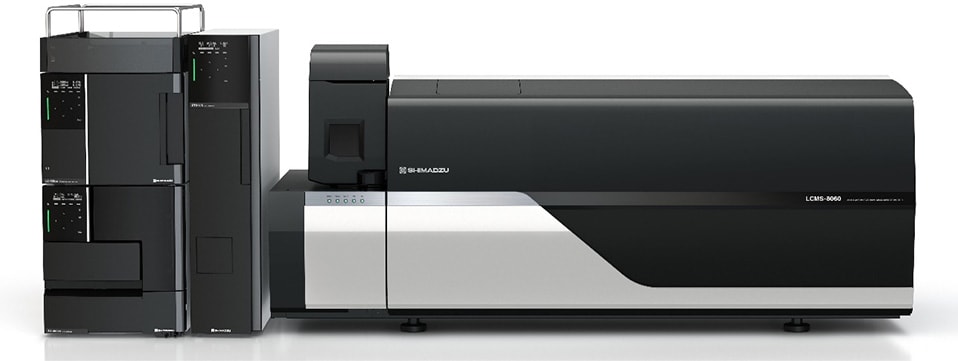
Photo: LCMS-8060 Liquid Chromatograph Mass Spectrometer