


October 16, 2026 | News & Notices
Joint Development of HeROSS Helicopter Rescue Support System with Kawasaki Heavy Industries and CHS
First Time for Shimadzu to have its Helmet Mounted Display Adopted for Helicopter Use
Shimadzu Corporation has developed the HeROSS* helicopter rescue support system jointly with Kawasaki Heavy Industries Ltd. (Headquarters: Minato-ku, Tokyo, Representative Director and President: Yasuhiko Hashimoto) and Central Helicopter Service, Ltd. (Headquarters: Toyoyama-cho, Aichi Prefecture, Representative President: Susumu Horiuchi). Shimadzu has provided the information display device referred to as the Helmet Mounted Display (HMD), and the obstacle information generation device (main computer) for the system. HeROSS is an optional accessory for the latest helicopter H145//BK117D-3. It detects obstacle information around the outside of the aircraft with laser radar (LiDAR), and uses monitoring cameras to acquire images of the rear and below, which can easily become blind spots. By displaying this information on a tablet or the HMD, the information is brought to the attention of the crew members.
When a helicopter is hovering while performing a rescue activity, it can come close to obstacles in the surroundings, such as in forests or mountainous areas. By having the HeROSS display obstacle information around the aircraft, the load of monitoring work by the crew is reduced, contributing to the safe and reliable execution of rescue missions. The HMD for aircraft is a device that displays information such as speed and elevation on a display superimposed on the distant scenery. Shimadzu has supplied HMDs and Heads Up Displays (HUDs) for almost all the aircraft of the Japan Self-Defense Forces, including fighter aircraft, transport aircraft, reconnaissance planes, training aircraft, etc., but this is the first time a helicopter HMD is used for both defense and civil aircraft.
Shimadzu has been manufacturing parts for aircraft since 1936, and the Aircraft Equipment Division was established in 1957, advocating “contributing to the realization of a safe and secure society.” Having manufactured HMDs for the Self-Defense Forces of the Ministry of Defense, we continue to undertake research and development exploring demand for civilian use, including a “flying car.”
- * Taken from the first letters of Helicopter Rescue Operation Support System.
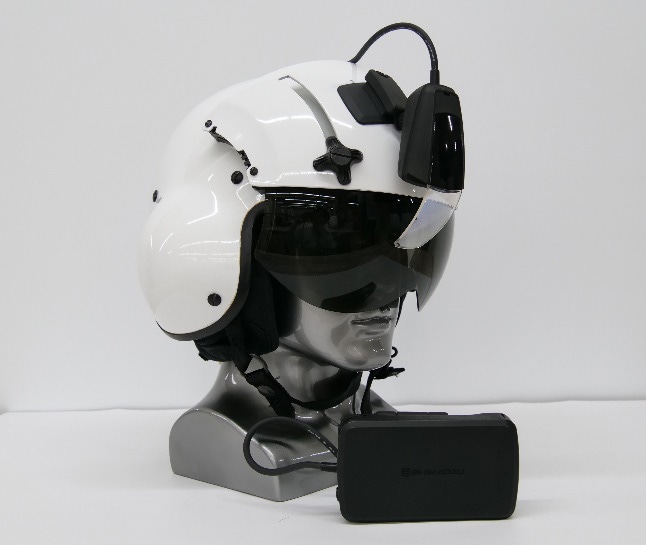
Photo: Helmet with special HMD mounted
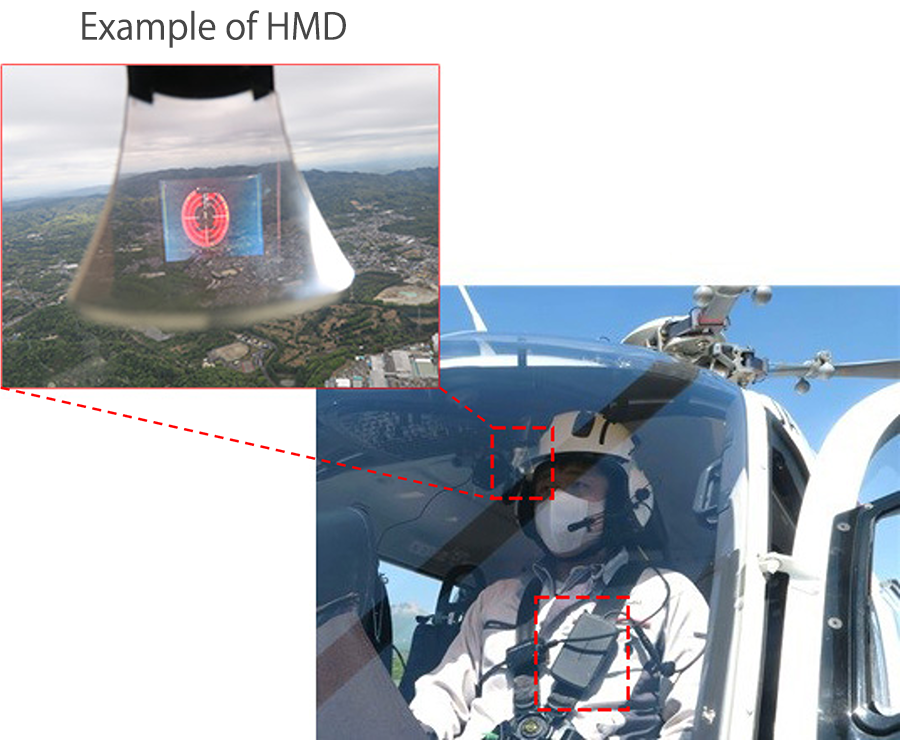
Photo: Crew member using the HeROSS
(for illustration purpose)
Features of the HMD using HeROSS
1. Color display with high brightness
The special Display Unit (hereafter referred to as “DU”) displays images with brightness so that they can be recognized even when the sky is clear. Even when the pilot is viewing the external scenery it is possible to recognize obstacle detection information within an 18° diagonal field of view. The brightness of the display can be adjusted with a Controller Unit.
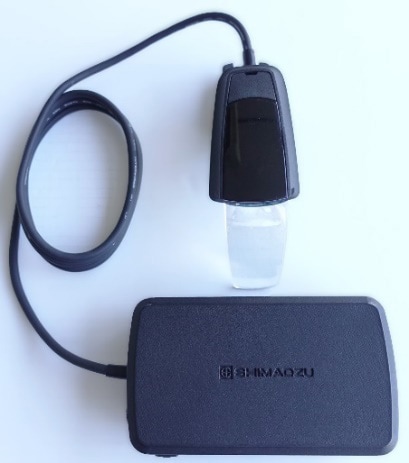
Photo: Display Unit and Controller Unit
2. Independent interface
The image input is wireless (complying with the IEEE802.11b, g, n specification), and power is supplied from a battery (2 hours continuous or more), so cable connections to external equipment are not required.
3. Compact and light, and can be retrofitted to helmets
The DU weighs less than 100 g, and it can be attached to and detached from the helmet with one touch via a mounting attachment. The wearer can move the DU to a position where the display is easily viewed, and when not needed can move the DU out of the field of view.
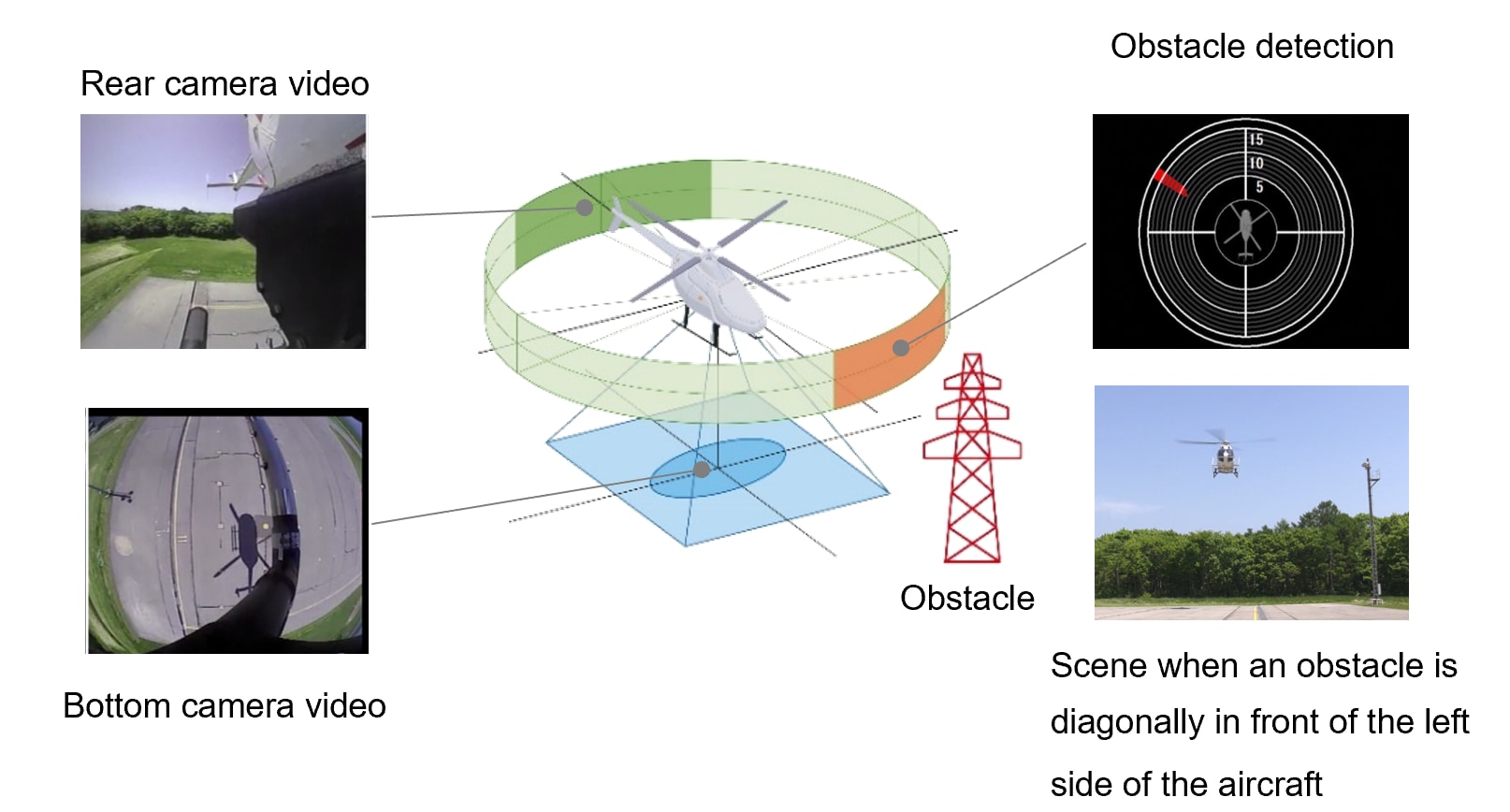
Concept Views of the HeROSS Helicopter Rescue Support System