



The Season Has Come for the Fresh Rice Crop! Measuring the Taste of Rice Using Light
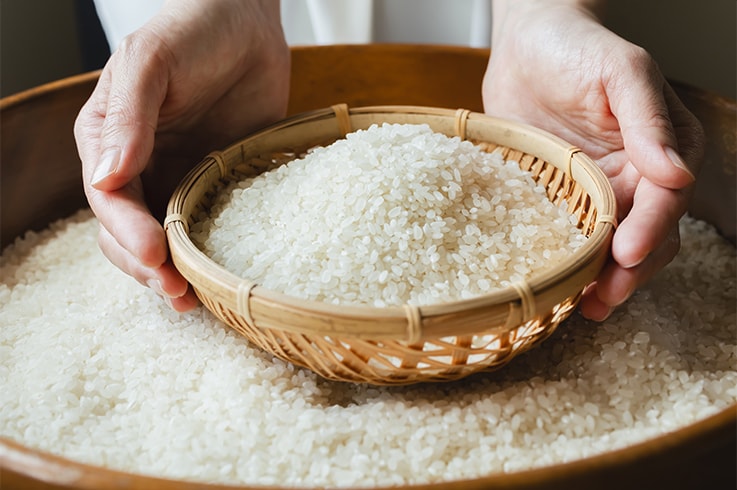
The Reiwa Rice Crisis: Since the summer of 2024, in Japan, the balance between the supply and demand for rice has been lost. Steep price jumps have continued, and rice has disappeared from the shelves of retail stores, thereby developing into a significant social issue. According to a bulletin from the Ministry of Agriculture, Forestry and Fisheries of Japan, the relative transaction price for rice produced in 2024 (per 60 kg of unpolished rice) was recorded at the high price of 24,751 yen. Between 2006 and 2023, the relative transaction price for rice ranged from 11,967 yen to 16,501 yen, and it is now nearly doubled.
This led many people to reflect on the taste of rice and their own preferences, when they came across different types of rice, including stockpiled rice and imported rice. In fact, there is a growing need to evaluate the taste and quality of rice, and to publicize this data.
The taste of rice can be indicated numerically using a taste evaluation system. At the heart of such a taste evaluation system, Shimadzu’s diffraction grating plays an important role.
Measuring the Taste of Rice with a Taste Evaluation System
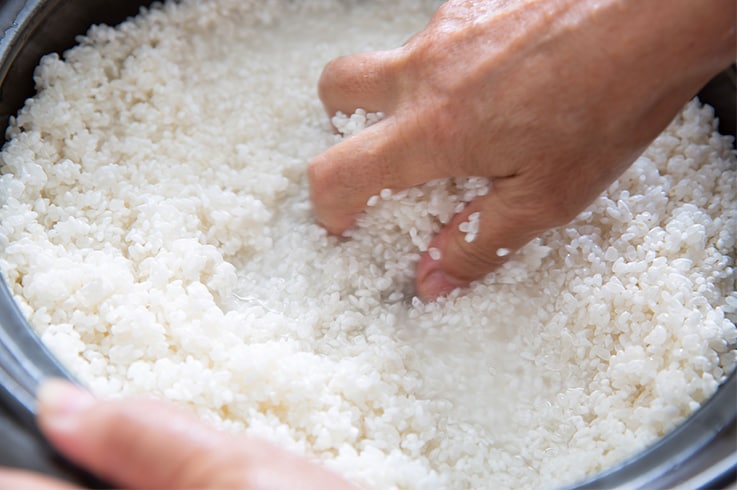
The taste of rice is evaluated using sensory examinations and physicochemical measurements that include flavor, aroma, color, stickiness, and hardness. A variety of factors have an impact, including the brand, the production region, the climate, cultivation methods, and polishing methods.
A taste evaluation system is an instrument that quantifies the taste of rice. These systems measure some of the components of rice, including moisture, amylose, and proteins, and output a flavor value on a scale of 0 to 100 calculated using a proprietary formula set by each manufacturer.
Near-infrared light (from approximately 750 to 1,000 nm) is utilized for the measurements taken by taste evaluation systems. When near-infrared light irradiates rice, part of the light is absorbed by each of the components, reducing the amount of light that passes through. The balance of components in the rice is evaluated by estimating the types and amounts of the components based on differences in these absorption quantities. Measurements only take a few dozen seconds, so these systems are utilized by many agricultural organizations.
Diffraction Gratings Disperse Light
In measurements such as this, dispersing the light by wavelength is essential for measuring the types and amounts of components in contact with the light. This is where Shimadzu’s diffraction grating plays a vital role.
Concave diffraction grating for monochromators
A diffraction grating is an optical device capable of dispersing light into its component wavelengths. A feature of such devices is that they seem to shine with the colors of the rainbow when viewed with the naked eye. The surface is etched with several hundred to several thousand tiny grooves per millimeter. When light strikes it, the light at each wavelength is diffracted at a characteristic angle, enabling the target wavelength to be selected through a process of constructive interference.
Measuring the Taste of Rice, Fruits, and Vegetables
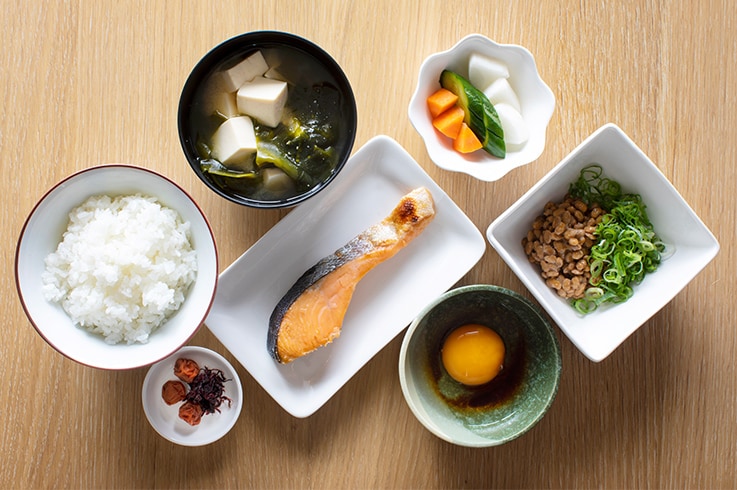
Shimadzu Corporation began manufacturing these diffraction gratings about 50 years ago. In addition to using them in our own analytical instruments, we provide them as parts that are indispensable for artificial satellites and various precision instruments. They can be used not only for measuring the taste of rice, but also for measuring the sugar content and acidity of fruits and vegetables. In this way, we are contributing to providing taste indices for use as evaluative materials when doing our daily shopping at the supermarket.
 Page Title and URL Copied.