



Toward Risk Management of Environmental Pollutants: Strategic Agreement Signed with China’s State Key Laboratory
Shimadzu (China) Co., Ltd. (SSL), a Shimadzu Group company, has entered into a strategic partnership with the State Key Laboratory of Environmental Criteria and Risk Assessment (SKLECRA), an organization affiliated with the Chinese Research Academy of Environmental Sciences (CRAES). The two parties aim to drive innovation in areas such as PFAS and microplastics, which demand increasingly advanced environmental risk management.
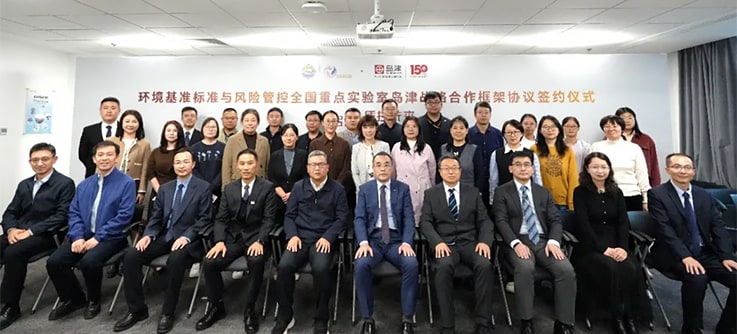
Addressing Environmental Challenges through Research and Technology
In recent years, PFAS and microplastics have become a global issue due to their environmental impact. In China, these substances have been designated for priority control and management in the “List of New Pollutants for Priority Control” published in 2022.
Under the agreement, the two parties will strengthen collaboration to identify, analyze, and monitor new pollutants, advance analytical methods, and establish standards and guidelines. By integrating the research expertise of the SKLECRA with Shimadzu’s analytical and measuring technologies, we aim to contribute to environmental risk management.
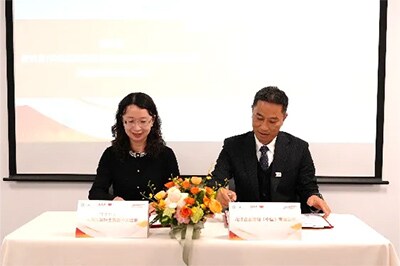
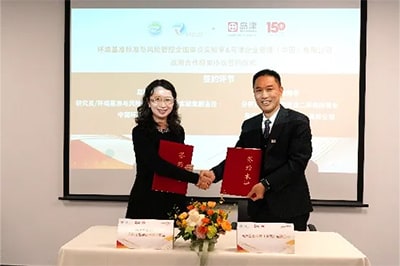
Representatives signing the agreement. Xiaoli Zhao, Deputy Director of the SKLECRA (left), and Jinghua Zhu, General Manager of Sales Department 2, Analytical & Measuring Instruments Division, SSL
Zhanjun Quan, Vice President of the CRAES—the parent organization of the SKLECRA—stated at the signing ceremony, “This signing marks a new starting point for deepening our cooperative relationship with Shimadzu.” Tongbin Wu, General Manager of the Analytical & Measuring Instruments Division, SSL, delivered remarks, noting that Shimadzu has consistently met societal needs through innovation, even in the face of increasingly complex challenges posed by new pollutants.
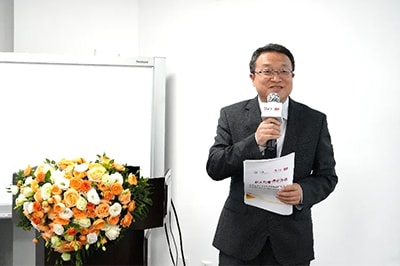
Zhanjun Quan, Vice President of the CRAES
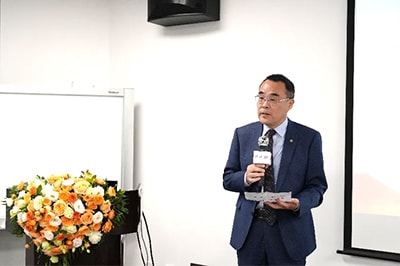
Tongbin Wu, General Manager, Analytical & Measuring Instruments Division, SSL
Contributing to Improved PFAS Analysis Efficiency
Following the signing ceremony, researchers from both organizations shared insights on new pollutants and their analytical methods. Yanli Guo of the SSL Innovation Center delivered a presentation titled “Typical Applications of Supercritical Fluid Chromatograph Mass Spectrometer (SFC-MS) in the Analysis of Complex Samples.”
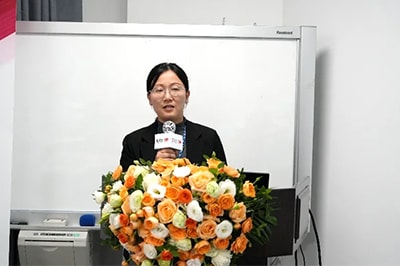
Yanli Guo, SSL Innovation Center
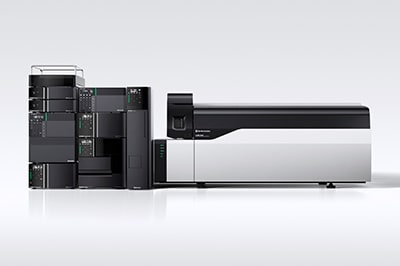
Example of an SFC-MS (Photo shows the Shimadzu Nexera UC SFC-MS system)
Environmental concerns regarding ultra-short-chain PFAS, which exhibit high mobility and persistence, have intensified, attracting attention from researchers worldwide. Guo discussed quantitative methods using the SFC-MS system to handle various complex samples, citing examples developed at SSL Innovation Center.
The samples analyzed using this method include not only conventional environmental samples such as water, soil, and air, but also biological samples and semiconductor-related materials. The excellent miscibility (how well two substances mix completely into one) between the supercritical carbon dioxide used in SFC and the sample solvent has significantly simplified the sample pretreatment process. This enables analysis using simple dilution alone, thereby improving throughput (the number of samples or amount of data that can be processed at a given time) in PFAS analysis. Supercritical fluid chromatography mass spectrometry is expected to become an important tool for the detection and screening of new pollutants.
Shimadzu Group will continue to take on the challenge of realizing people's wishes and contributing to society.
Related Links
- Joint Establishment of the UCAS-SHIMADZU Environmental Health Innovation Center with the University of Chinese Academy of Sciences | SHIMADZU TODAY
- Promoting Biomass Energy Research with Ties between Industry and Academia: Establishment of a Collaborative Laboratory with South China Agricultural University | SHIMADZU TODAY
 Page Title and URL Copied.