



Safe Childhood: Protecting Children’s Lives Through Improved Pharmaceutical Safety
Cough syrups are widely used to relieve coughs and sore throats in children. In recent years, there have been reports from around the world of fatalities among children who took medicines contaminated with toxic substances. The India sales team at Shimadzu (Asia Pacific) Pte Ltd. (hereafter, SAP), based in Singapore, is working on the Safe Childhood project, which aims to improve pharmaceutical safety through analytical technology.

Medicines Contaminated with Toxic Substances
Cough syrups often contain sweeteners to make them easier for children to take and can also be useful in treating children’s illnesses. According to the World Health Organization (WHO), there have been reports since 2022 from countries around the world of fatal cases involving children who took cough syrups contaminated with toxic substances. At least 300 child fatalities are believed to have occurred between 2022 and 2023.
The substances at issue were toxic chemicals known as ethylene glycol (EG) and diethylene glycol (DEG). These chemicals are used in the manufacture of paints and adhesives and in automotive coolant (antifreeze), and are toxic to humans. Even small amounts can pose a serious health risk if they contaminate pharmaceutical raw materials.
When Cheh Wei Keong of SAP’s India sales team learned about the situation, he became concerned and began thinking about how such incidents could be prevented. “I was concerned that medicines intended to treat people had resulted in fatalities among children. At the same time, I thought these incidents could be prevented through stricter quality control and reliable analytical testing.” This led him to launch the Safe Childhood project to help protect children from toxic substances.
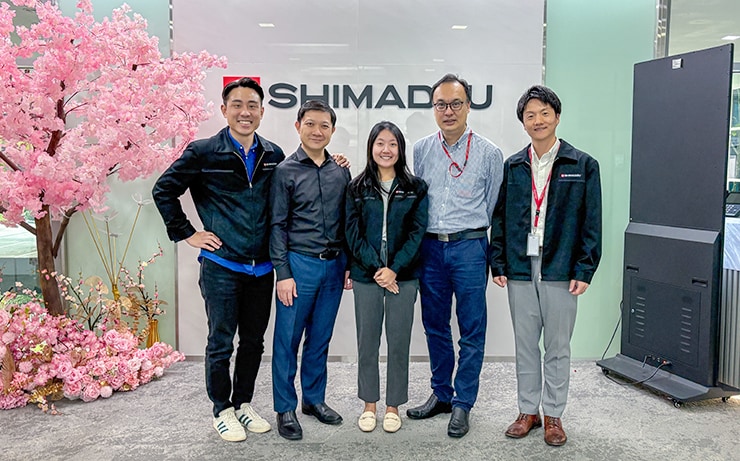
Members of SAP’s India sales team working on the Safe Childhood project. Cheh is the second from the left
Improving Safety through Analytical Technology
Through Safe Childhood, SAP’s India sales team worked to promote the use of gas chromatographs capable of detecting toxic substances in India’s pharmaceutical industry, with the aim of strengthening pharmaceutical quality control. Gas chromatographs can detect and quantify toxic substances such as EG and DEG with high sensitivity and accuracy. They help ensure safety through testing raw materials before manufacturing and checking the quality of the final product, cough syrup. Application solutions for EG and DEG analysis using the Nexis GC-2050 are also available on the SAP website (in English only).
Introduction video for the Nexis GC-2050 gas chromatograph
Working with distributors in India, the team also held seminars and application demonstrations for customers with whom it had not previously been in contact. The team explained the risks of EG and DEG contamination and showed how to incorporate testing for these substances into routine analytical work. This led more than 80 pharmaceutical companies in India to adopt EG/DEG analysis solutions using Shimadzu gas chromatographs. This project received the First a Dream Award, an in-house award within the Shimadzu Group that recognizes employees who proactively take on challenges driven by their dreams and aspirations.
Comment from SAP’s Cheh
Through Safe Childhood, we have explained to our customers that the project is about more than regulatory compliance. It is also an important part of our corporate social responsibility (CSR) activities. Strengthening quality control systems requires companies to invest additional resources. However, with the understanding and support of our pharmaceutical industry customers, we were able to help many of them implement EG/DEG analysis solutions.
When I learned that we had received the First a Dream Award, I felt extremely honored and grateful. I believe that, rather than simply recognizing the project itself, the award recognizes the importance of using science, technology, and quality assurance to help protect children’s lives. This achievement was made possible not only by our team, but also by our distributors, technical specialists, and customers, who share our commitment to patient safety.
Ultimately, our goal is to prevent any loss of life caused by preventable contamination incidents. Through the Safe Childhood project, we hope to help raise quality and safety standards across the pharmaceutical industry for future generations.
 Page Title and URL Copied.