



Environmental Management through Dialogue with Stakeholders
Engaging in Dialogue to Help Build a Better Society
Shimadzu Corporation’s Global Environmental Management Department is responsible for planning and promoting the Shimadzu Group’s overall environmental strategy and supporting the environmental initiatives of each business division.
To integrate responses to environmental issues into our business, we must do more than pursue initiatives internally. We must also understand what society expects of companies and which issues it considers important.
For this reason, we engage in ongoing dialogue with a wide range of stakeholders, including universities, industry associations, and companies. Through these opportunities, we share our approach to environmental management and our initiatives, while also using questions and feedback from participants to improve our activities and the way we communicate them.
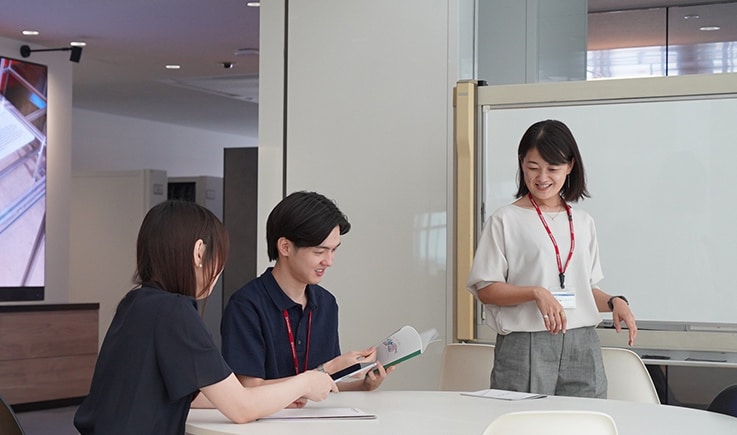
Students’ Questions Reveal an Interest in Putting Ideas into Practice
Since 1988, Shimadzu Corporation has been sharing information on environmental issues with universities, industry associations, companies, and other organizations. Today, we introduce our approach to environmental management and our initiatives through around 10 lectures and seminars each year. In June 2026, we gave a lecture at the School of Law at Waseda University for students studying environmental law, as well as a lecture as part of a general course offered by the School of Law.
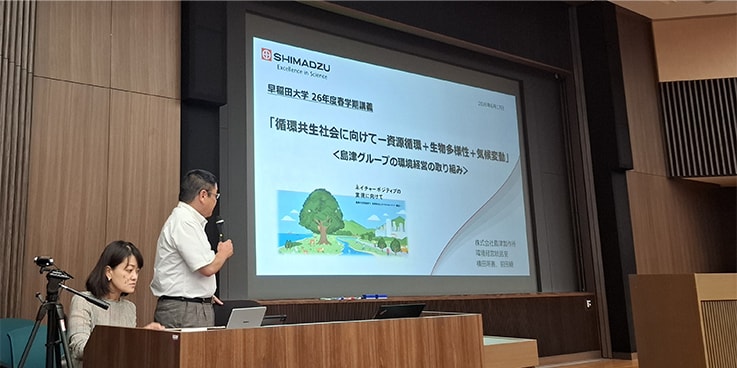
Lecture at Waseda University
Under the theme “Toward a Circular and Symbiotic Society,” the lecture introduced Shimadzu Group’s approach to environmental management and specific initiatives from three perspectives: resource circulation, biodiversity, and climate change.
During the question-and-answer session, we received many questions about how to go beyond setting environmental targets and translate them into action on the ground and incorporate them into business processes. For example, one question was: “How do you communicate ambitious environmental targets, such as those under the Eco-First System (a program through which Japan’s Ministry of the Environment recognizes companies for their advanced environmental initiatives), throughout the organization and turn them into changes in behavior?” In response, the lecturer explained: “Communicating environmental targets throughout the organization is not easy. At Shimadzu, policies are established at our environmental management meetings, chaired by the President, and shared with all employees. We then incorporate these policies into departmental policies and individual goals, linking them to day-to-day work in order to foster lasting environmental awareness.”
We also received many questions about the circular economy, in which resources are kept in circulation rather than being discarded after use. For example, participants asked how we make circular business models based on leasing and refurbishment (products restored through repair and maintenance by the manufacturer) commercially viable, and whether regulations can be a barrier to commercialization.
What these questions had in common was an interest not only in “what we are doing,” but also in “how we put those initiatives into practice and make them commercially viable.” This demonstrated a strong interest in viewing corporate environmental activities not simply as contributions to society, but in relation to corporate management and business operations.
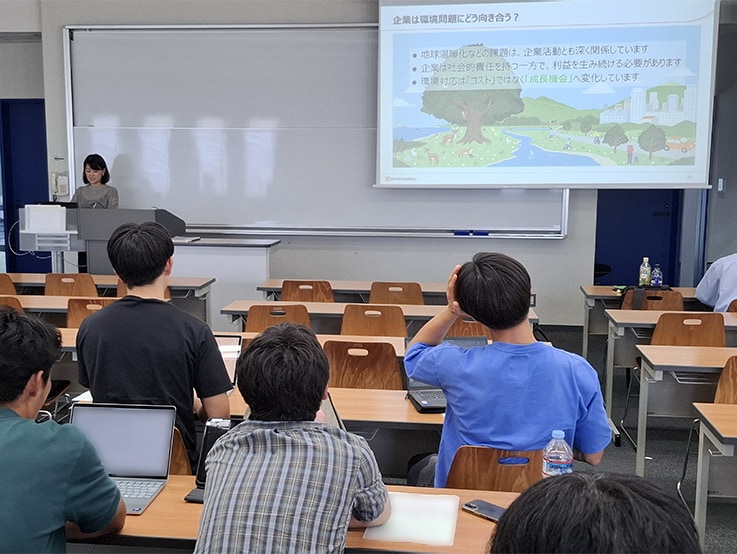
A scene from a university lecture
Turning Dialogue into Further Action
In addition to Waseda University, Shimadzu Corporation shares information and exchanges views on environmental management in a variety of settings, including lectures at universities in Kyoto, study sessions organized by the Kyoto Industrial Association and industry organizations in the electrical and electronics sectors, and seminars for companies.
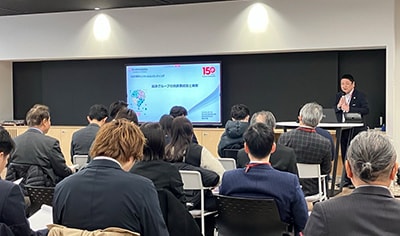
A study session at an industry association
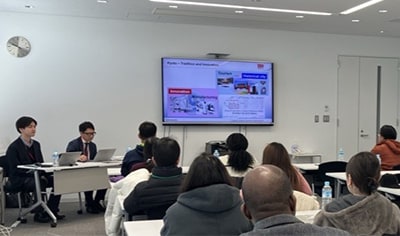
A seminar for international participants
These opportunities for dialogue provide valuable insight into changes in what society expects companies to explain and what it expects of them. After lectures and presentations, we share questions and feedback from participants with the relevant departments and use them to review the information we provide and consider new environmental management policies.

Members of the Global Environmental Management Department reviewing and sharing the content of communications
Going forward, Shimadzu will continue to listen to the voices of society through dialogue and incorporate new perspectives and insights into our environmental management initiatives.
Comment from the Person in Charge
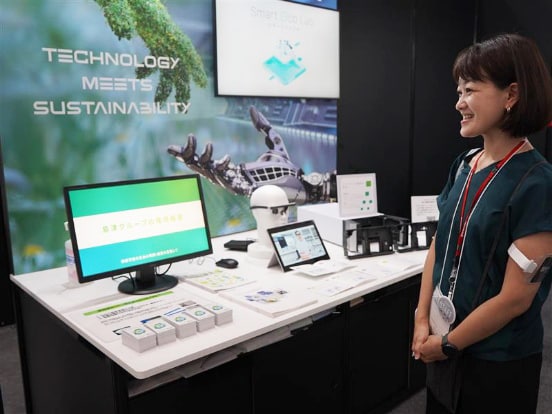
During these lectures, in addition to explaining our approach to environmental management, we introduced how analytical and measurement technologies can help identify and address environmental issues.
One student commented, “I was reminded that addressing environmental issues requires not only a guiding philosophy, but also scientific evidence and technological expertise.” This made me realize once more how important it is to communicate the role that Shimadzu technology plays.
We will continue working to improve our environmental management while engaging in dialogue with a diverse range of stakeholders.
 Page Title and URL Copied.