Py-Screener Ver.3 - Features
NEWScreening System for Phthalate Esters, Brominated Flame Retardants and Other Regulated Substances
-
Easy to Operate Even for Novices
-
Testing System Complying with the RoHS Directive
-
Simultaneous Inspections for Phthalate Esters and Integrated Guard Column Brominated Flame Retardants (Total of 20 PBBs and PBDEs)
-
Support for High-Speed Simultaneous Testing of Phthalate Esters and Brominated Flame Retardants (22 Minutes)
-
High Durability Columns Dedicated for Py-Screener
-
Phthalate Ester Screenings in Accordance with the European REACH Regulation
-
Support for Compounds Regulated under the US TSCA and the POPs Convention
Easy to Operate Even for Novices
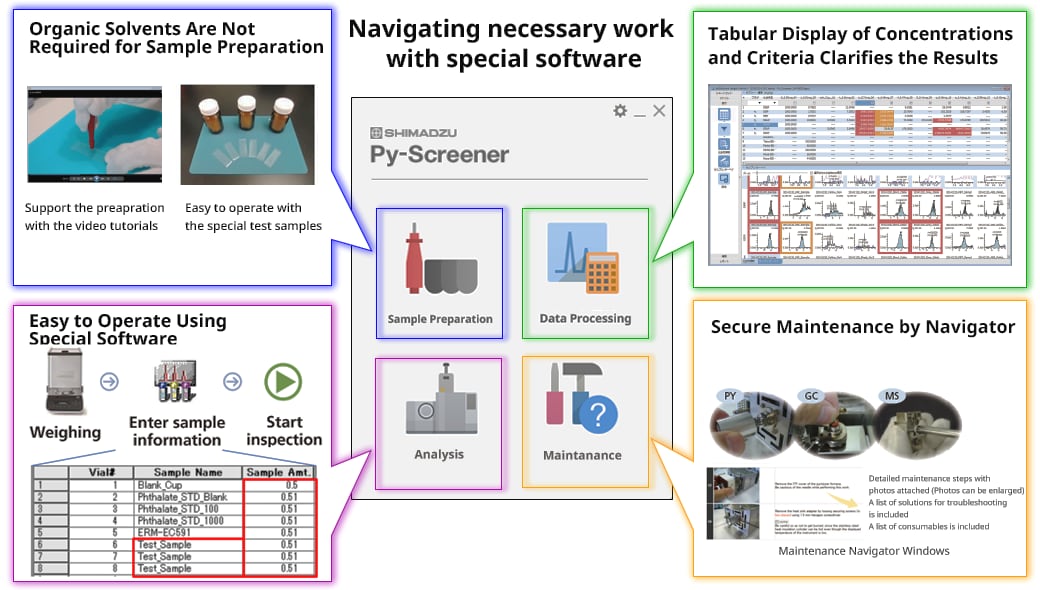
This screening system consists of a sampling toolkit, special standards, and special software and can be easily operated even by novices.
-
Sample Preparation Video
The sample preparation videos can be viewed on smart devices by accessing them here. Login to the members-only site, MySHIMADZU, is required. If you have not yet registered as a member, please complete a new registration here.
-
Testing System Complying with the RoHS Directive
The Py-Screener Ver. 3 supports simultaneous analysis of phthalate esters in accordance with the international analytical standard IEC 62321-8, and simultaneous analysis of phthalate esters and brominated flame retardants in accordance with IEC 62321-3-3. In addition, by using a high-durability column (manufactured by Shimadzu Corporation), high-speed simultaneous analysis of phthalate esters and brominated flame retardants is enabled.
Simultaneous Inspections for Phthalate Esters and Integrated Guard Column Brominated Flame Retardants (Total of 20 PBBs and PBDEs)
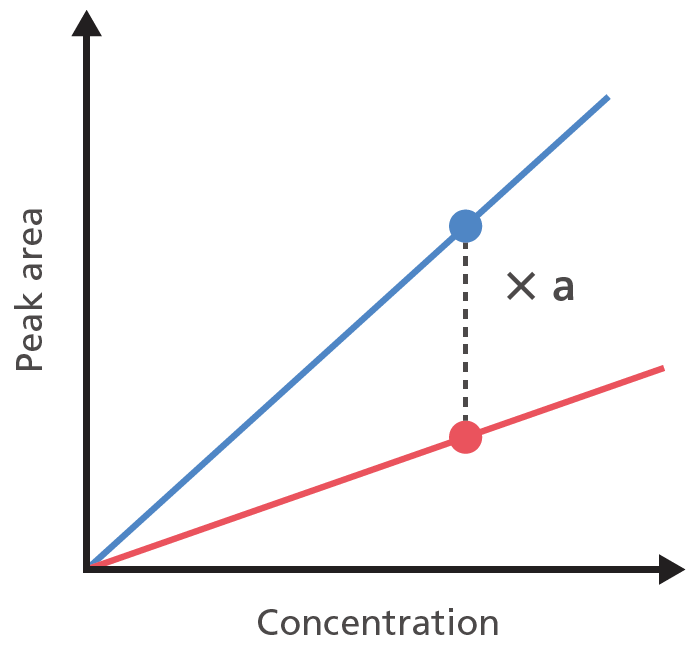
The system can perform batch inspections for phthalate esters and a total of 20 PBBs and PBDEs with between 1 and 10 bromine atoms. Using the correction factor database, the software can automatically create calibration curves for substances not included in the standard sample, based on the calibration curve information for substances contained in the measured standard sample, and calculate the concentrations of all of the above substances. It is possible to perform detailed RoHS inspections, by comprehensively testing for phthalate esters, PBBs, and PBDEs, which are regulated under the RoHS Directive.
-
1. Calibration curve for compounds (substitute compounds) included in the standard samples
2. Multiply the calibration curve of the standard compounds by the sensitivity factor a
3. Calibration curve calculated for compounds not included in the standard samples
Equipped with the correction factor database function, which registers the area ratio information of the compounds (substitute compounds) included in the standard samples and the compounds not included in the standard samples. A wide range of compounds can be quantified just with standards samples for some compounds.
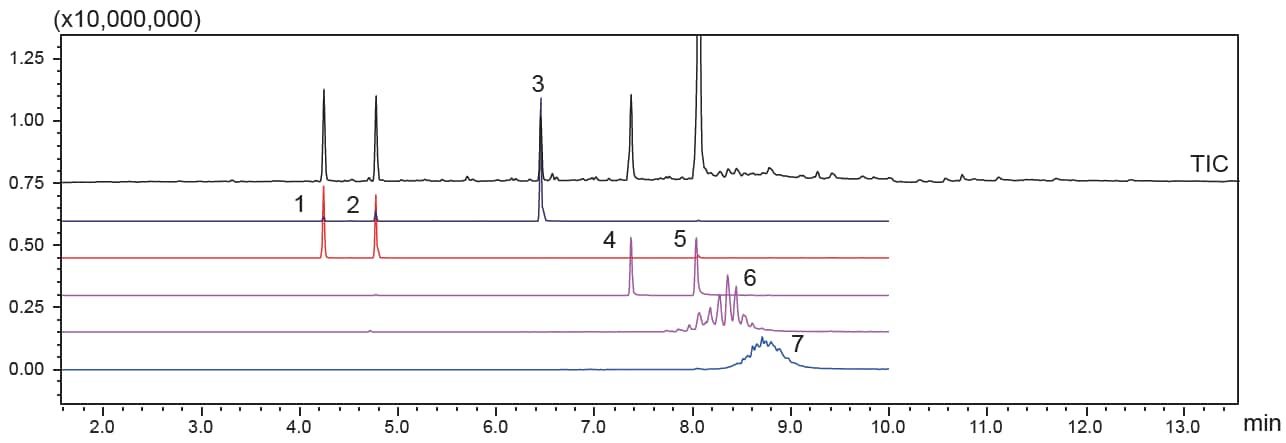
Inspection results for 7 phthalate esters
(DIBP, DBP, BBP, DEHP, DNOP, DINP, and DIDP)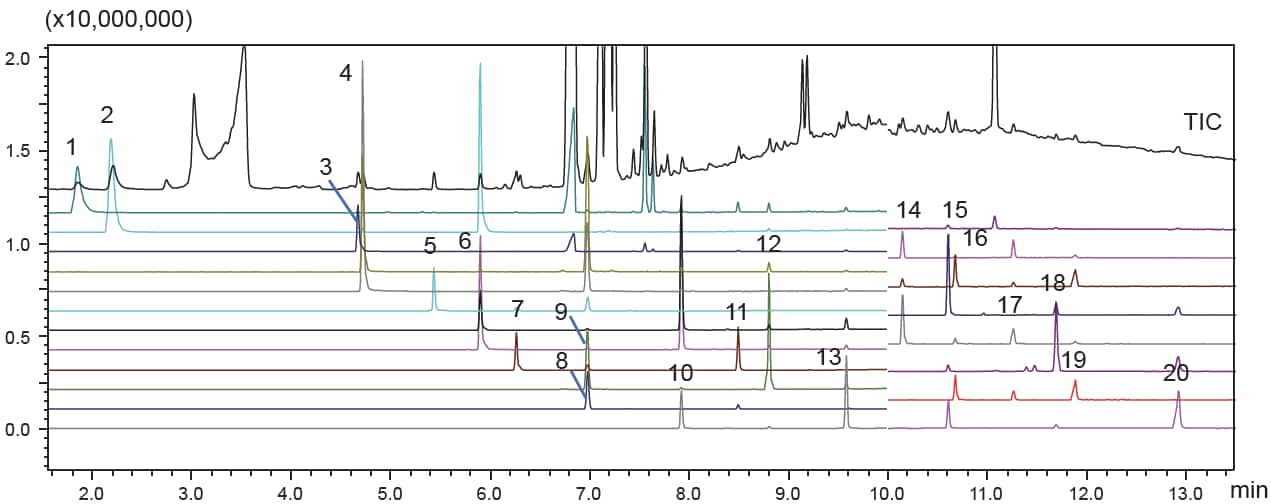
Inspection results for PBBs (total of 10 with 1 to 10 bromine atoms) and
PBDEs (total of 10 with 1 to 10 bromine atoms)
Support for High-Speed Simultaneous Testing of Phthalate Esters and Brominated Flame Retardants (22 Minutes)
The testing time for phthalate esters and brominated flame retardants can be greatly reduced by the high-speed simultaneous testing method. Both productivity and reliability can be achieved for testing of a wide range of regulated compounds.
Note: This edition also includes the conventional (35 minute) simultaneous inspection method for phthalate esters and brominated flame retardants, and an inspection method compatible with high-speed screening exclusively for phthalate esters.
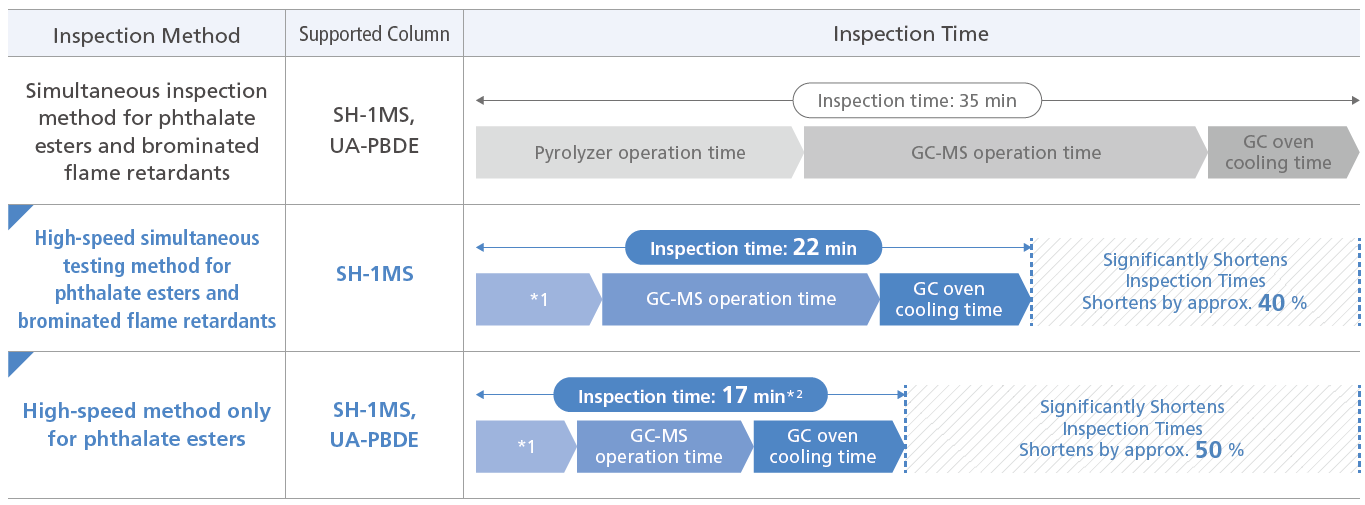
*1 Pyrolyzer operation time
*2 For UA-PBDE column. 19 min for SH-1MS column.
High Durability Columns Dedicated for Py-Screener
A high-durability column (with SH-1MS guard column) (manufactured by Shimadzu Corporation) extends the column’s life, and reduces maintenance and running costs. This is ideal for customers with high inspection frequency.
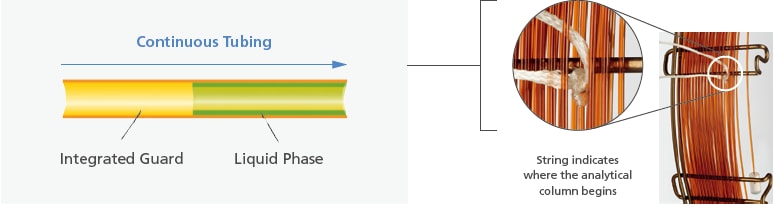
Integrated Guard Column
The analysis column and guard column are integrated. The analysis column is shipped with a guard column attached, eliminating the risk of leaks at the connections and preventing adsorption or decomposition of target substances.
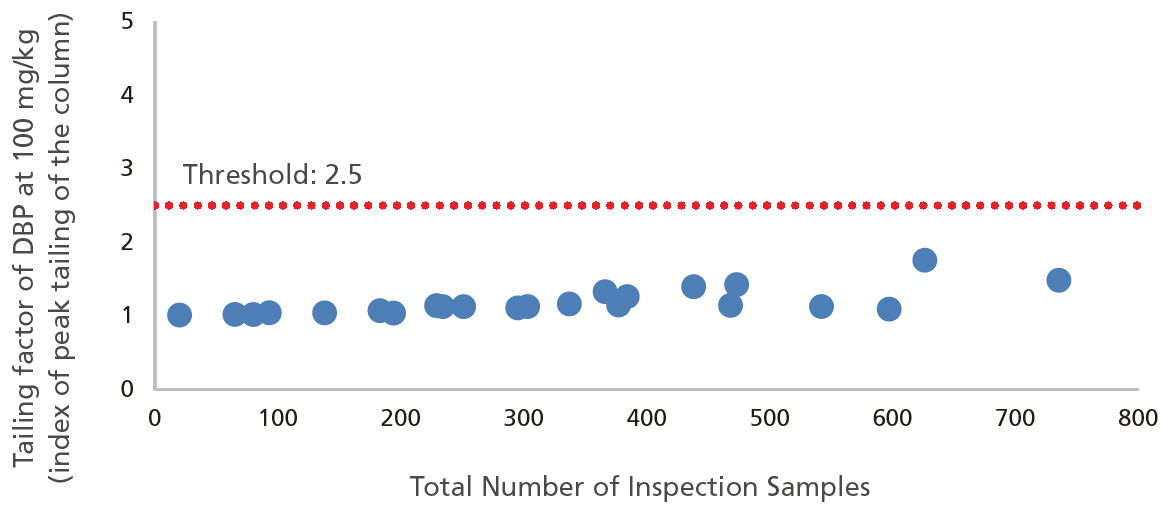
Results of a durability test using the high-durability column (SH-1MS with integrated guard column)
Phthalate Ester Screenings in Accordance with the European REACH Regulation
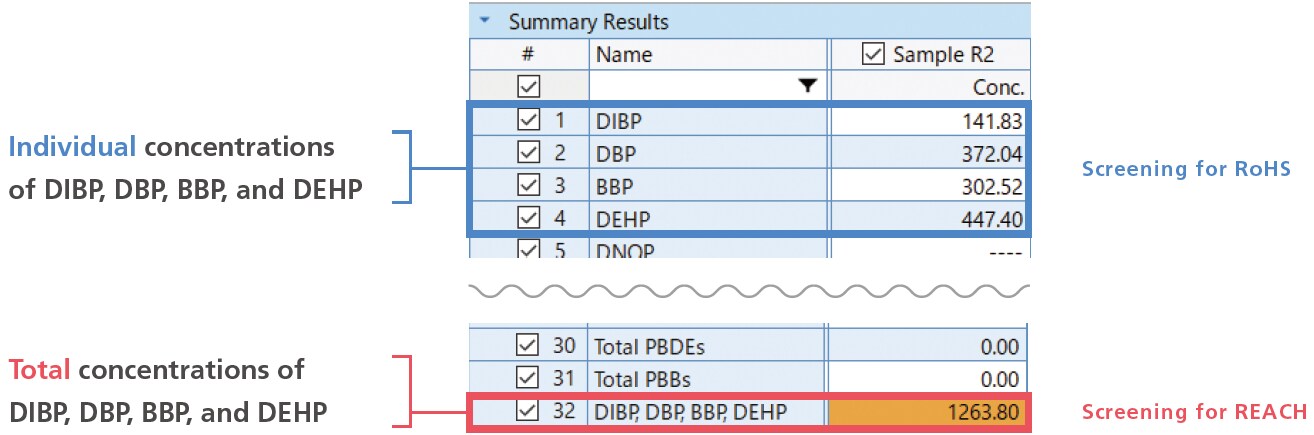
Since 2020, under the European REACH Regulation, the same 4 phthalate esters (DIBP, DBP, BBP, and DEHP) regulated under the RoHS Directive have become regulated in a wide range of molded items including toys and childcare articles. Under the REACH Regulation, regulatory concentration values are established with respect to individual concentration values and total calculated concentration values, which means that this regulation must be managed differently than the RoHS Directive. This system is capable of automatic screening determinations with respect to the total calculated concentration of these 4 phthalate esters. Py-Screener Ver. 3 can also be used for phthalate ester inspections to support compliance with the REACH Regulation.
Support for Compounds Regulated under the US TSCA and the POPs Convention
In addition to phthalate esters and brominated flame retardants, the Py-Screener Ver. 3 enables simultaneous analysis of various regulated compounds. The system can screen for PIP (3:1) and Deca-BDE, which are regulated under the US TSCA, as well as UV-328, Dechlorane Plus (DP), and short-chain chlorinated paraffins (SCCPs) and medium-chain chlorinated paraffins (MCCPs), which are regulated under the POPs Convention.
Support for PIP (3:1) Regulated under the US TSCA
PIP (3:1), which is regulated under the US TSCA, is defined as a phosphate compound containing 3 phenyl groups, at least one of which is isopropylated, with numerous isomers and congeners. Using Py-Screener Ver. 3, complex PIP (3:1) tests can be screened simply and with high accuracy using patented technology. For quantitation of PIP (3:1), the concentration can be calculated from the relative sensitivity coefficient with DEHP in a phthalate ester standard sample, so preparation of a standard sample is not required.
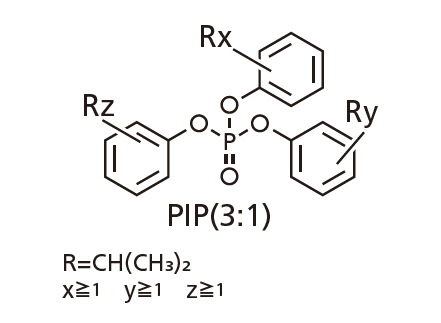
PIP (3:1) Structural Formula
-
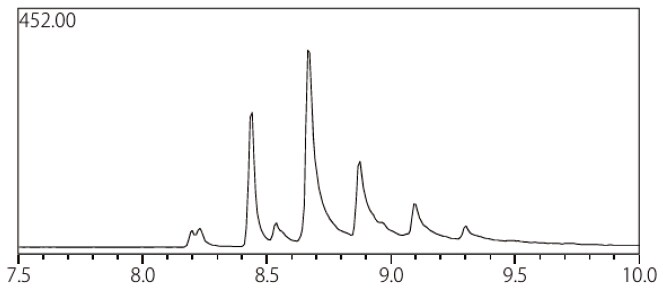
PIP (3:1) Analysis Results
Support for UV-328 and DP Regulated under the POPs Convention
UV-328 and DP are highly persistent and bioaccumulative, so there are concerns regarding their effect on the environment. They are listed in Annex A (Elimination) of the POPs Convention.
In the case of DP, peaks are detected for their syn- and anti-stereoisomers. Py-Screener Ver. 3 can easily screen for such compounds by combining the peaks of stereoisomers. Also, the concentrations of UV-328 and DP can be easily calculated using the relative sensitivity coefficient with DEHP in the phthalate ester standard sample. This method improves the efficiency of the analytical process by eliminating the need for preparation of UV-328 and DP standard samples.
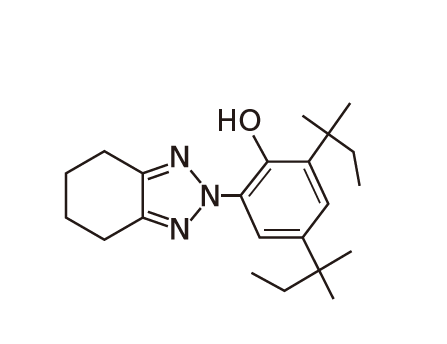
UV-328
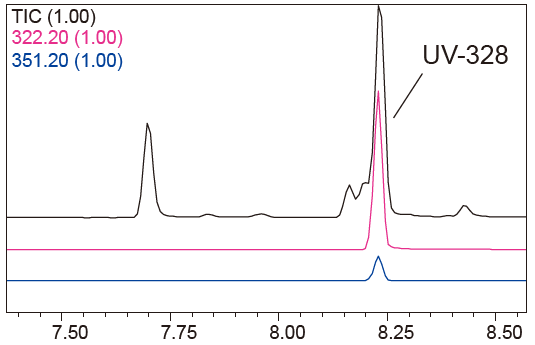
UV-328 Analysis Results
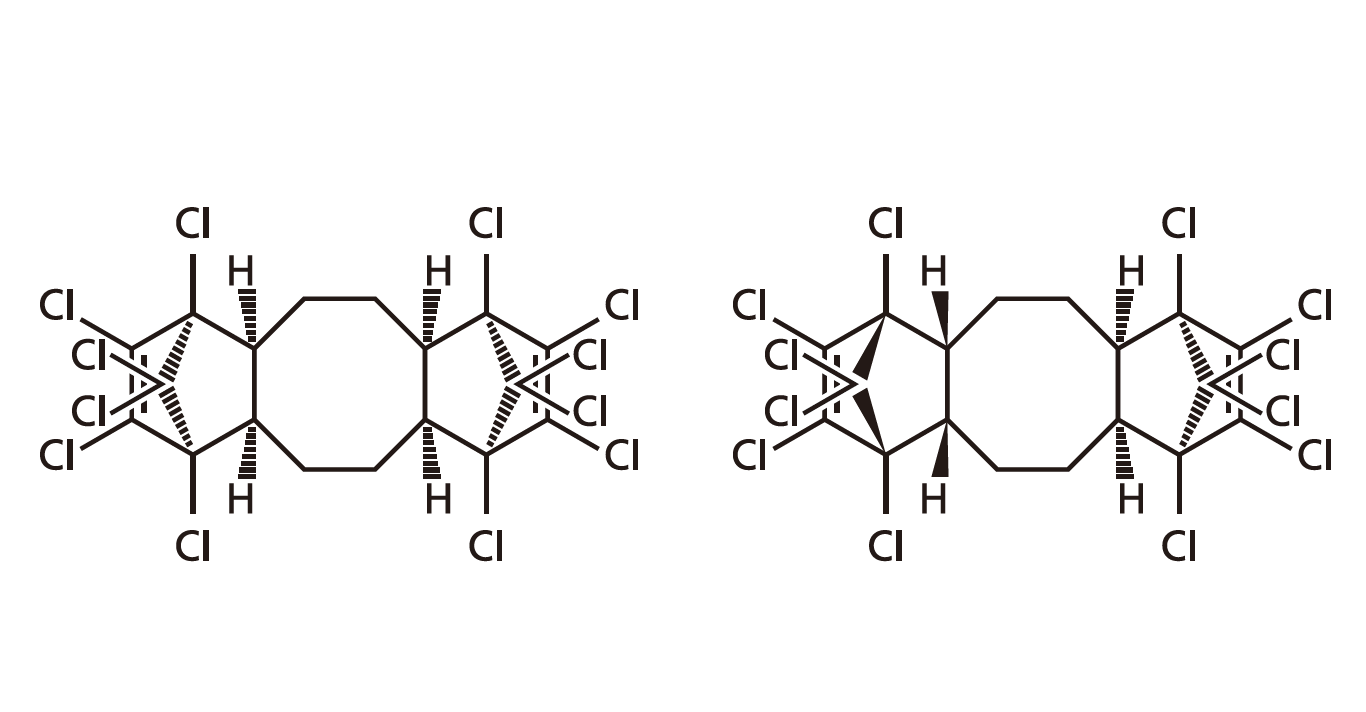
Syn-DP Anti-DP
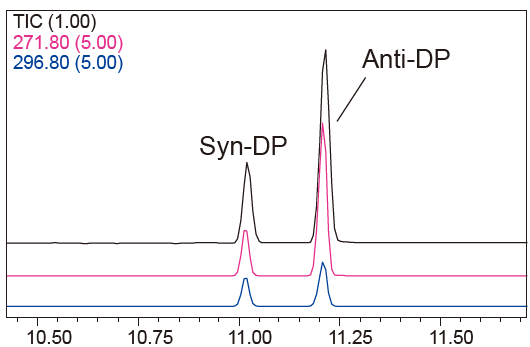
DP Analysis Results
Support for SCCPs/MCCPs Regulated under the POPs Convention
SCCPs/MCCPs are designated as substances subject to elimination under Annex A of the POPs Convention due to their persistent, highly bioaccumulative, and toxic properties. SCCPs/MCCPs are normally analyzed by negative ion chemical ionization (NCI), because they have many isomers. However, with the Py-Screener Ver. 3, analysis can be performed by the electron ionization (EI) method, enabling simultaneous analysis with other regulated compounds. Also, flammable gas is not required. Similarly, the concentration can be calculated from the relative sensitivity coefficient with DEHP in a phthalate ester standard sample, allowing quantitation without preparing an additional standard sample*1.
*1 Py-Screener Ver.3 detects and quantitates SCCPs and MCCPs. It does not differentiate between individual compounds and quantifies them as a sum (SCCPs/MCCPs ). However, long-chain chlorinated paraffins (LCCPs) may be detected as SCCPs/MCCPs if present.

Left: Example of SCCPs Molecular Formula C12H21Cl5
Right: Example of MCCPs Molecular Formula C14H24Cl6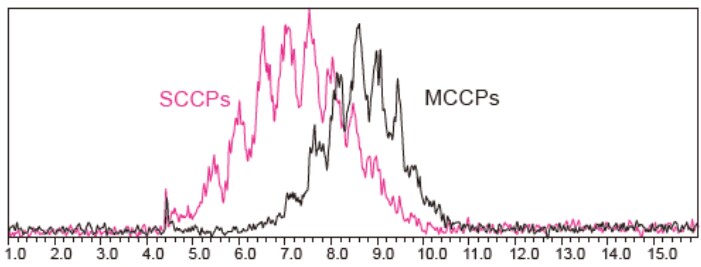
Analysis Results for SCCPs/MCCPs
Enables Simultaneous Analysis of Regulated Compounds in Accordance with the
RoHS Directive, US TSCA, and POPs Convention
PIP (3:1), UV-328, DP, and SCCPs/MCCPs can be analyzed together with phthalate esters and brominated flame retardants*². The efficiency of analysis operations can be improved by testing multiple compounds simultaneously.
*2 This is not compatible with the high-speed simultaneous testing method.
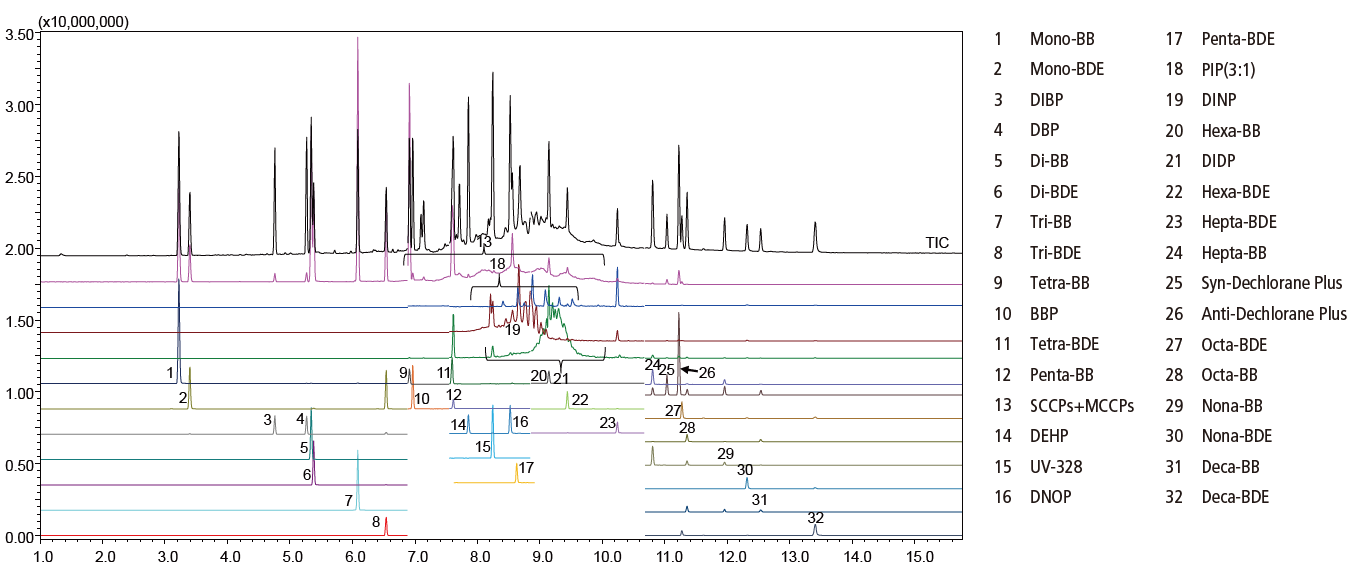
Simultaneous Analysis Results for Phthalate Esters, Brominated Flame Retardants, PIP (3:1), UV-328, DP, and SCCPs/MCCPs
Support for Detection of Regulated Compounds in Actual Test Samples
-
Py-Screener Ver. 3 includes an Analysis Handbook with many examples of GC-MS analysis using actual test samples. The collection includes analyses of target compounds such as PIP(3:1), DP, and SCCPs/MCCPs, featuring complex chromatograms unique to real samples and not obtainable from standard samples. Real samples contain a wide variety of compounds, so the chromatograms are more complex and are relevant to actual analysis situations. This Analysis Example Collection can be used for hints and as reference material for daily analysis work. In case of difficulty with peak separation and identification, these practical examples can help with the analysis.
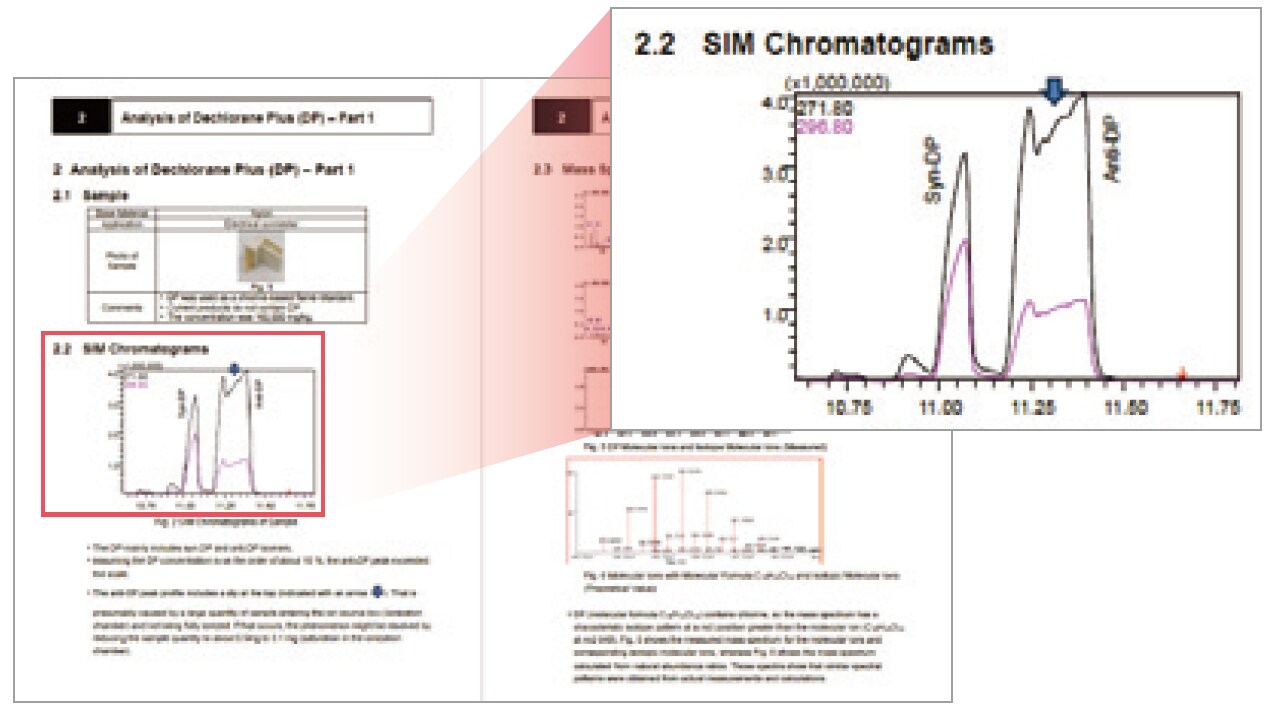
Example of Analysis Handbook
Downloads
Download the latest brochure.