


VGA-100/ VGA-101 - Applications
Gas Chromatography Detector

Most of the documents on the LITERATURE is available in PDF format. You will need Adobe Acrobat Reader to open and read PDF documents. If you do not already have Acrobat Reader, you can download it free at the Adobe's Website. Click the GET ADOBE READER icon on the left to download a free copy of Adobe Acrobat Reader.
PIONA Analysis ASTM D8071
-
The chromatogram below was obtained by a reformulated gasoline sample that contains over 300 individual compounds. This sample was acquired using a 30-meter, non-polar PDMS column with a runtime of 34 minutes. While it is not obvious by looking at the chromatogram, there are several co-eluting compounds that make it difficult to analyze using traditional retention time approaches.
Powerful Deconvolution Function
GC-VUV is a three-dimensional technique, where data is acquired on three axes – time, absorbance, and wavelength. As a result, each compound has a unique spectral shape. Additionally, the individual spectra from compounds in a given class share similar shapes. This is significant because the class-based spectra can be combined to provide accurate class-based analysis that is required for PIONA.
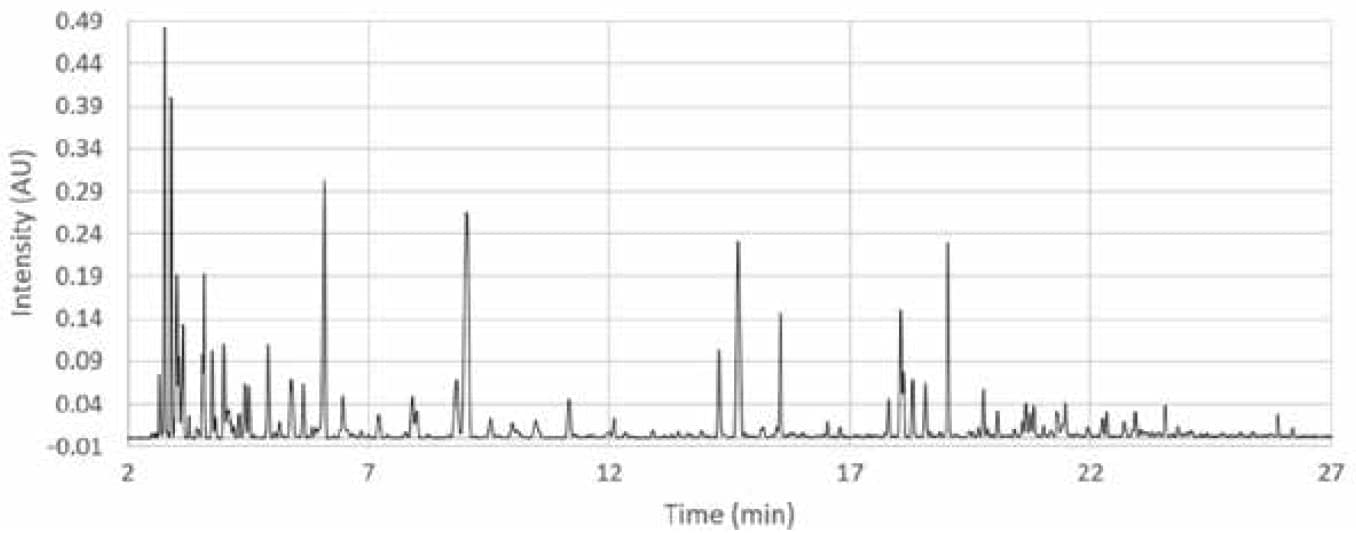
The chromatogram of a reformulated gasoline sample
After VUV Analyze Software completes the carbon number and class categorization of the components within the sample, an automated calculation determines the mass percent and volume percent makeup. The result is a carbon number breakdown table based on compound class.
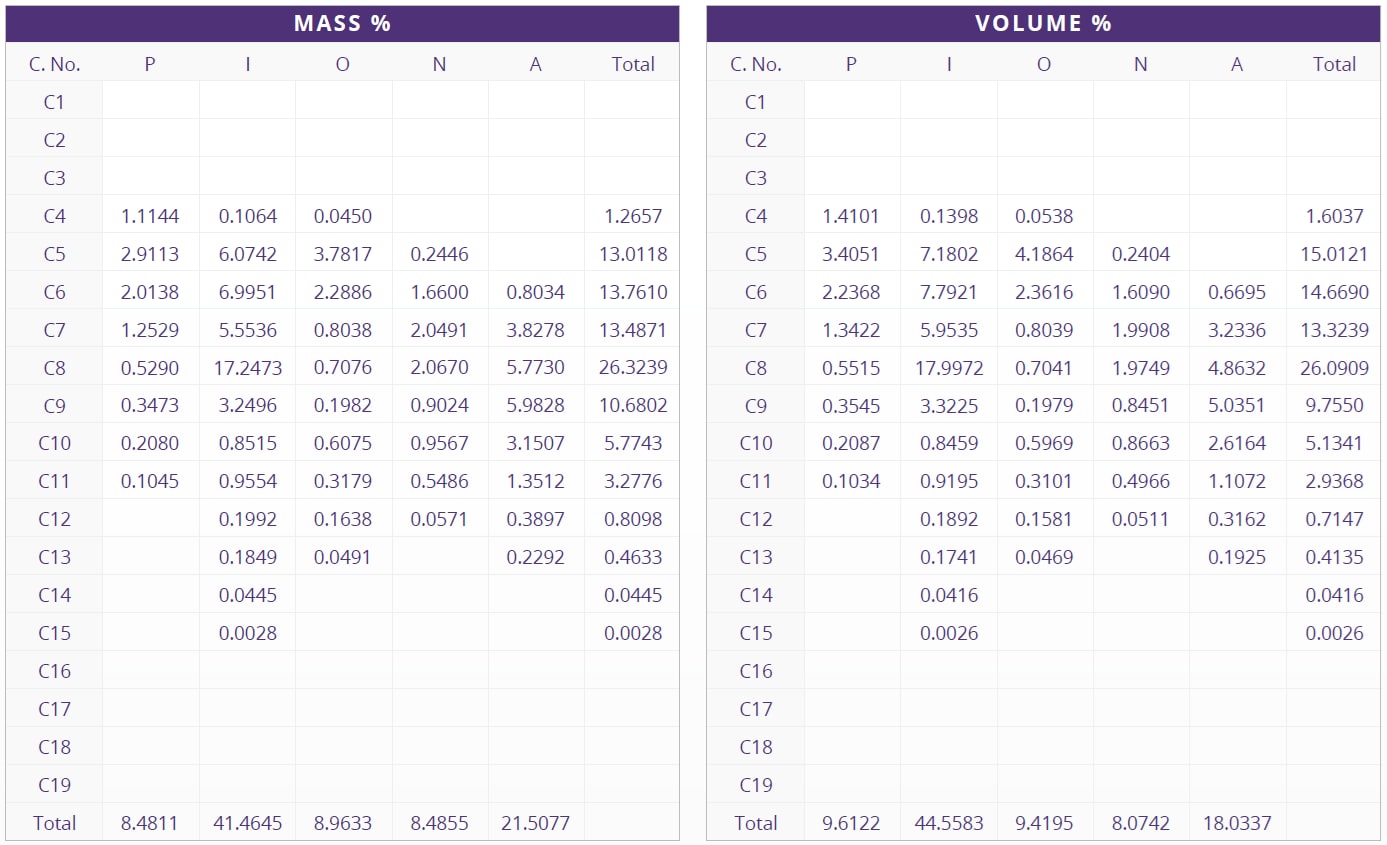
ASTM D8071 results are presented in an easy-to read table showing carbon number and class breakdown
Aromatics analysis in jet fuels ASTM D8267
This method can be used to quantify total saturates and total aromatics; additionally, monoaromatics and diaromatics are distinguished and quantified.
No sample preparation or system calibration is required for analysis. Samples are characterized in a simple 14-minute run, and fully automated data processing is achieved using spectral matching.
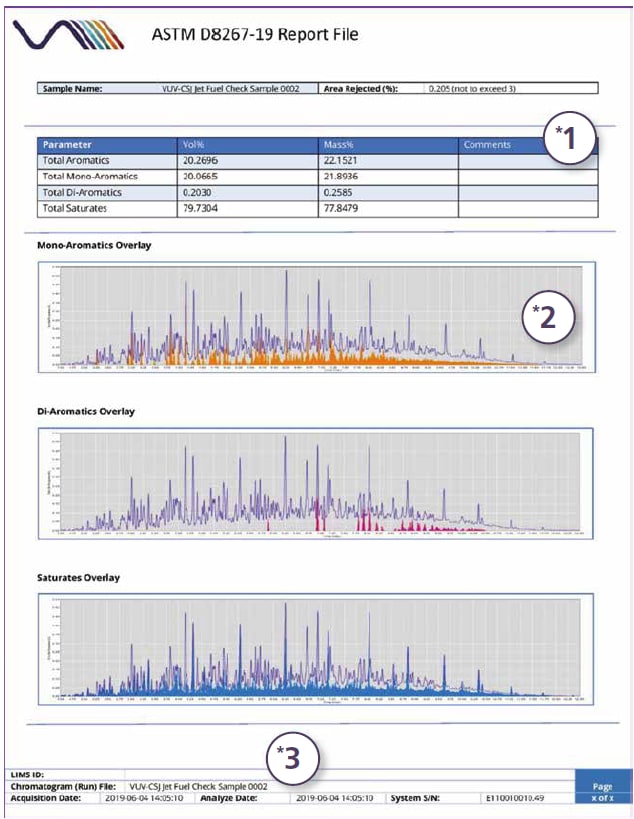
*1. Results are easy to interpret with no room for ambiguity.
*2. Chromatogram overlays are provided for visual distinction of saturate, monoaromatic, and diaromatic content.
*3. Detailed acquisition information is provided for analysis traceability.
PAHs, FAME analysis in diesel fuels ASTM D8368
The combustion properties of diesel fuel and the resulting emissions from their consumption is greatly influenced by the percentage of aromatic hydrocarbons that are present in the diesel fuels. As a result, measuring the aromatic content of diesel fuels is important not only to determine the quality of the fuel from a manufacturing standpoint, but also to comply with environmental regulations for air quality and emissions.
While it is important to measure aromatic hydrocarbons, modern diesel fuels are often blended with as much as 20% (B20) biodiesel. As a result, it is also important to measure the fatty acid methyl esters (FAMEs) content to ensure compliance with current diesel fuel specifications.
The VUV Analyzer Platform achieves both qualitative and quantitative analysis of total aromatics, polyaromatic hydrocarbons (PAHs), and fatty acid methyl esters (FAMEs) using a single-injection, automated technique.
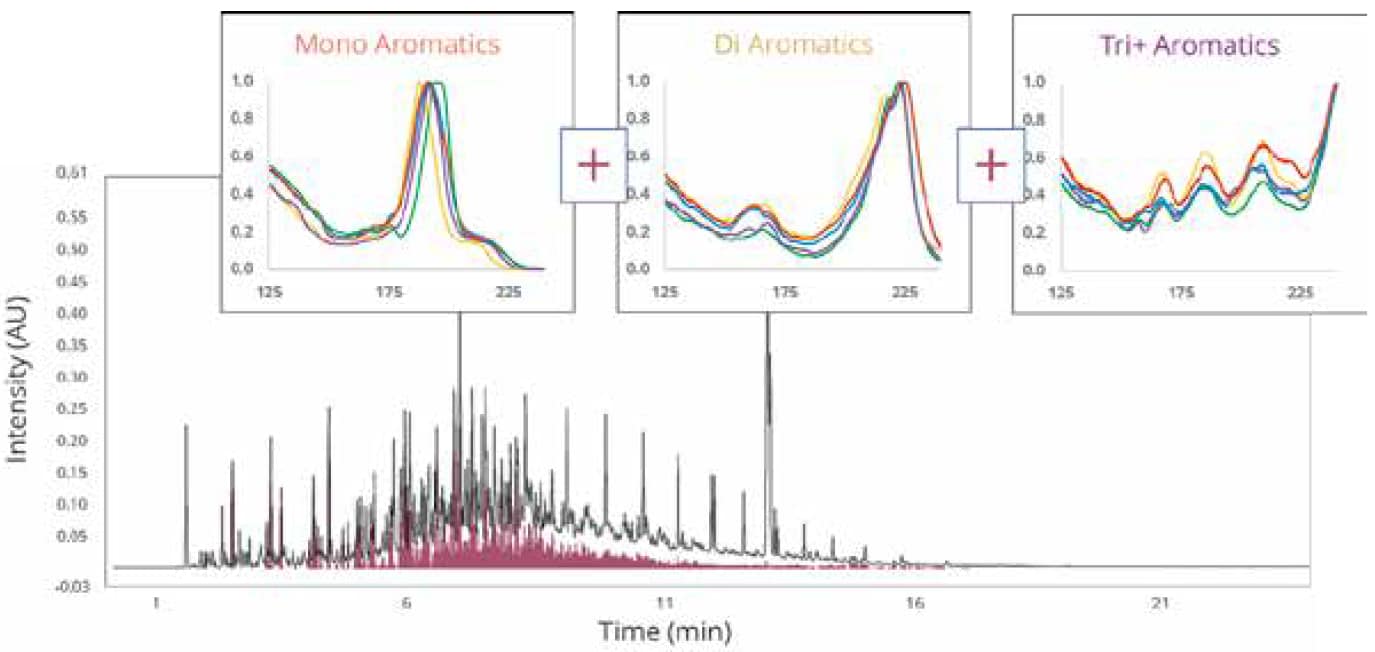
Chromatogram of a conventional biodiesel blend with the total aromatic spectral filter applied
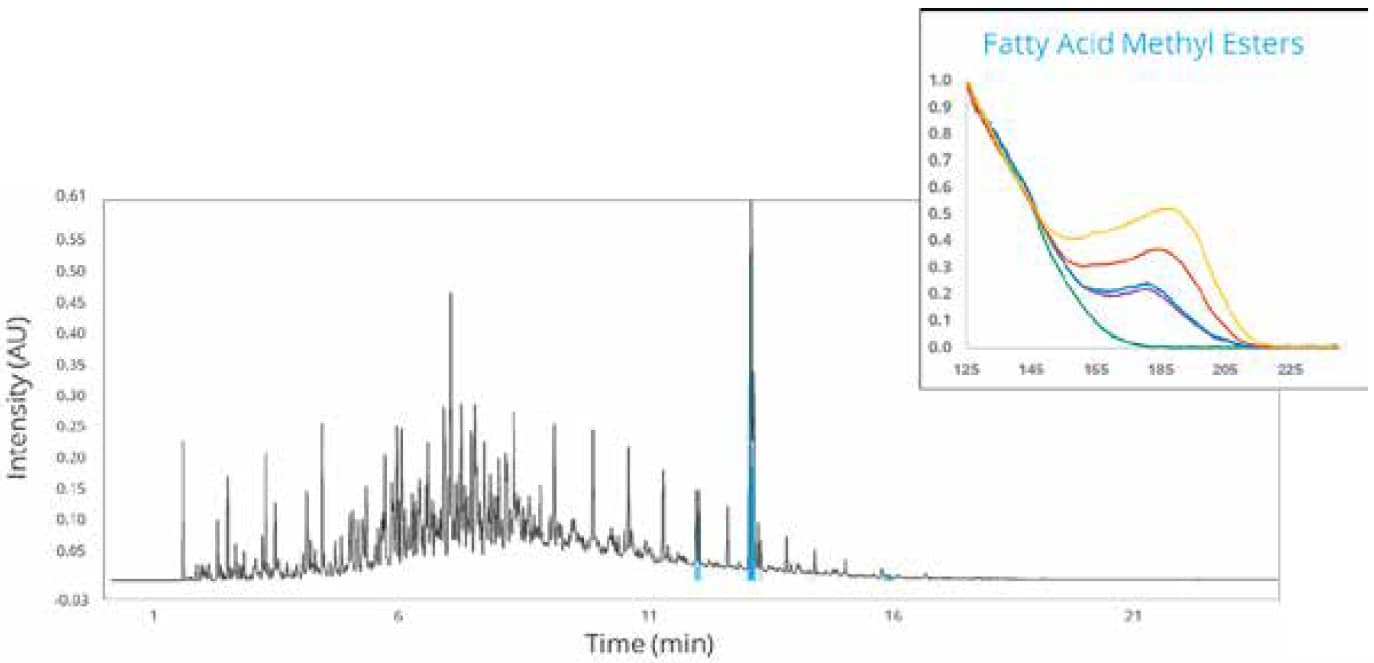
Chromatogram of a conventional biodiesel blend with the FAMEs spectral filter applied.
The inset shows the VUV absorbance spectra of several common FAMEs found in diesel fuel.
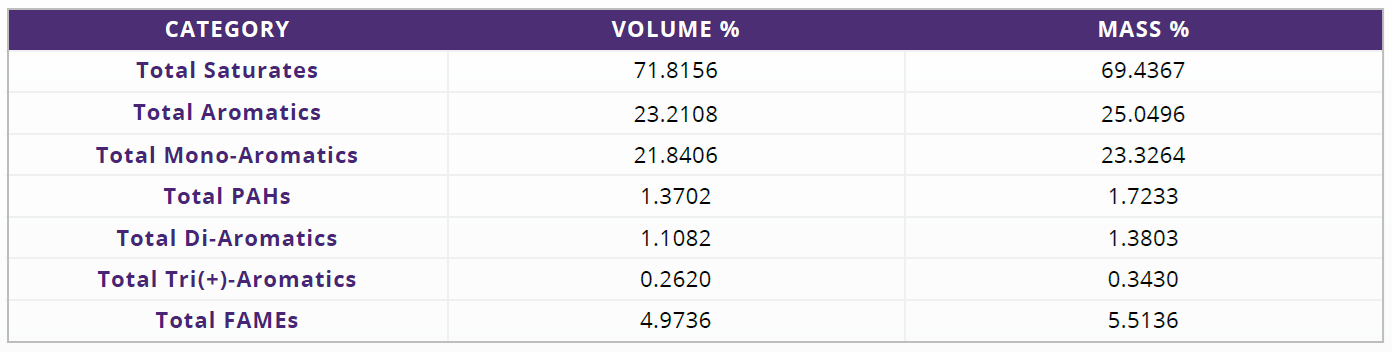
Results of the diesel analysis using GC-VUV and the Diesel Analyze Application are shown.
All parameters are reported in volume percent and mass percent.
Detailed hydrocarbon analysis of gasoline ASTM D8369
This is standard test method for detailed hydrocarbon analysis (DHA) by high resolution gas chromatography with vacuum ultraviolet absorption spectroscopy (GC-VUV)
Characterization of hydrocarbon streams, including speciation and quantitation, has traditionally been accomplished using DHA by GC-FID. Requiring long run times, very good chromatographic separation and significant human review from your most experienced user, traditional DHA has changed little since it was first introduced over 40 years ago.
The verified hydrocarbon analyzer™ (VHA)™ is a new approach to characterizing hydrocarbon streams at the component level that replaces traditional DHA. VHA is a modern approach to detailed hydrocarbon analysis that uses vacuum ultraviolet spectroscopy and spectral validation to deconvolve and identify critical components – accurately, without the need for human intervention, and in a fraction of the time of traditional DHA.
Pyrolysis oil analysis ASTM D8519
This is standard test method for determination of hydrocarbon types (saturates, olefins, styrenes, aromatics and polyaromatics) of Waste Plastic Process Oil (WPPO) from chemical or thermal processes using gas chromatography and vacuum ultraviolet absorption spectroscopy detection (GC-VUV).
This method is designed to accurately characterize WPPO produced from chemical or thermal recycling of waste plastics. With this technique, operators can identify and quantify hydrocarbons in WPPO more efficiently than ever before.