


A Bridge for Science
A researcher from India impelled by an unanswered question of his youth to aim for far-flung Japan. Dr. Ganesh Pandian Namasivayam talks of his search for answers to new questions and his dream to become a bridge linking India and Japan.
Guided by the Silkworm
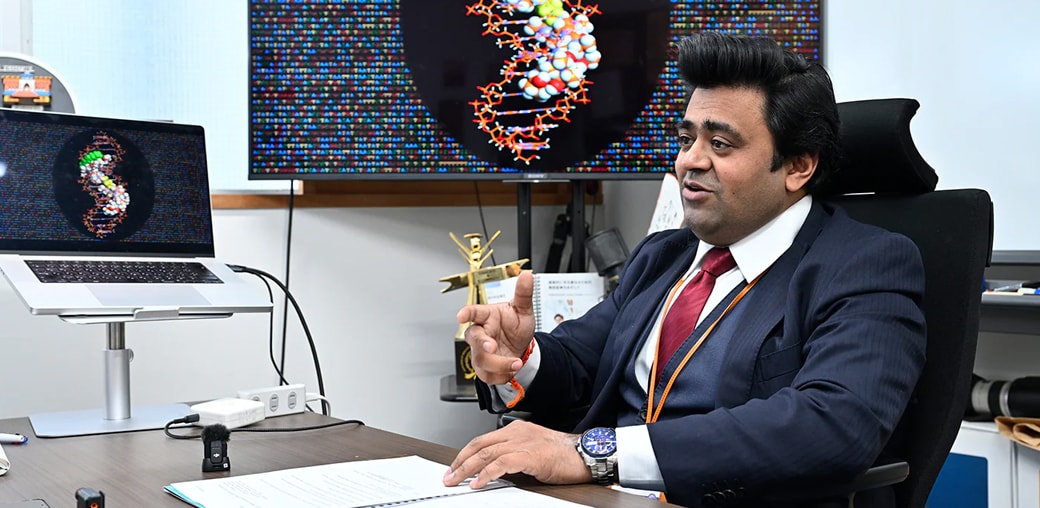
Tamil Nadu is home to the oldest language in the world and the southernmost state of India. Born in Tamil Nadu, Dr. Ganesh Pandian Namasivayam followed an unusual path to Japan, where he now works as a Junior Associate Professor at Kyoto University iCeMS (Institute for Integrated Cell-Material Sciences), a leader at INitiative for INtelligent ChemBioInformatics (IN-CBI, a collaborative laboratory established by iCeMS and the Indian Institute of Technology Roorkee in 2024), and is a passionate researcher of biotechnology.
“When I was young, I kept a silkworm as a pet. Being weak as a child, I often fell ill with a fever, yet my silkworm never seemed to fall ill despite its relatively unsanitary living conditions. This intrigued me.”
A young Namasivayam asked his mother why his silkworm never got sick. “My mother said, ‘When you grow up, go and find the answer for yourself.’”
These words would serve as a compass, guiding Dr. Namasivayam on his path through life.
On entering university, Dr. Namasivayam chose to study biology. There, he saw the appeal of working with DNA, and went on to obtain a master’s in biotechnology. It was at this point that Dr. Namasivayam set out to answer the question that had remained unanswered since childhood.
“I wanted to work in a laboratory where I could find the answer to my question. With this in mind, I searched the world for a place where I could make this the subject of my PhD.”
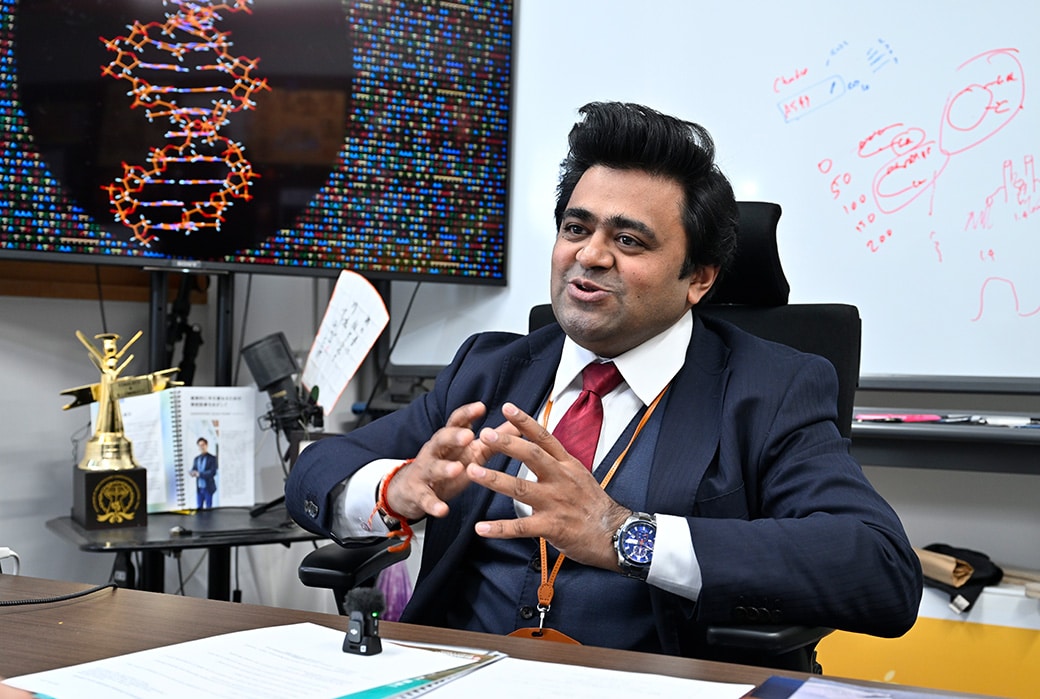
Dr. Namasivayam wrote his research proposal and found himself entering a Japanese university as a government-sponsored foreign student. Prof. Hidetaka Hori, affiliated with the Graduate School of Science and Technology at Niigata University at the time, was studying how insects developed resistance to bacteria-derived insecticides. This, plus an extensive knowledge of silkworms, made it the perfect place for Dr. Namasivayam to study for his PhD.
Arriving full of enthusiasm in Japan, Dr. Namasivayam spent two and a half years completing his dissertation. The title was “Why do I get sick, but silkworms don’t?” The main thesis of the dissertation was that silkworms develop immunity naturally through substances in food. But while pursuing this research, a new line of questioning occurred to Dr. Namasivayam.
“I started wondering whether bacteria get sick.” This is when he learned of the CRISPR-Cas immune systems. Like humans, bacteria are also under constant attack from viruses. CRISPR-Cas is a powerful weapon in resisting these attacks. Bacteria have short DNA sequences that repeat at regular intervals. These function together with a group of proteins called Cas proteins as part of the bacterial immune system to destroy invading viruses. Cas9 is a Cas protein that can cleave DNA, and CRISPR-Cas9, which incorporates Cas9, is an extremely useful genome editing tool and the driving factor behind the current prominence of genome editing.
The Importance of Simplicity
Dr. Namasivayam saw the potential in CRISPR-Cas9 and realized how his personal interest in biology could also have a significant impact on medicine and food. However, despite this, Dr. Namasivayam abandoned this line of inquiry.
“CRISPR is quite a complex technique. My motto is ‘simple is best,’ which in essence means natural systems and mechanisms. This led me to genetic switches.”
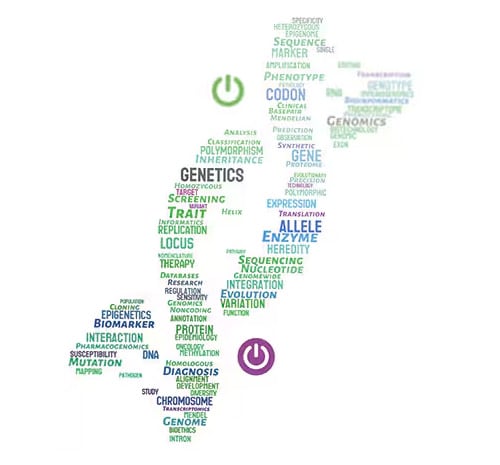
DNA has more than just a simple switch-like feature, whereby the throwing of a single switch can have a dramatic effect on gene function. For example, identical twins share the same genes and even the same genetic faults, yet one twin might develop a particular illness while the other does not. There are many cases like this influenced by whether a genetic switch is turned on or off. The study of this phenomenon is called epigenetics, a field of rapidly growing interest.
The ability to create designer molecules that read and bind to specific DNA sequences could open the door to ways of turning specific genes on and off, thereby altering the epigenetic status and fate of a cell.
This is when Dr. Namasivayam learned of Prof. Hiroshi Sugiyama at iCeMS. Prof. Sugiyama is a leading researcher of pyrrole-imidazole polyamides (PIPs), a class of molecules touted as a useful tool for modifying epigenetic behavior. Dr. Namasivayam decided he wanted to work on applied research at iCeMS, and declared his intent to Prof. Sugiyama directly. That was in 2010.
Many diseases could potentially be treated or prevented by switching on specific immunological functions and switching off disease-causing genes. Dr. Namasivayam notes that this includes diseases with no current treatment.
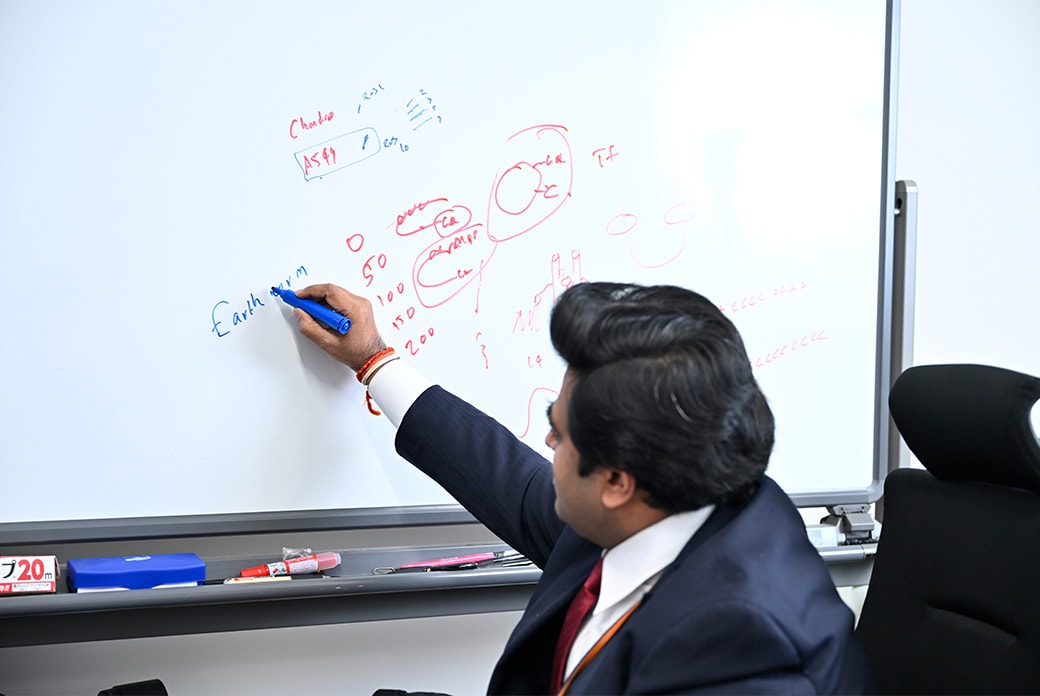
“For example, autism is one of these diseases, and we have been using earthworms to experiment with treatments for autism. Earthworms typically have a socializing tendency and form into groups, but autistic earthworms do not. We have been able to control the genes involved in this socializing behavior. Of course, this has only been proven at the research level and is not ready for human use. We are still laying the groundwork for this technology. But in the future, a time may come when autism can be treated by taking a tablet.”
The diseases of greatest interest are those with their origins in mitochondrial DNA.
“Most diseases start out as an impairment of mitochondrial function or a mitochondrial disorder. This is the case with cancer and even aging. Conventional symptomatic treatment is expensive, and its benefits are only accessible to a limited few. If a chemical substance that switches genes on and off can be developed and made available as a low-cost drug, everyone could benefit from it. That is the future I am aiming for.”
A Bridge Linking India to Japan
After living in Japan for more than a quarter of a century, Dr. Namasivayam has another dream for the future.
“Japan answered my long-standing question and gave my life a goal. For that, I am truly grateful. This is why I want to become a bridge linking India to Japan. Biotechnology is also very popular in India. I want to bring outstanding people from the field of biotechnology in India to study in Japan and help create more technology deserving of the label ‘Made in Japan.’”
India is the most populous country in the world, a place of remarkable progress, and students in India are keen to learn. However, Japan remains low on the list of countries considered by those who wish to study abroad. Dr. Namasivayam is passionate about changing this, and considers it his “second calling.”
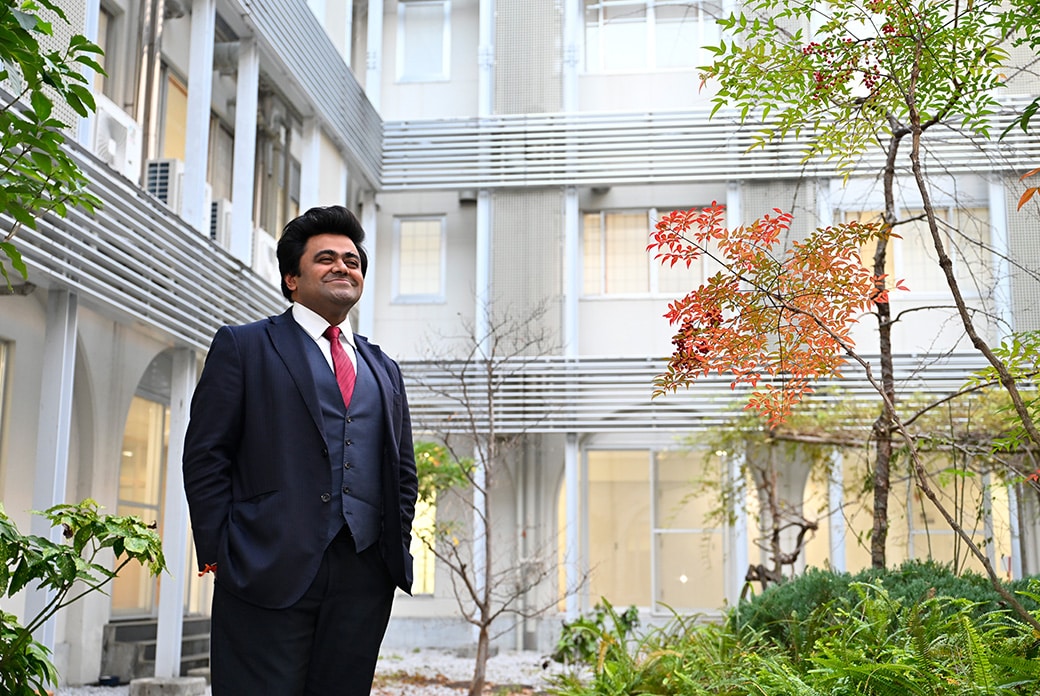
“I am Indian. But living in Kyoto, I also think of myself as a Kyotoite (Kyoto people). Nothing would make me happier than the opportunity to undertake joint research with Shimadzu, a company also based in Kyoto, under the iCeMS program.”
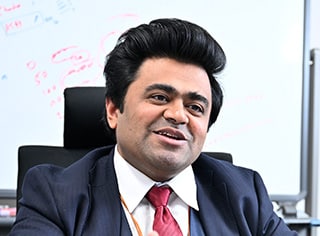
Ganesh Pandian Namasivayam, Junior Associate Professor at Kyoto University iCeMS (Institute for Integrated Cell-Material Sciences)
Born in Tirunelveli, Tamil Nadu, India. Obtained a master’s in biotechnology from the University of Madras, India, followed by a PhD from Division of Applied Biosciences, Niigata University Graduate School. Began working as a researcher for iCeMS Sugiyama Lab in 2012 and became an Assistant Professor in 2018. Now leads his own research group at iCeMS and serves as a representative of the INitiative for INtelligent ChemBioInformatics (IN-CBI) on-site laboratory at Kyoto University, a visiting scientist for the Swiss Institute of Allergy and Asthma Research at University of Zurich, a visiting scientist for the AO Research Institute in Switzerland, a visiting professor for KiBum Lab at Rutgers University, and a scientific advisor for ReguGene Co., Ltd.
- *This article is an English translation of our article originally published on the website “Boomerang”. The information, including affiliates and titles of the persons in this article, are current as of the time of interviewing.
 Copied


