



Shimadzu System Solutions Continues to Provide Support to Regional Water Supplies
Equipment Replacement and Maintenance Contract for A Water Treatment Plant in Aichi Prefecture
Turn the faucet and water flows out. Our daily lives are sustained by our public water supply infrastructure. However, due to a labor shortage and aging equipment at water treatment plants and other water supply infrastructure, there is an increasingly widespread problem of previous practices not being sufficient for sustaining adequate water supplies.
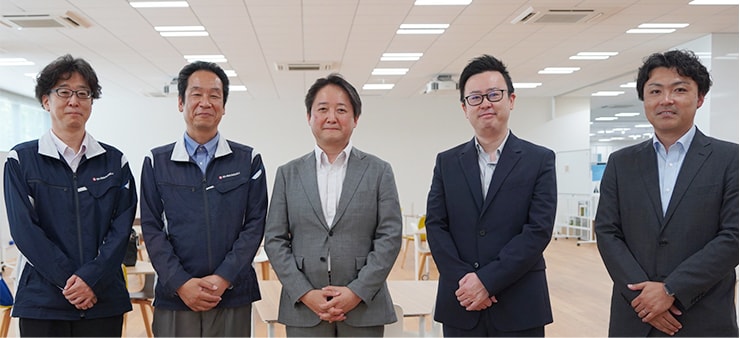
From the left are Shimadzu System Solutions personnel Kato, Tanaka, Onoue, Corporate Officer, and Nakaji and Yasue
Shimadzu System Solutions Providing Support for Public Infrastructure
Shimadzu System Solutions Co., Ltd. (SSS) supplies flow meters and other equipment for water and wastewater, environmental and energy, and manufacturing plants, and builds systems to visualize, monitor, and control equipment status. The company also provides maintenance and other aftermarket services. Through such business activities working closely with frontline workers, they have been instrumental in sustaining water supply infrastructure over many years.
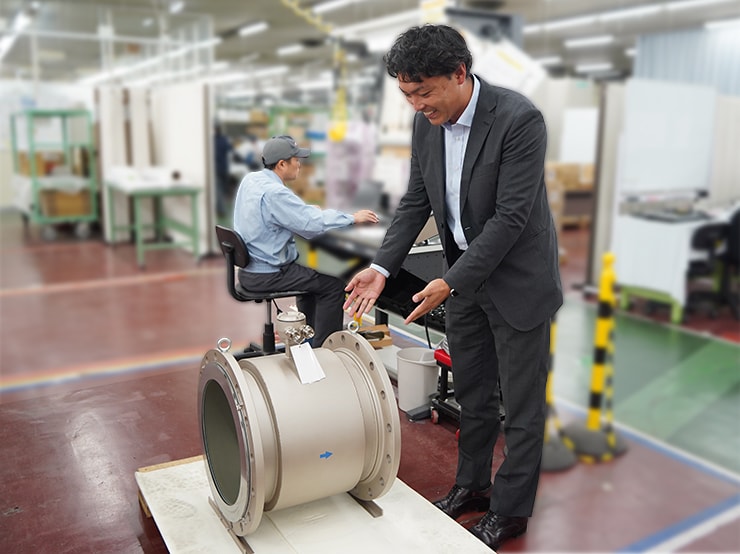
Yasue explaining an electromagnetic flow meter used to measure the volume of water flowing through pipes
SSS submitted a bid for a DBM* project advertised by the Aichi Prefectural Enterprise Bureau for the replacement and maintenance of electrical instrumentation equipment at the Chita Water Treatment Plant and two pump stations, and signed a contract on March 27, 2026.
- * A system in which a private company is responsible for design, building, and maintenance in an integrated manner.
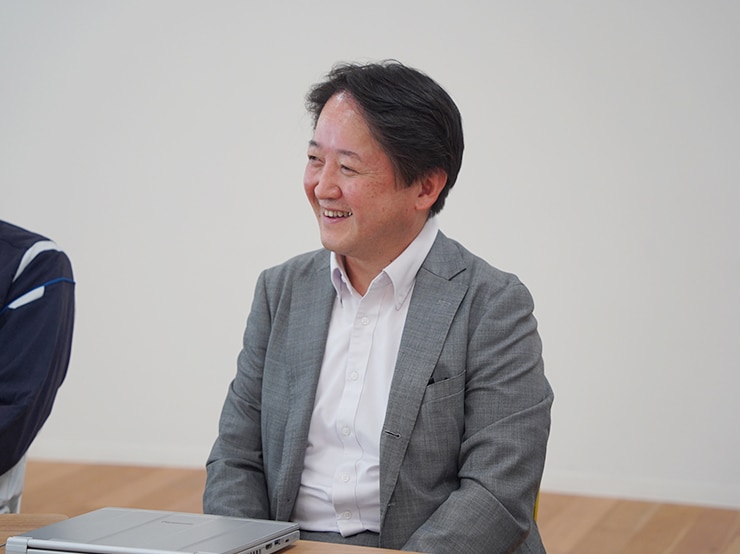
Reflecting on the project, Project Manager Onoue recalled that his first reaction to hearing about the project was, “What? Really? It seemed like such a large and highly responsible project”
The DBM approach meant that the project involved much more than simply delivering equipment. It involves the responsibility of ensuring the equipment will keep operating smoothly over the long term and requires a forward-looking response. Onoue explained that “the contract requires being responsible for designing, manufacturing, installing, maintaining, and managing the equipment continuously for 25 years.”
The Capabilities Needed in this Turning Point for Water Supply Infrastructure
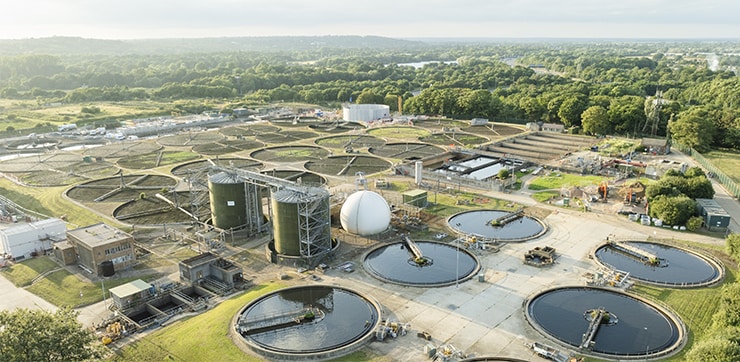
One role of water supply facilities is water distribution, which involves providing a reliable supply of treated water to each household. For example, in areas where elevation differences can be used effectively, water can be distributed by using gravity from reservoirs located at higher elevations. However, in flat regions with minimal elevation differences, pumps must be used to manage the water flow volume and water pressure levels. In regions with many hills and valleys, sometimes water needs to be pressurized with pumps. In water distribution, water is delivered by adapting equipment and operating methods to the local land and regional conditions.
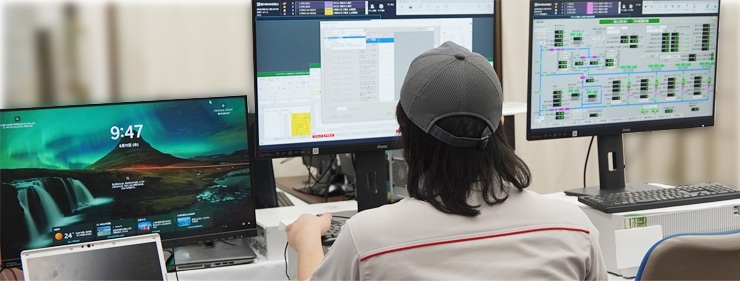
Building (engineering) the METRIS-G5 monitoring and control system
SSS takes an integrated view of both equipment and operations in water supply infrastructure and builds systems to optimize the whole.
For water supply infrastructure, it is important not only to operate the equipment, but also to keep daily operations stable. Such sites require more than equipment performance alone; long-term usability and ease of maintenance are also important. The public tender was conducted using a comprehensive evaluation method that assessed not only price but also technical capability, quality, track record, and the company's reliability as a business that can continue into the future.
Within that context, a major factor for winning the bid was the 150-page technical proposal they submitted. When preparing the proposal, rather than simply presenting the latest technologies, they focused on thoroughly considering what problems frontline workers actually face, how operations could be made easier, and the frontline perspective. They also worked with their engineering and sales personnel and cooperated with partner companies and outside advisers, which they say allowed them to discuss issues together as one team.
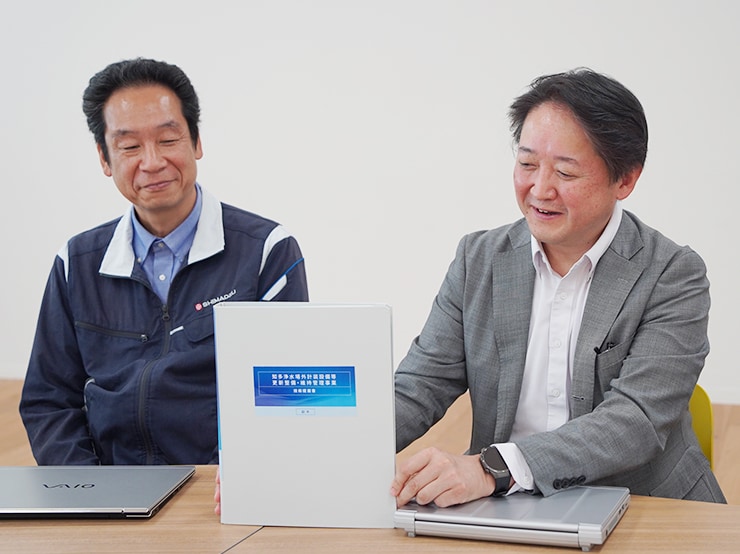
Onoue (right) and Tanaka holding the technical proposal document
Onoue reflected on the process of creating the project concept, on which the proposal would be based, as follows.
Typically, it is unusual to significantly solicit input from others about a project proposal that a Project Manager or General Manager has organized. However, we have a company culture in which people freely exchange frank opinions across job titles and positions in order to make better proposals. In this case, we received many suggestions and advice from people outside the company, which prompted a series of opinions from SSS team members. After many discussions with all team members, we revised the proposal by refining each issue raised.
It was really tough. On the other hand, it was very enjoyable and rewarding to have frank, in-depth discussions with the customer in mind.
Onoue said that these team relationships also helped support the project.
Systems Prepared to Ensure Future Technology Succession
The proposal incorporated a new concept for taking into account the future succession of technology. One such system is an AI-based system for assisting with recording and searching. The concept is to use voice recognition and natural language processing to capture daily handovers and conversations on site, extract and accumulate important know-how and the reasons behind decisions, and make veteran employees' knowledge easier to record and share.
SSS also proposed linking that knowledge to a central monitoring system so that, when an abnormality occurs, similar past cases and key decision points can be referenced. The aim is to support decision-making by younger employees and technology succession at the same time, thereby improving the sustainability of on-site operations.
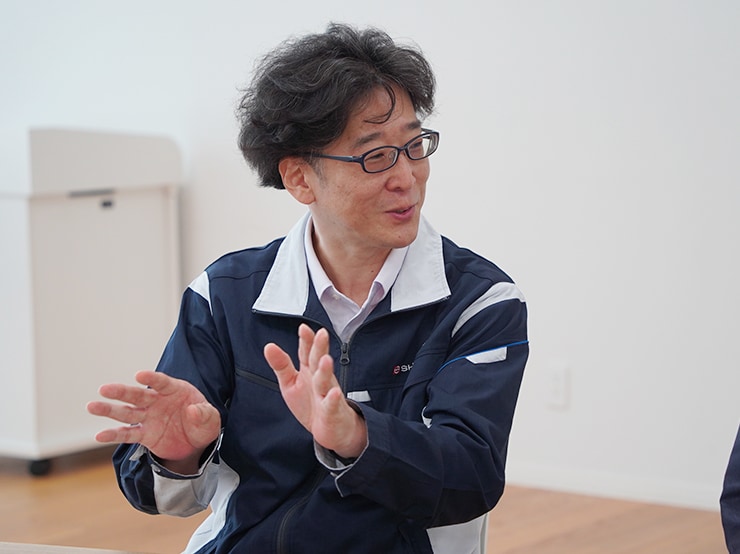
Kato says, “We visited the site many times and held repeated discussions as a team.”
Comment from the Project Team
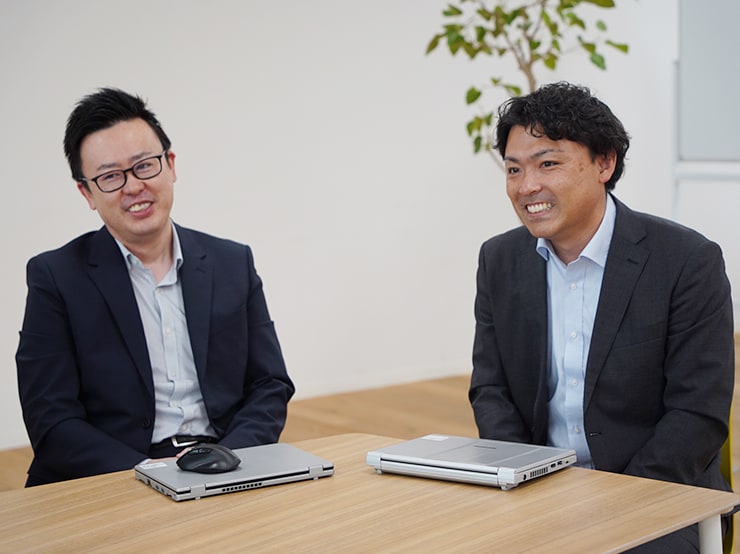
Nakaji (left) and Yasue, who suggested submitting a bid
For SSS, this project is more than just an equipment replacement. It is an initiative to continue providing stable support for regional water supply infrastructure in the future. Winning the order was not the goal but the starting point. It also marks the beginning of cultivating an even deeper long-term relationship of trust with customers.
Going forward, we will continue to face on-site challenges while fulfilling our responsibility to support the everyday lives people take for granted. We will also remain engaged in continuously providing value.
 Page Title and URL Copied.