



DASSAI × SHIMADZU
Bringing the Appeal of Japanese Sake to the World through Science
Dassai is a Japanese sake brand highly acclaimed both in Japan and overseas. DASSAI Inc. (hereinafter DASSAI), headquartered in Iwakuni, Yamaguchi Prefecture, where its sake is produced, is pursuing new challenges that leverage analytical technologies while preserving the traditional sake brewing techniques.
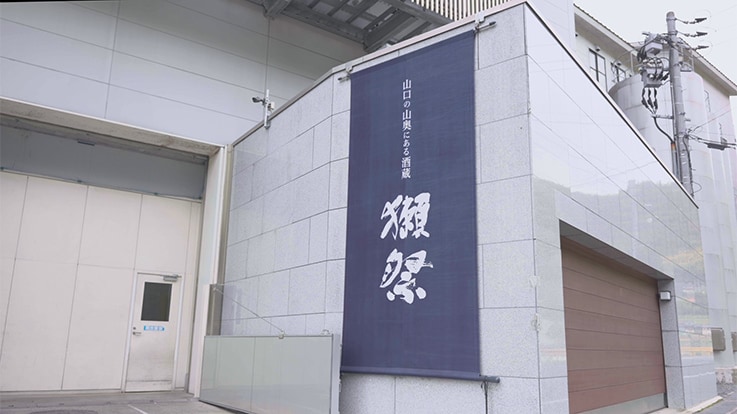
Shimadzu has been collaborating with DASSAI through cooperation between its Hiroshima Branch and the Solutions COE (SCOE) of the Analytical & Measuring Instruments Division. By visualizing aroma and flavor, Shimadzu is helping improve quality while communicating the appeal of Japanese sake to people around the world.
Collaboration Began with an Analysis Request
The collaboration with DASSAI began with a request to analyze Japanese sake using a GC (gas chromatograph), an instrument used to analyze compounds contained in liquids and gases.
At the time, DASSAI was exploring whether aroma evaluations traditionally based on human sensory perception could be assessed objectively through analysis. Shimadzu’s Hiroshima Branch served as the point of contact, and analyses were conducted at the SCOE laboratory, and this marked the beginning of efforts to apply analytical technologies to sake quality evaluation.
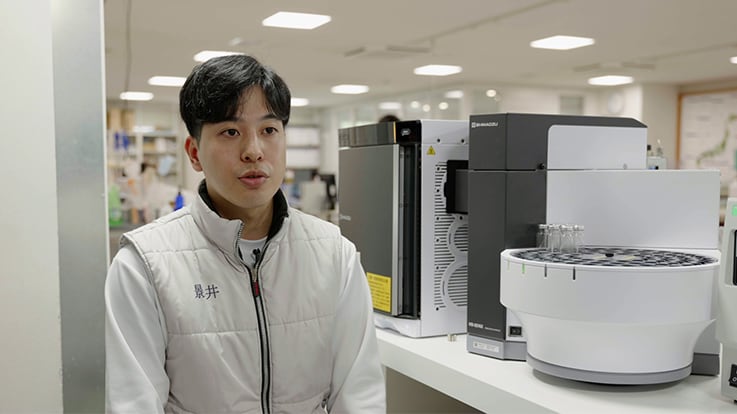
Ryo Kagei, Manufacturing Department’s Innovation Laboratory, DASSAI Inc.
As the analyses progressed, various data related to the aroma of Japanese sake were obtained, and the two companies engaged in repeated discussions regarding the results. Analytical data on aroma is highly confidential information that forms the foundation of quality control. However, with the cooperation of DASSAI, they have been exploring ways to utilize this data and apply it to improve quality.
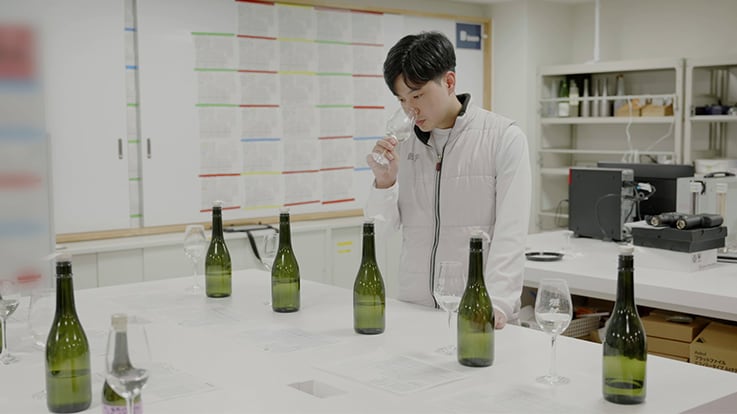
Through these efforts, the collaboration between the two companies expanded beyond simply receiving requests and providing analysis results to include exploring new analytical methods and proposing ways to apply them. Today, they continue to pursue new possibilities for Japanese sake by combining the expertise gained through sake brewing with analytical technologies.
The Possibilities for Japanese Sake Opened Up by Analytical Technologies
The quality evaluation of Japanese sake has traditionally relied heavily on the experience and sensory perceptions of sake brewers. Shimadzu’s analytical technologies play a role in supporting these evaluations with objective data.
By measuring compounds associated with the aroma of Japanese sake, differences that were previously described in subjective terms can be quantified. This makes it possible to objectively evaluate certain aspects of sake quality and provides new perspectives for quality control and consideration of production processes.
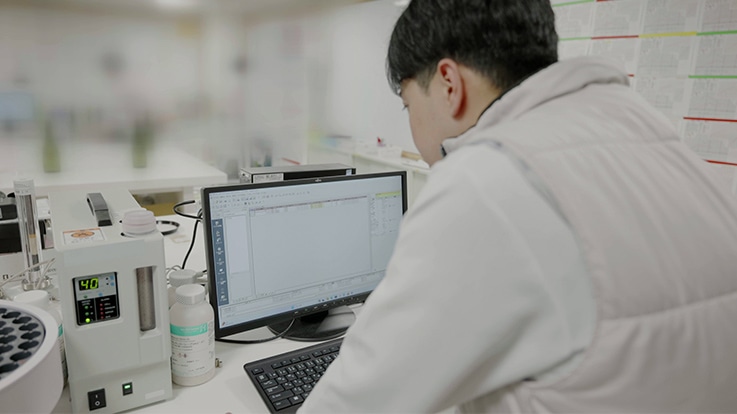
At the same time, analytical results do not necessarily correspond exactly to the impressions perceived by people. Even when analytical results are similar, people may perceive aromas differently. Such differences are also one example of the depth and complexity of Japanese sake. Analytical technologies are not intended to replace human sensory perception; rather, they are used as a means of gaining a deeper understanding of it. By combining data with experience in the pursuit of sake brewing, new possibilities for Japanese sake are emerging.
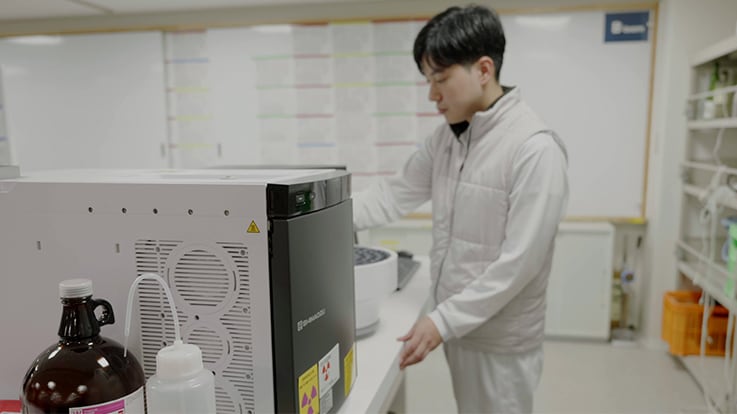
Bringing the Appeal of Japanese Sake to the World
The collaboration between Shimadzu’s Hiroshima Branch and SCOE has supported these activities. With the Hiroshima Branch serving as the point of contact with the customer and SCOE responsible for analysis and evaluation, the two organizations have supported DASSAI in addressing its challenges from both customer-support and technical perspectives.
Through their collaboration with DASSAI, the two companies have repeatedly exchanged views based on the data obtained, jointly exploring possibilities for improving sake quality and creating new value. Furthermore, as engineers from the sake-brewing and analytical fields deepened their interaction, they jointly developed an application for easy, low-cost quantitative analysis of aroma compounds in Japanese sake. This application makes it possible to visualize differences in aroma as data and objectively confirm changes in aroma compounds before and after pasteurization. These activities are being used to support quality control and verification of manufacturing processes for Japanese sake.
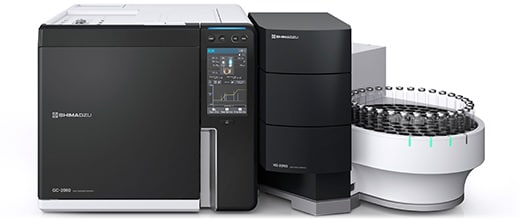
The Nexis GC-2060 gas chromatograph (left) and the HS-20 NX headspace sampler used to analyzed aroma compounds in Japanese Sake
Through these activities, the relationship between the two companies has evolved beyond that of an instrument manufacturer and user into a partnership in which they share challenges and work together to develop solutions. Wider adoption of methods for objectively evaluating and sharing aroma and quality data would make it easier to communicate the value of Japanese sake. In addition, combining sake brewing with analytical technologies will open new possibilities for research and product development.
Tradition and science. By leveraging their respective strengths, the two companies’ efforts are contributing to the further development of Japanese sake culture and promoting its appeal around the world.
[DASSAI × Shimadzu GC] Analytical Technology Behind World‑Class Japanese Sake Brewing
Comment from the Person in Charge at Shimadzu Corporation
Through our collaboration with DASSAI, we aim to use analysis to visualize the differences in the aromas and flavors of sake, thereby conveying its appeal—which cannot be fully expressed through sensory experience alone—in a more accessible way.
As a first step, we intend to use the knowledge gained through a previous beer-related collaboration as a model case to help DASSAI address its challenges, with the ultimate goal of realizing a collaborative Japanese sake product. We also aim to use these activities to contribute to establishing a global standard for Japanese sake analysis, while expanding the possibilities of analytical technologies, including GC and GCMS (gas chromatograph mass spectrometer).
 Page Title and URL Copied.