- Shimadzu Gas Chromatograph 70th Anniversary
- History of Shimadzu GC
- User Interview – DASSAI
- Nexis GC-2060 Developer Interview
[DASSAI × Shimadzu GC]
Analytical Technology Behind World‑Class Japanese Sake Brewing
Shimadzu Gas Chromatograph 70th Anniversary User Interview
DASSAI Inc., the maker of the globally recognized premium sake brand “Dassai,” is guided by a steadfast commitment to quality.
In this interview, we explore the philosophy that shapes their approach to sake brewing, along with the analytical technologies that support their pursuit of excellence. By harmonizing time-honored craftsmanship with scientific insight, Dassai continues to expand the possibilities of sake – creating new value and innovation while remaining deeply rooted in tradition.
-
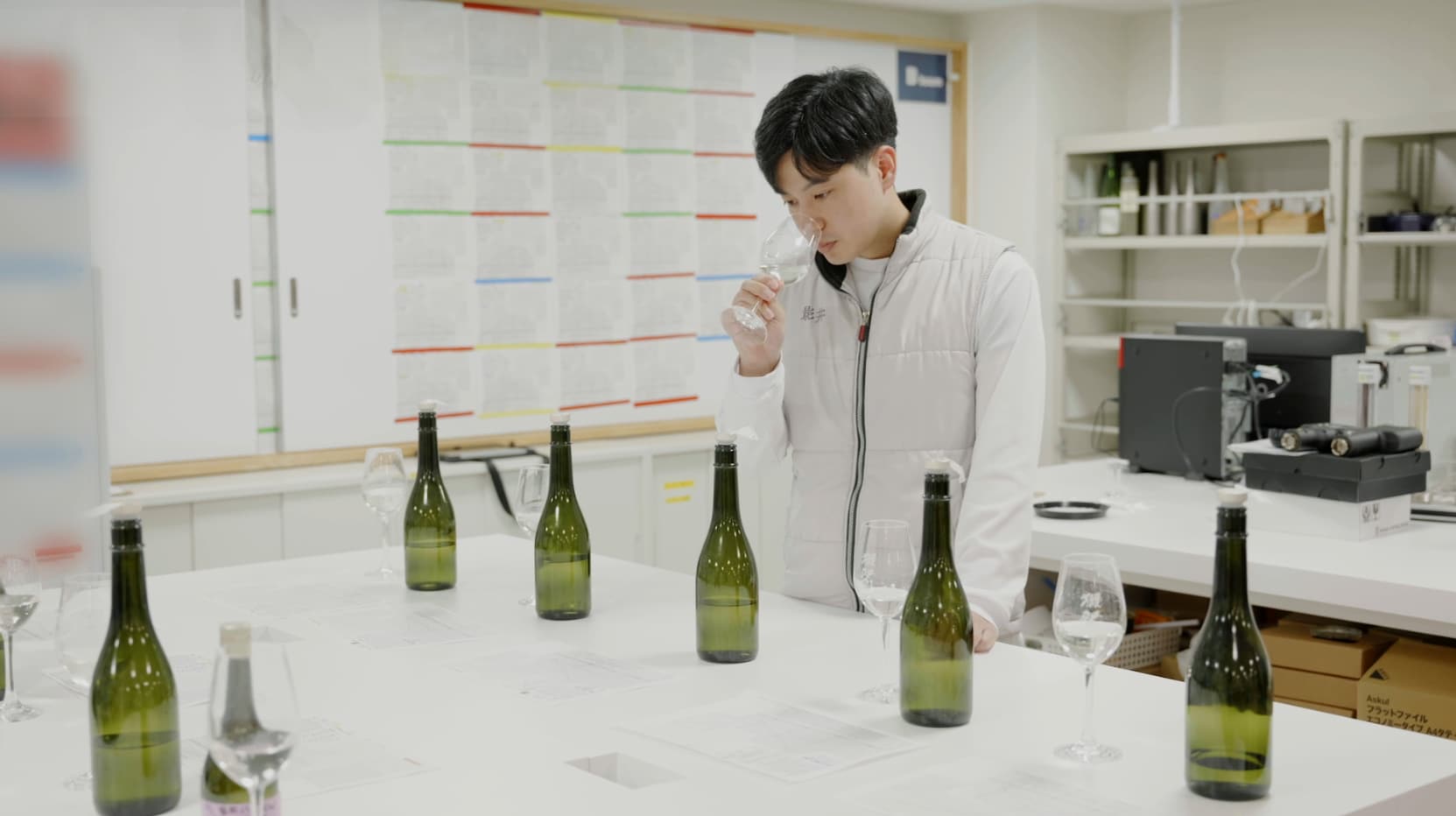
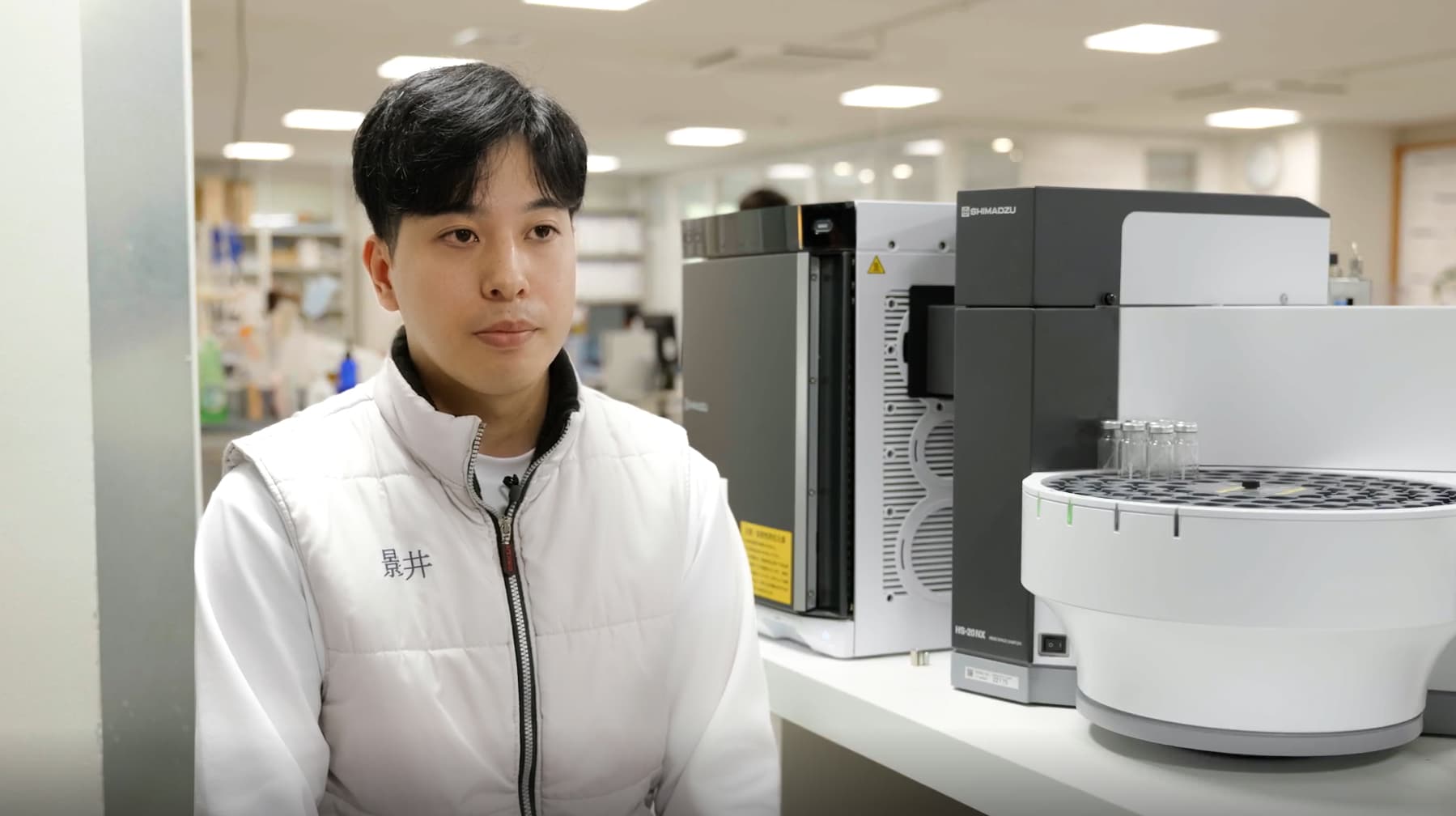
Mr. Ryo Kagei
Manufacturing Department’s Innovation Laboratory
DASSAI Inc.We strive to create sake not simply to sell, but to provide enjoyment through a product that is genuinely delicious.
Interview Highlights
1. The Philosophy Behind Dassai
-
──Please tell us about your current role and responsibilities.
I currently work in the Manufacturing Department’s Innovation Laboratory. My main responsibilities include selecting new technologies that can be introduced into the brewing process and producing exosomes used in the Dassai Shinsei series. While respecting the traditional sake-brewing practices that rely on experience and intuition, I evaluate how existing technologies can be applied to improve quality, from verification to implementation in the production phase.
──What led you to enter the sake brewing industry?
At the core is my curiosity about food. I have long been deeply interested in delicious food and alcoholic beverages. My awareness of the sake brewing world began when I purchased and drank sake on my own for the first time. That sake happened to be Dassai. I still vividly remember the pure emotion of finding the very first sip to be genuinely delicious, as well as my astonishment at its quality, which sparked a strong interest in sake brewing as a profession.
2. What Defines Quality at Dassai
──Please tell us about Dassai’s commitment to quality in sake brewing.
We strive to create sake not simply to sell, but to provide enjoyment through a product that is genuinely delicious. For this reason, we prioritize quality at every stage of the process and never hesitate to put in the necessary time and effort. We also take full responsibility to maintain that quality until the sake is consumed, while continually working to improve each day.
3. How Analytical Technology Is Changing Sake Brewing
──Dassai practices sake brewing based on data and numerical values. What role do analytical instruments play?
To consistently produce high-quality sake, it is essential to enhance reproducibility through data. Rapid and accurate analytical instruments are indispensable for expressing sensory perceptions as objective numerical values and for visualizing criteria used in decision-making.
──What were the objectives and expectations when you introduced GC?
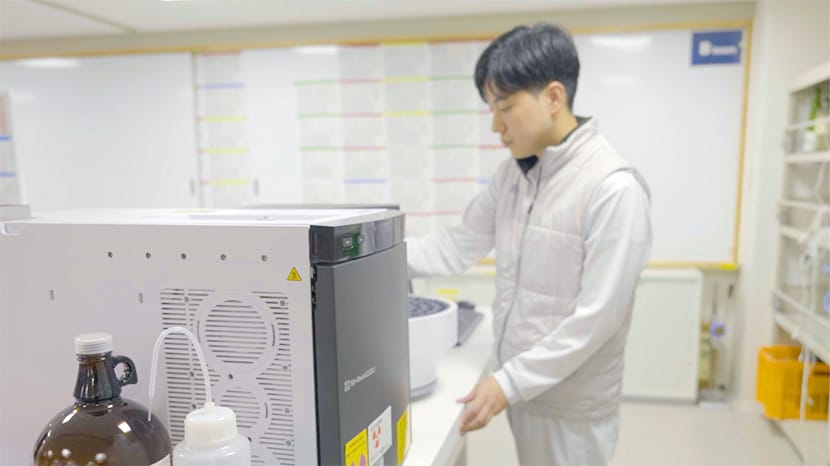
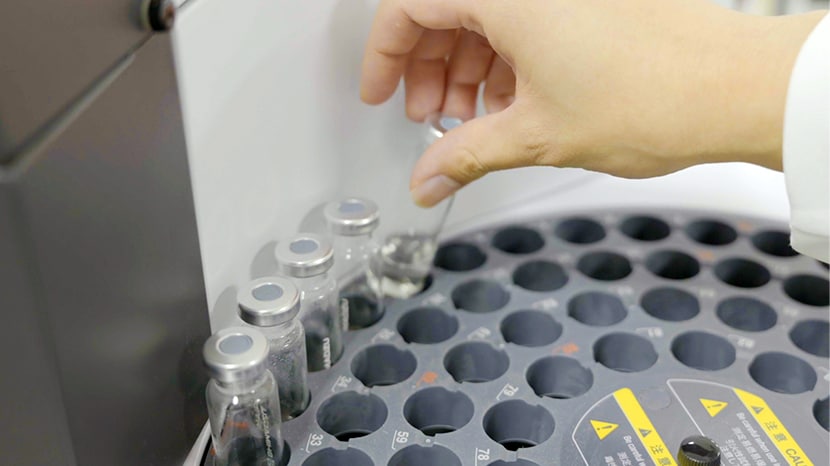
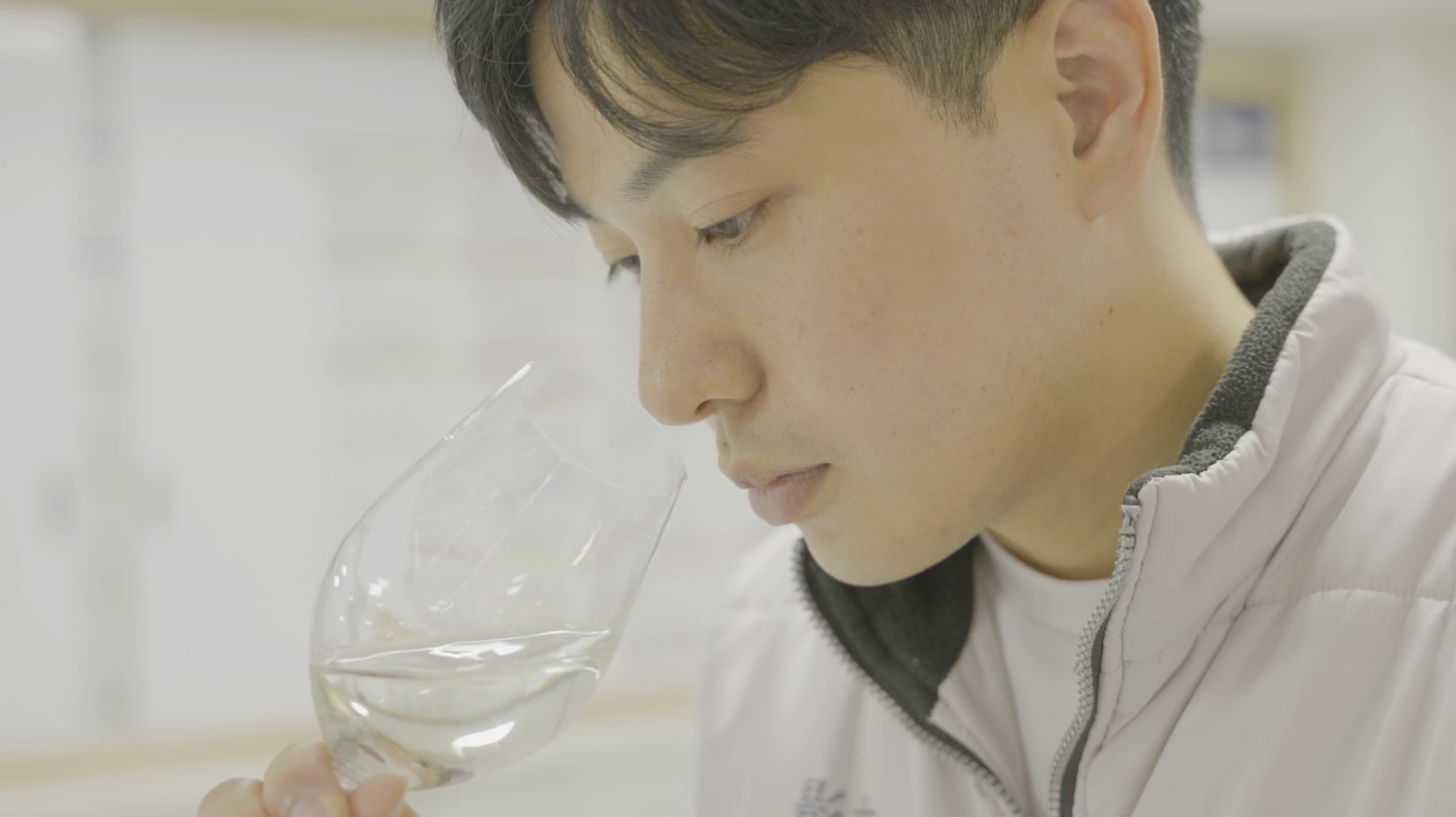
Because aroma is one of the greatest attractions of sake, we wanted to pursue quality control and improvement in this area, which led to the introduction of GC. We had several indicators in place for taste, but aroma components had largely depended on individual sensory perception. Human senses alone make it difficult to accurately determine whether a strongly perceived aroma is due to a high absolute concentration of a component or its relative prominence among other components. Analytical data would allow us to translate ambiguous individual sensations into objective indicators that can be used to improve quality.
──Have you seen any changes in quality control, product development, or internal initiatives since introducing GC?
After introducing GC, discussions related to aroma have become significantly more active within the company. Having a shared, objective indicator has increased opportunities for more concrete discussions. Sometimes, the analytical results align with personal sensory perceptions whereas, in other cases, they contradict each other depending on the component. Although we are still in an experimental phase, we feel that these gaps between data and perception provide hints for quality improvement, which can lead to a deeper overall understanding of sake brewing.
4. The Role of Data in the Future of Sake
──How do you view the value of analytical data in overseas markets and global expansion?
Analytical data can be considered a universal language, but its true value lies in building trust with overseas customers and partners who view this data as an indicator of sincere craftsmanship. For those encountering sake culture for the first time, thorough quality control based on precise analysis provides a great sense of reassurance. While we do not often present data itself as a starting point in discussions, our uncompromising attitude toward quality is something that transcends language and cultural barriers and is sure to be conveyed. Data will continue to serve as a solid foundation, supporting the unwavering confidence behind our finest flavors, protected by countless unseen efforts.
──How do you plan to utilize analytical instruments in future product development and quality enhancement at Dassai?
We aim to understand how each process affects aroma components, including physical influences such as pressing and transfer, to improve overall quality. Regarding diacetyl, which we manage under stricter standards than general benchmarks, we plan to optimize criteria that work in combination with sensory evaluations to establish a system that more reliably realizes the intended sake profile.
-
──Are there any themes you would like to work on in the future or challenges you currently face?
Our future challenge is to accurately understand how factors such as koji quality, temperature transitions during fermentation, and sugar concentration affect the final aroma profile, and to apply this understanding in quality control. When anomalies or warning signs appear in daily measurements, we want to quickly identify their root causes and implement countermeasures. However, this is not easy, as multiple conditions intertwine before becoming apparent in the final product. We believe it is necessary to unravel these less visible effects—different from physical influences like agitation—through accumulated data and multifaceted analysis.
5. What Comes Next for Dassai
──Are there any new sake brewing challenges or initiatives you would like to pursue next?
We would like to develop our own yeast strains and produce low-alcohol sake. For yeast development, precise profiling of aroma components using GC is essential. Rather than relying solely on sensory evaluations, we aim to scientifically substantiate the component composition to achieve specific aromatic characteristics and use this knowledge to develop yeasts that impart a targeted aroma profile. With low-alcohol sake, it’s important to note that simply reducing alcohol content often weakens the structure of flavor, leading to an unsatisfactory experience. Here as well, we hope to analyze which components contribute to a robust drinking experience and rich flavor depth without relying on alcohol.
──What role do you believe analytical technologies will play in the future of the sake industry as a whole?
Ultimately, what moves people is the passion of the brewer and the flavor of the sake itself. Analytical technologies play an important role in turning that emotion from chance into inevitability and expanding it globally in a sustainable way. As technology allows more aspects to be visualized, we believe it will enable us to pursue more ideal sake profiles and extend the possibilities of sake into the future.
──Are there any specific features or performance improvements you would expect from Shimadzu’s analytical instruments in the future (e.g., sensitivity, speed, automation, online measurement)?
We hope that further automation of analytical instruments will make them more accessible and easier to use for anyone, regardless of the person’s level of expertise. Currently, specialized knowledge is essential for analysis and data interpretation, but if AI can act as a bridge between analytical instruments and the brewing floor—enabling intuitive, interactive workflows from preparation to analysis—the barrier to using these instruments will be lowered. This would allow more staff members to engage in analysis, fostering more active discussions and deeper collective knowledge. While we look forward to advancements in sensitivity and speed, we expect analytical instruments to evolve as navigators that guide us on the best course of action to take.
──What was your first impression of Shimadzu, and how has it changed through your ongoing collaboration?
When considering bringing analytical instruments into the laboratory, we were concerned about how much of what we sought could be realized due to our lack of expertise. However, through consultations, Shimadzu made a strong effort to understand the complex, unique processes of sake brewing and provided optimal proposals supported by solid technical expertise. Their willingness to help us overcome our challenges has been extremely reassuring, deepening our trust in them as a true co-creation partner.
──Could you share Dassai’s vision for the future?
While we have set a goal of achieving annual sales of 100 billion yen, we believe its essence lies not in the number itself, but in Dassai being recognized worldwide as a premium Japanese brand. We also believe this can be achieved not only by brewing delicious sake, but by delivering it reliably to customers around the world. Even as production volume increases, we will never compromise on quality; rather, we will continually enhance it. By transcending borders and cultures, we aim for a future where a single cup of Dassai becomes part of everyday life around the world, and we will continue to pursue the ultimate in quality.
──Do you have a message for Shimadzu on the GC 70th anniversary, or any expectations for analytical instruments in general?
Congratulations on the 70th anniversary of GC. Since launching Japan’s first domestically produced GC in 1956, Shimadzu has long led and supported Japanese analytical technology, and we express our deepest respect for this journey. We hope Shimadzu will continue to be a pioneering presence that leads the analytical instrument industry and provides new perspectives to us as brewers. We sincerely support your continued growth as you take on new challenges and move toward your next major milestone.
Celebrating Shimadzu Gas Chromatograph 70th Anniversary
We will continue to share analytical applications and user stories from a diverse range of fields around the world. The GC 70th Anniversary Special Website also presents the history of Shimadzu gas chromatography, tracing the evolution of GC technology over the years. We invite you to explore the site and discover the journey of innovation that has shaped analytical science for the past seven decades.