



A Hot Summer for Japanese High School Students: 2026 Final Rounds of the Physics, Chemistry, and Biology Olympiads
In late August 2026, the final rounds of the “Physics Challenge,” “High School Chemistry Grand Prix,” and “Japan Biology Olympiad” were held in a residential camp format.
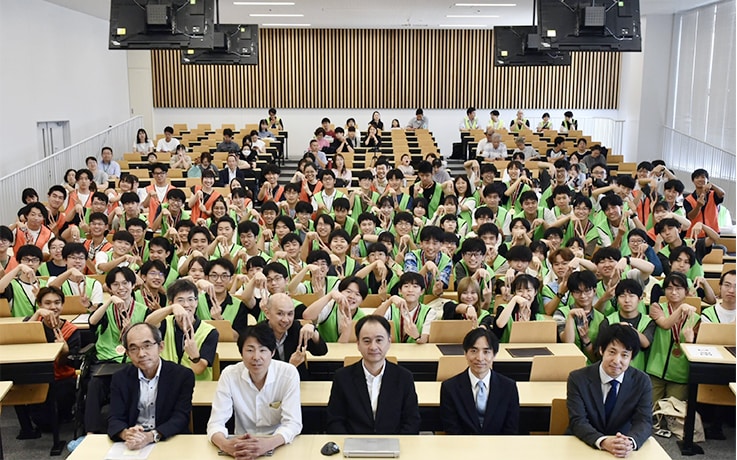
2026 Japan Biology Olympiad (Osaka Tournament)
Science Olympiads are nationwide competitions in which participants compete in their knowledge and inquiry skills in fields such as physics, chemistry, and biology. The events also serve to select candidates for representing Japan at international tournaments. Participants who achieve outstanding results in the final rounds then undergo further training and selection before competing in the international Olympiads.
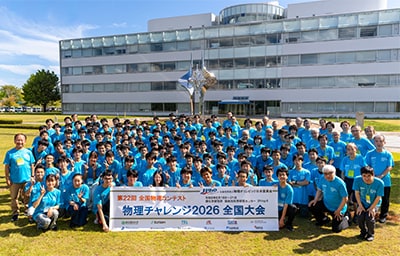
2026 Physics Challenge final round
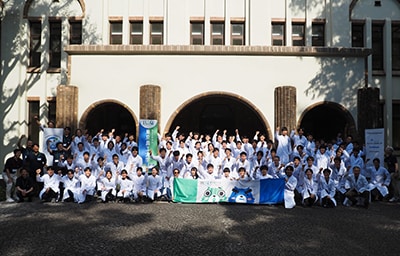
2026 High School Chemistry Grand Prix final round
Shimadzu sponsors four Science Olympiads, including the Earth Science Olympiad, whose final round is held in March, and exhibited at sponsor events for the Physics Challenge and the Japan Biology Olympiad.
- 2026 Japan Biology Olympiad (Osaka Tournament)
An Experiment-Based First Step toward Becoming a Researcher - 2026 Physics Challenge
Competition for the Pinnacle of Physics Based on Theory and Experiments - 2026 High School Chemistry Grand Prix
Stage for Exploring Chemistry that Attracts Top Competitors from throughout Japan - International Earth Science Olympiad
- Comment from the Person in Charge at Shimadzu Corporation
2026 Japan Biology Olympiad (Osaka Tournament)
An Experiment-Based First Step toward Becoming a Researcher
The 2026 Japan Biology Olympiad (Osaka tournament) was held at Osaka Metropolitan University during the 4 days from August 18 to 21. Of the 1,929 participants in the preliminary round, 80 were selected to compete in the final round, including some junior high school students.
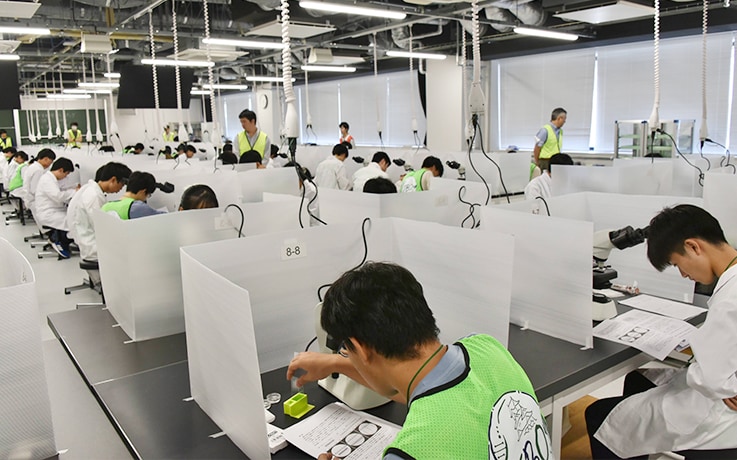
The competition included practical examinations that tested not only the participants’ knowledge of biology but also their observational, analytical, and experimental skills. After the test, the teachers who had written the questions explained the answers and underlying concepts, allowing the participants to reflect on their own thinking and approaches and deepen their understanding.
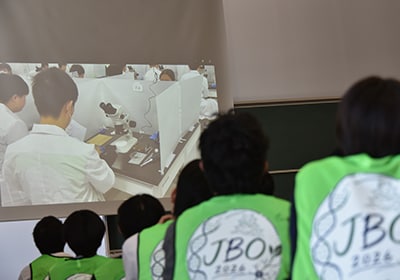
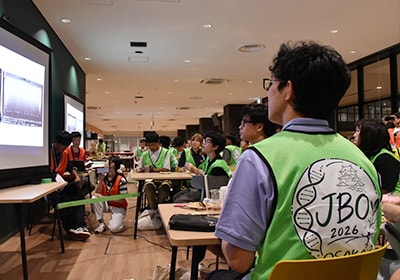
On the third day, a research experience program was held. After being exposed to cutting-edge research being conducted at Osaka Metropolitan University research facilities, the participants gave presentations to each other about what they had learned, which increased their interest in biology.
For the research experiment program, Shimadzu exhibited a MultiNA II microchip electrophoresis system. Although electrophoresis, which is used for applications such as DNA analysis, was familiar to the participants, they found it novel that DNA could be separated in tiny liquid-filled channels without using a gel, prompting a steady stream of questions at the instrument. Based on their strong interest in analytical technologies in general, they seemed to have a deep interest in biology.
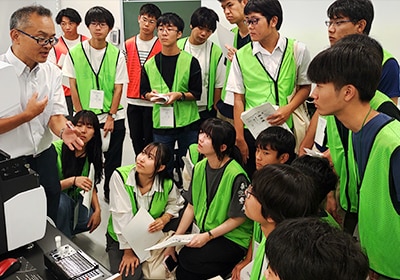
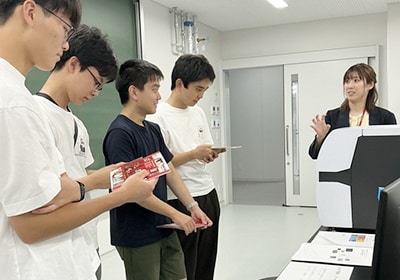
Participants asking one question after another about the analytical instrument used in research, including, “Can electrophoresis be performed in liquid?”
On the final day, gold, silver, and bronze medals were presented at an awards ceremony, and the 12 highest-scoring participants who were second-year high school students or younger were selected as candidates to represent Japan at the International Biology Olympiad the following year. In addition, the Shimadzu Prize was awarded to the third-year high school student who achieved the highest score on Major Question 1. A new challenge begins as they work toward competing in the international tournament.
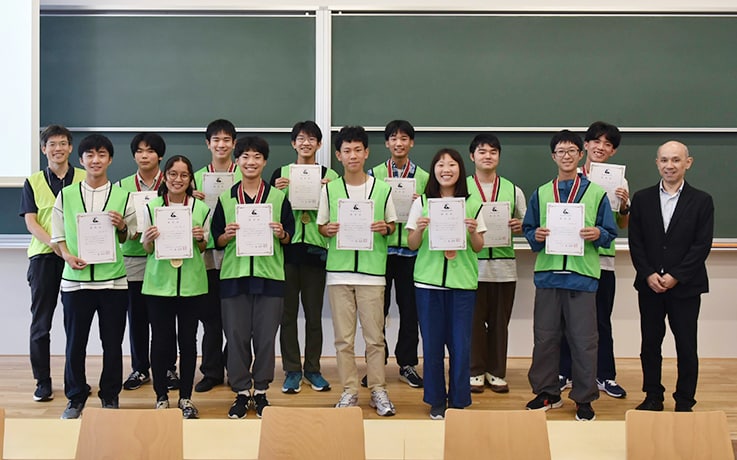
Candidates for representing Japan at the 2027 International Biology Olympiad (Poland Tournament). Now they start training in the hopes of being selected to represent Japan
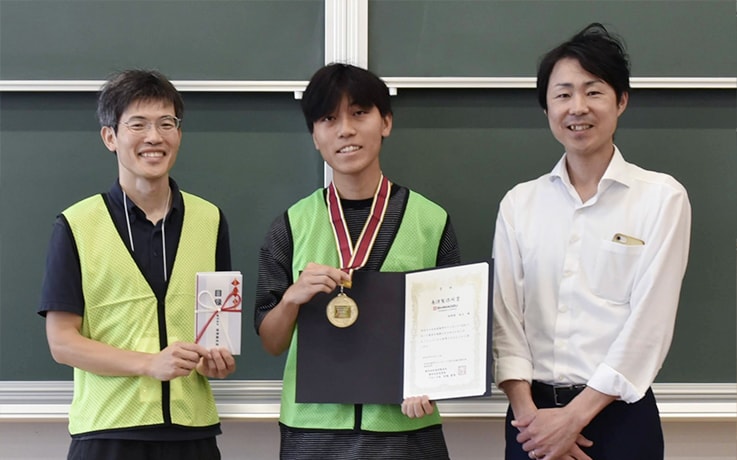
A Shimadzu Rika Corporation microscope was presented as the Shimadzu Prize.
From left: Organizing Committee Chair Professor Koichi Kobayashi of Osaka Metropolitan University, award recipient Takamadate, and Shimadzu’s Kitamura
2026 Physics Challenge
Competition for the Pinnacle of Physics Based on Theory and Experiments
The second challenge, or final round, of the 2026 Physics Challenge was held over four days, from August 18 to 21, at the SPring-8 large synchrotron radiation facility in Hyogo Prefecture. 100 people selected from 1,511 participants in the preliminary qualifying round competed in terms of their physics knowledge and skills.
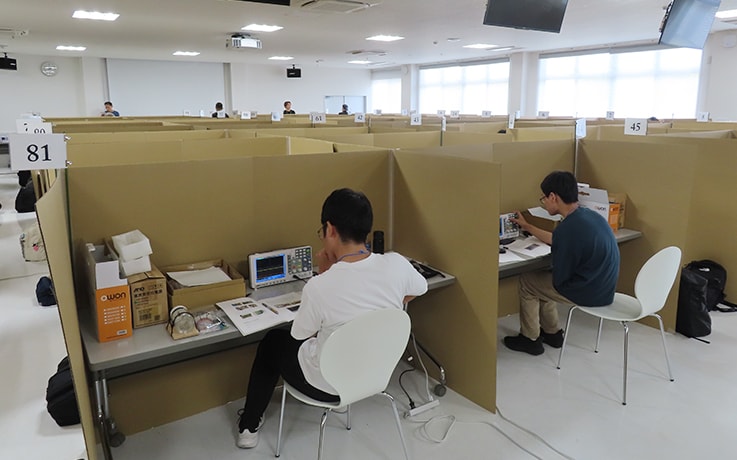
Tackling experimental questions for five hours
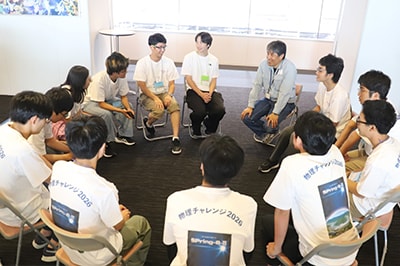
During the first half of the competition, participants took examinations consisting of theoretical and experimental questions. During the second half, they toured research facilities and participated in programs to interact with leading researchers. Top-performing participants received gold, silver, or bronze medals, and the top 12 participants who were second-year high school students or younger were selected as candidates to represent Japan at the International Physics Olympiad.
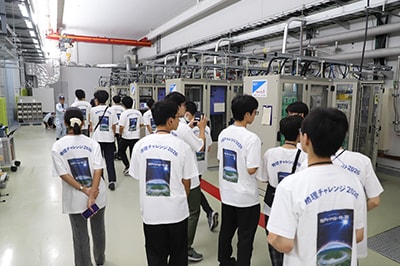
At the Shimadzu exhibit, the Shimadzu representative talked about their challenge on the NHK’s “Night of the Makaizo Society” TV show. They explained in a video and booklet that though the Shimadzu team only achieved a result of three seconds for the plastic umbrella time-of-flight challenge during the television program, volunteers from the team have continued to make improvements toward achieving their goal of the umbrella hovering for 150 seconds.
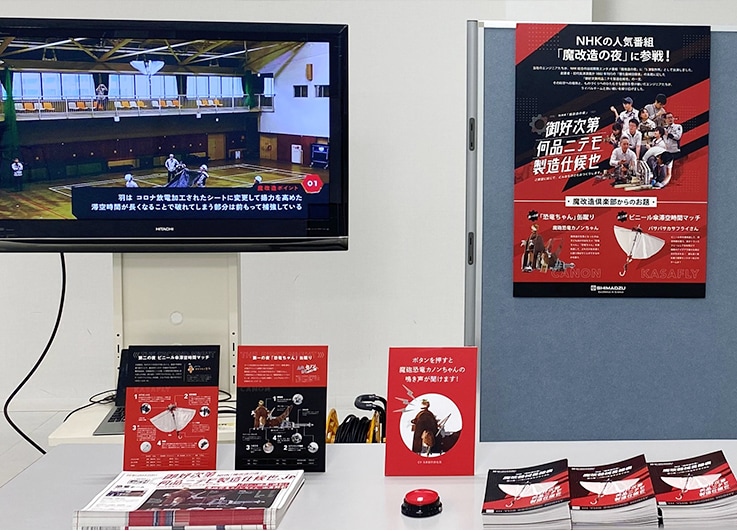
In response, when even students who had never heard of the program heard an explanation of the competition and its rules, they immediately started thinking about what would make the challenge difficult and what they would do if they were involved. Because the students had just finished a thermodynamics experiment, they also showed particular interest in how temperature affects the hovering umbrella. The participants openly asked questions about what they did not know and deepened their analysis based on what they learned.
2026 High School Chemistry Grand Prix
Stage for Exploring Chemistry that Attracts Top Competitors from throughout Japan
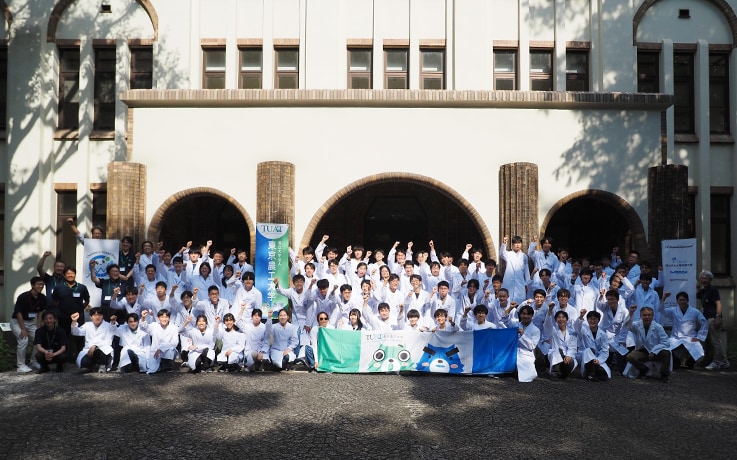
The 2026 Japan High School Chemistry Grand Prix final round was held over a three-day period, from August 20 through 22, at the Tokyo University of Agriculture and Technology. Of the 2,538 participants in the preliminary round, 74 were selected to compete in the final round, where they competed in chemistry knowledge as well as thinking and observation skills demonstrated through experiments.
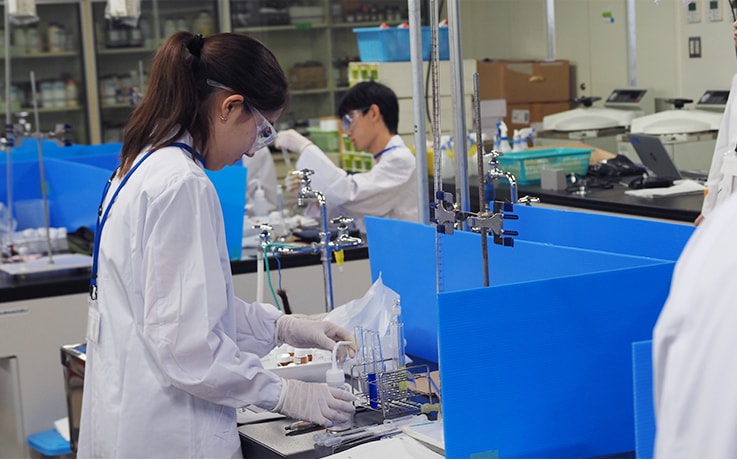
In addition to grand, gold, silver, and bronze prizes being awarded based on performance, participants who were second-year high school students or younger were selected as candidates to represent Japan at the following year’s International Chemistry Olympiad. It was a three-day event in which top high school students from across Japan demonstrated their spirit of inquiry into chemistry.
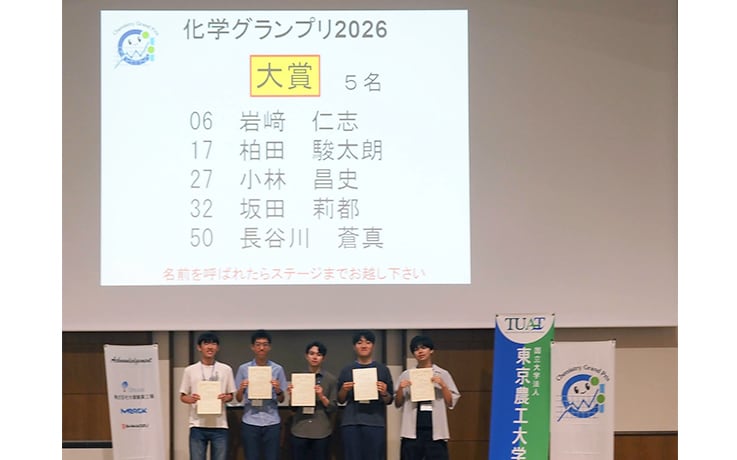
The corresponding 59th International Chemistry Olympiad (IChO2027) is scheduled to be held in July 2027 in Taiwan.
International Earth Science Olympiad
The 19th International Earth Science Olympiad (IESO) was held in Turin, Italy, from August 20 to 27, attracting about 150 participants from 39 countries and regions. The four representatives from Japan successfully achieved two gold medals and two silver medals.
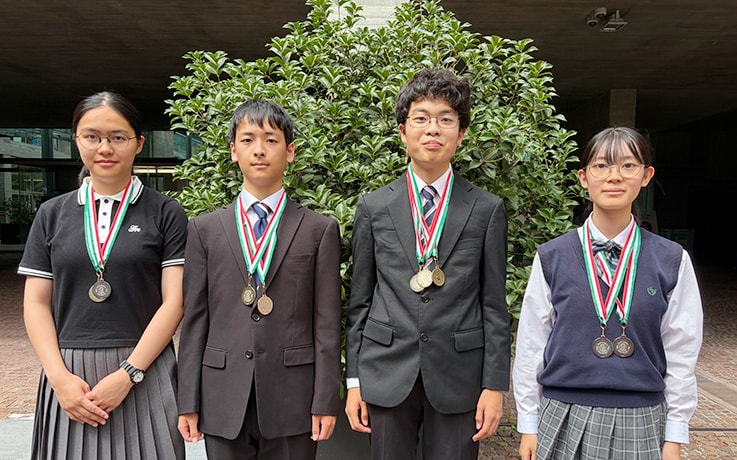
The next International Olympiad is scheduled to be held in Matsue City, Shimane Prefecture, in 2027. The application period for participation in the Japan Earth Science Olympiad, which is also the basis for selecting Japan representatives, is from September 1 to November 15.
Comment from the Person in Charge at Shimadzu Corporation
The curiosity and passion of the high school students striving to represent Japan, together with the dedication of the organizations supporting their growth, reaffirmed my belief that the Science Olympiads help nurture the people who will shape the future of science and technology.
The Science Olympiads not only provide opportunities to test one’s abilities but also offer a valuable chance to meet peers who share the same interests and grow together. Shimadzu remains committed to supporting young people who will shape the future of science and to communicating the fascination and potential of science. We hope that the Science Olympiads will inspire as many young people as possible to take on new challenges.
Photo credits: The secretariats of the respective Science Olympiad committees, except for photos of the Shimadzu exhibition booths.
 Page Title and URL Copied.