


1945
Manufacturing resumed
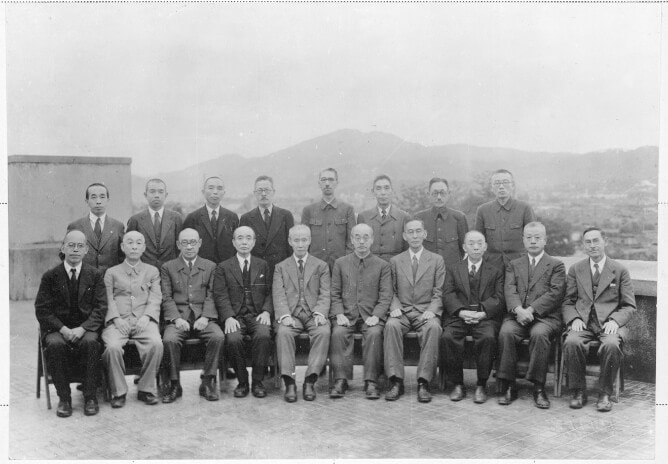
In August, one day after the end of the World War 2, an emergency board of directors meeting was held to initiate the process of winding up Shimadzu’s wartime activities. All employees resigned in September, but 2,865 were rehired the following month, and production resumed in November. Yosuke Suzuki was appointed third president, and full-scale activities based on a recovery plan commenced.
1947
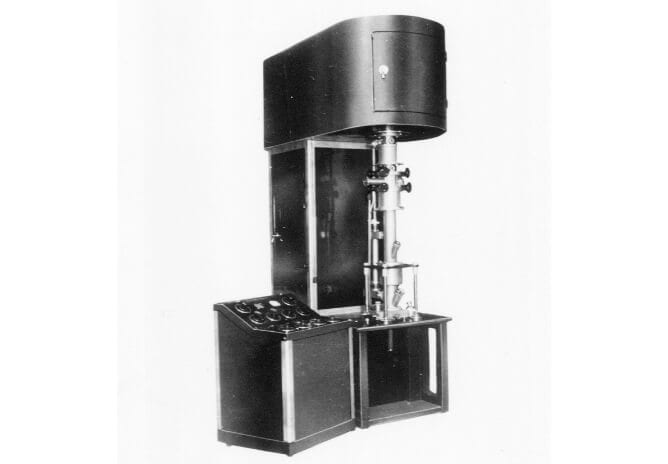
Shimadzu launched the first domestically-produced electron microscope
1948
Specimen Department became an independent company (today’s Kyoto Kagaku Co. Ltd)
1951
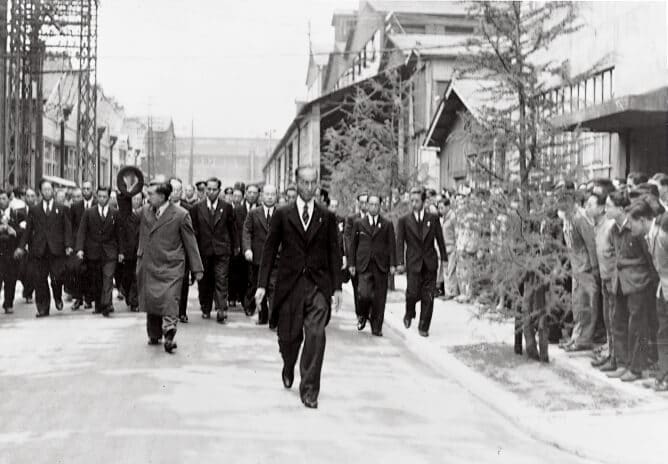
The Emperor visited the Sanjo Factory
During a visit to Kyoto to inspect postwar conditions and promote industry, the Emperor toured Shimadzu’s Sanjo Factory. In the electron microscope room, he observed diatoms, which were his area of research, through an electron microscope.
1953
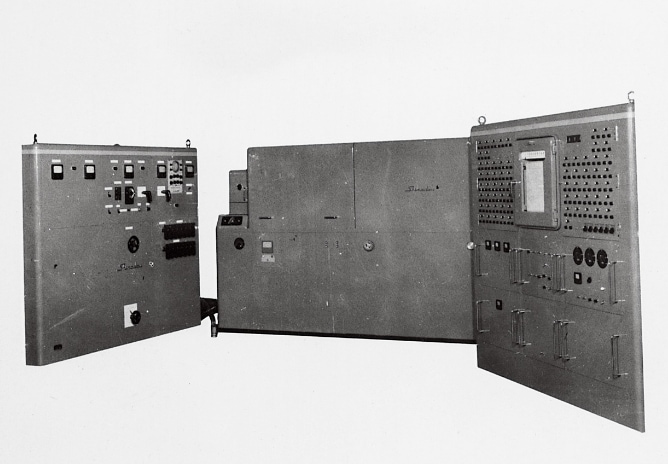
Sales began of Japan's first direct-reading optical emission spectrometer (quantometric recorder)
1956
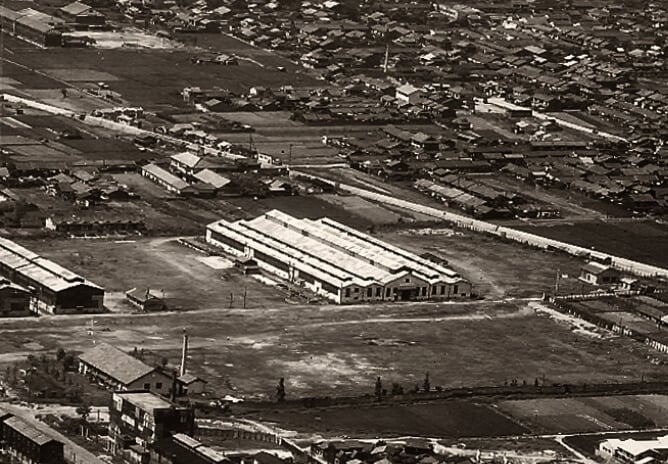
Aircraft Equipment Division was established
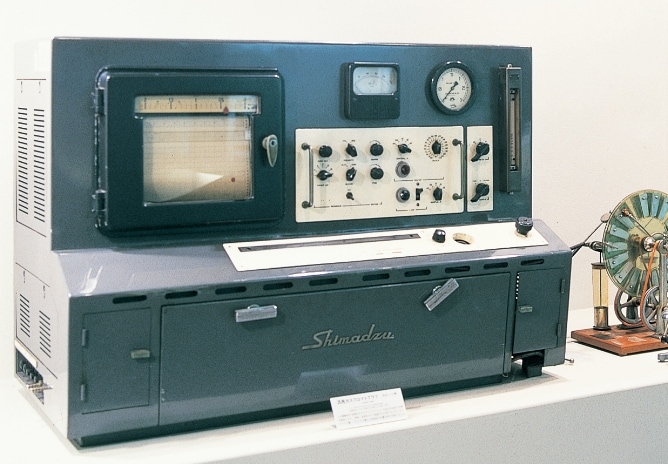
Shimadzu launched the first domestically-produced gas chromatograph
The gas chromatograph (GC) revolutionized the analysis of many substances such as petroleum products, solvents, chemicals, and food ingredients. GC use has spread widely along with the development of the chemical and food industries, and Shimadzu continues to develop these devices as a leading manufacturer.
1961
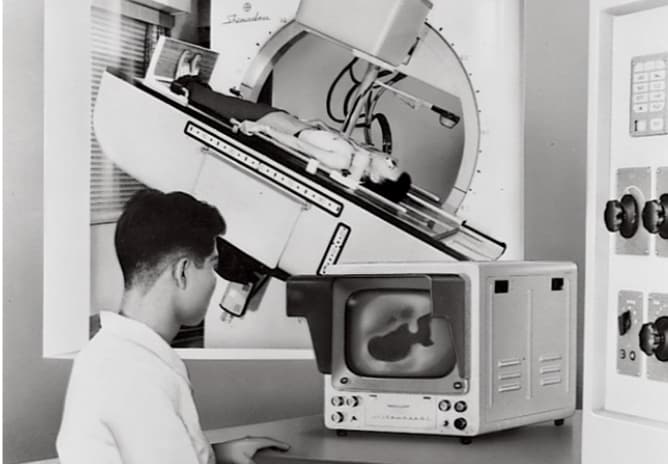
Shimadzu launched the world's first remote X-ray television system
1963
Established the New York Office
1968
Shimadzu (Europa) GmbH (SEG) was established in West Germany