
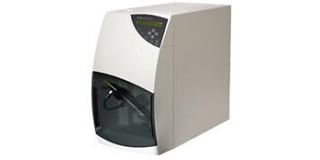
ELSD-LTII


High Performance Liquid Chromatography
Stevia, stevia rebaudiana bertoni, is a plant of the Compositae family native to Paraguay whose leaves have been used for centuries as a sweetener. Recently, it has been introduced as a crop in the United States and Canada in response to increased interest in natural foods. In its leaves, Stevia produces several sweet diterpene glycosides, which are non-glycemic, yet range in sweetness from 30 to 320 times that of sucrose. Four major Stevia diterpene glycosides are recognized in the literature: stevioside, rebaudioside A, rebaudioside C and dulcoside A. In addition to these, previously identified leaf constituents include volatile oil components, sterols, triterpenes, flavonoids, coumarins, and non-glycosidic diterpenes (sterebins). Research interest in Stevia has been oriented toward developing genetic lines in which levels of sweet-tasting glycosides are maximized and non-glycosidic diterpenes are minimized. Reversed phase HPLC with UV detection at 210nm has been used to determine constituents in commercial Stevia products, but the methodology is limited in its ability to separate all components of interest, especially when higher order oligosaccharides are present. Another problem is that any single UV wavelength is a detection compromise as the constituents exhibit a wide range of absorbance maxima (193, 204, 236, 238, 284nm). Some are only weakly chromophoric. The Evaporative Light Scattering Detector (ELSD) is a valuable complement to spectroscopic detectors for HPLC. The ELSD makes a measurement of photons scattered from semi- and non-volatile particles that have been dried of mobile phase through evaporation. Because its response is independent of the light absorbing properties of molecules, it can reveal sample components that UV detectors miss and provide a more accurate profile of relative component abundance than is possible with a spectroscopic detector. For this study, a normal-phase methodology with complementary detectors, ELSD and multi-wavelength UV (PDA), reveals a wide range of constituents in commercial Stevia products in a single run.
July 27, 2009 GMT