
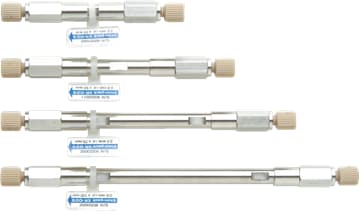
Shim-pack XR Series


Liquid Chromatograph Mass Spectrometry
In order to prevent residual pesticides and chemicals in food items from adversely affecting human health, the maximum residue limit of all pesticides, feed additives, and veterinary pharmaceuticals is set for each food item within the range of amounts that were determined to be safe for people to consume (the Positive List System). The Food Sanitation Act prohibits selling and importing food items with amounts of pesticides or other chemicals that exceed the maximum residue limit. Furthermore, maximum usage limits of pesticides and other chemicals are prescribed in the Agricultural Chemicals Regulation Law to prevent them from remaining in food items at amounts that exceed the limits. This article introduces an analysis of pesticides contained in green onion extracts using liquid chromatography tandem mass spectrometry (LC/MS/MS). The analyzed pesticides include endosulfan (benzoepin) which is a substance that was added on April 1, 2012 to the Ministerial Ordinance on Prohibition of Agricultural Chemical Sales. While endosulfan has conventionally been analyzed by gas chromatography mass spectrometry (GC/MS), detection by liquid chromatography mass spectrometry (LC/MS) with high sensitivity has become possible by optimizing the temperature and other conditions of the electrospray ionization interface for LC/MS. Good recovery factor resulted even for the green onion extracts obtained by the QuEChERS method which is known to have a relatively strong matrix influence. The example analyses introduced here cover endosulfan, thiamethoxam, dinotefuran, and an iprodione metabolite in green onion extract as well as imazalil, fludioxonil, pyrimethanil, and azoxystrobin in orange extract.
May 9, 2018 GMT