SSM- 5000A


Total Organic Carbon Analysis
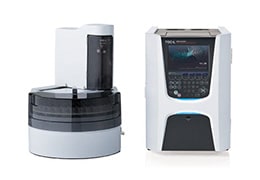
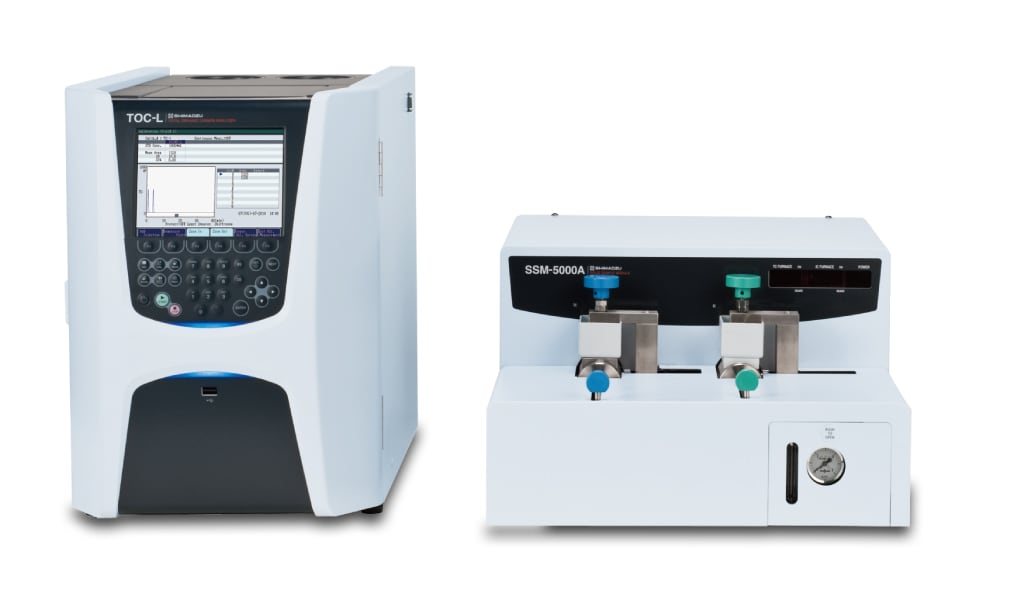
Eutrophication of lakes, marshes, and ponds near cities has progressed along side the development of economic activity and this has lead to cyanobacteria blooms, which are also known as "blue-green algae." Blue-green algae consist of a phytoplankton group called cyanobacteria, of which some types are toxic. For this reason, blue-green algae blooms cause concerns for the health of people and livestock who rely on water resources. In addition to eutrophication, high water temperatures and the stagnation time of lake water are also factors for blue-green algae blooms. Various water quality inspections on lake water are conducted in order to understand the environmental conditions that lead to blue-green algae blooms and to promote environmental conservation. This time, utilizing the combustion catalytic oxidation method of the Shimadzu Total Organic Carbon Analyzer TOC-L, we measured the concentration of carbon components in a suspension sample containing blue-green algae collected from lake water. Because carbon component concentration can be used as an index for understanding the intensity of blue-green algae blooms, gathering measurement data from differing sampling locations and timings facilitates investigation into the causes of blooms and the measures that can be implemented to prevent them. The measurement method introduced here involves measuring diluted stock solution of the blue-green algae suspension using the TOC-L system, and measuring the stock solution using the TOC solid sample measurement system that comprises the TOC-L and SSM-5000A.
February 24, 2017 GMT