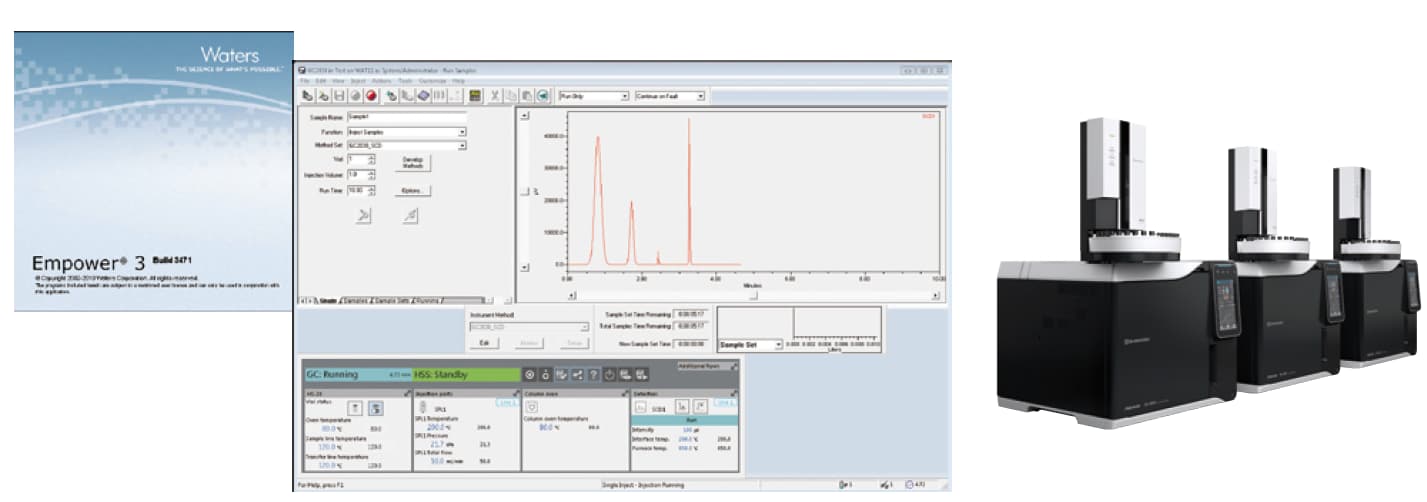
Shimadzu GC Driver for Waters Empower


Analysis of trans fatty acids in processed foods is mainly conducted by gas chromatography (GC) using a high-resolution capillary column and a flame ionization detector (FID), or by GC with a mass spectrometer (MS). Separation of fatty acid methyl ester (FAME) isomers, particularly cisand trans- isomers, is often conducted using a high-polarity cyanopropyl capillary column. However, when using a high-polarity column to analyze processed foods which typically contain a variety of contaminants, quantitation can be difficult due to incomplete separation of the many isomers present, even though separation can take as long as an hour per sample. On the other hand, measurement of fats and oils by FTIR can be conducted directly, taking only about 5 minutes including sample placement and rinsing. As effective as this may seem however, here too, there is a concern regarding contaminants in the food product. Up to now, not only has the extraction of fats and oils from food and biological samples had a large impact on the environment due to the heavy use of such solvents as chloroform and methanol, the methylation operation required for GC/FID and GC/MS analysis was also cumbersome. Here, under the guidance of Mr. Kouhei Yamamoto of Osaka Prefecture University, processed foods were subjected to saponification treatment and conventional solvent extraction, and the obtained sample extracts were analyzed by both FTIR and GC/FID methods. Here we report on our investigation comparing the differences in the trans fatty acid methyl ester quantitative results due to the respective analytical sample preparation and analysis methods.
September 24, 2012 GMT