
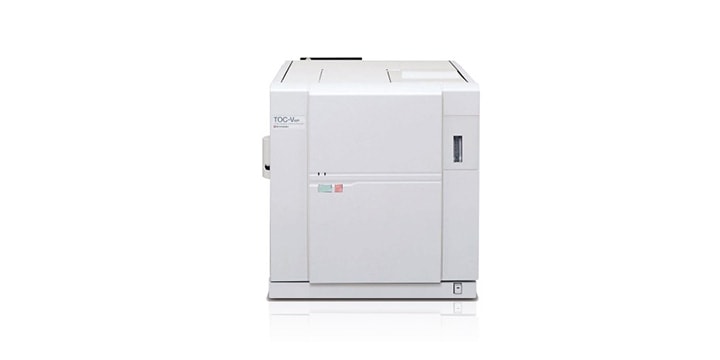
TOC-VWP


Organic additives are added to the electroplating solutions used in copper and nickel plating processes in PCB (Printed Circuit Board) production. The additives affect the plating quality and so controlling their concentrations is important for ensuring the quality of the PCBs. The concentrations of these additives can be controlled using a TOC analyzer. In general, electroplating solutions contain hydrosulfate at concentrations of a few percent or more. In order to avoid interference, dilution by a factor of at least 100 is required to use a combustion catalytic oxidation TOC analyzer. With a wet oxidation TOC analyzer, however, there is no interference, so other forms of the pretreatment like sample dilution is not required, and organic substances present in low concentrations in the electroplating solution can be measured accurately. Electroplating solutions that contain high concentrations of additive (i.e., 1,000 mgC/L or higher) and that can be greatly diluted can be measured using a combustion catalytic oxidation TOC analyzer. On the other hand, electroplating solutions that contain low concentrations of additive (i.e., 100 mgC/L or lower) and that cannot be greatly diluted can be measured accurately using a wet oxidation TOC analyzer. In the PCB plating process, the electroplating solution is contaminated by the elution of organic substances from the board material itself. With electroplating solutions that contain low concentrations of additive, however, this organic contamination can be controlled using a TOC analyzer. In this application news, we present an example of the measurement of copper plating solution performed using Shimadzu Wet oxidation TOC Analyzer TOC- VWS.
September 11, 2006 GMT