
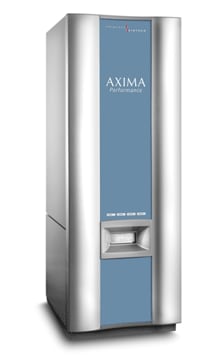
AXIMA Performance


Using the AXIMA MALDI-TOF-MS system for end-point analysis of two-dimensional electrophoresis, we analyzed carbonylated proteins in the CA1 area of a monkey hippocampus affected by ischemia-reperfusion. It is known that reactive oxygen species, or oxygen radicals (ROS), negatively impact a great many diseases, including cancer, cardiac disease and cerebral stroke, which are the leading causes of death among the Japanese, in addition to such lifestyle diseases as diabetes and arteriosclerosis. Reactive oxygen species are known to include hydrogen peroxide, the superoxide anion radical, and the hydroxyl radical, etc., and all of these cause non- physiological posttranslational modifications in nucleic acids, lipids, proteins and other types of biological molecules. Protein carbonylation is a type of protein damage resulting from oxidative stress in cells, and these carbonylated proteins are used as markers for oxidative stress to proteins. Oxidative carbonylation occurs when an aldehyde is formed on the side chains of amino acids such as arginine and lysine, which comprise proteins. It is suggested that selective neuronal cell death occurs in the hippocampus CA1 area due to transient cerebral ischemia, resulting in memory impairment. Here, using a sample consisting of the hippocampus CA1 area affected by transient cerebral ischemia, two- dimensional electrophoresis was conducted, and spots thought to be carbonylated proteins were excised and analyzed by LC-MALDI. The results confirmed the carbonylation of the 469th arginine of the Heat shock- 70 kDa protein 1 (Hsp70-1), which plays a role in regulating cell death.
April 22, 2010 GMT