
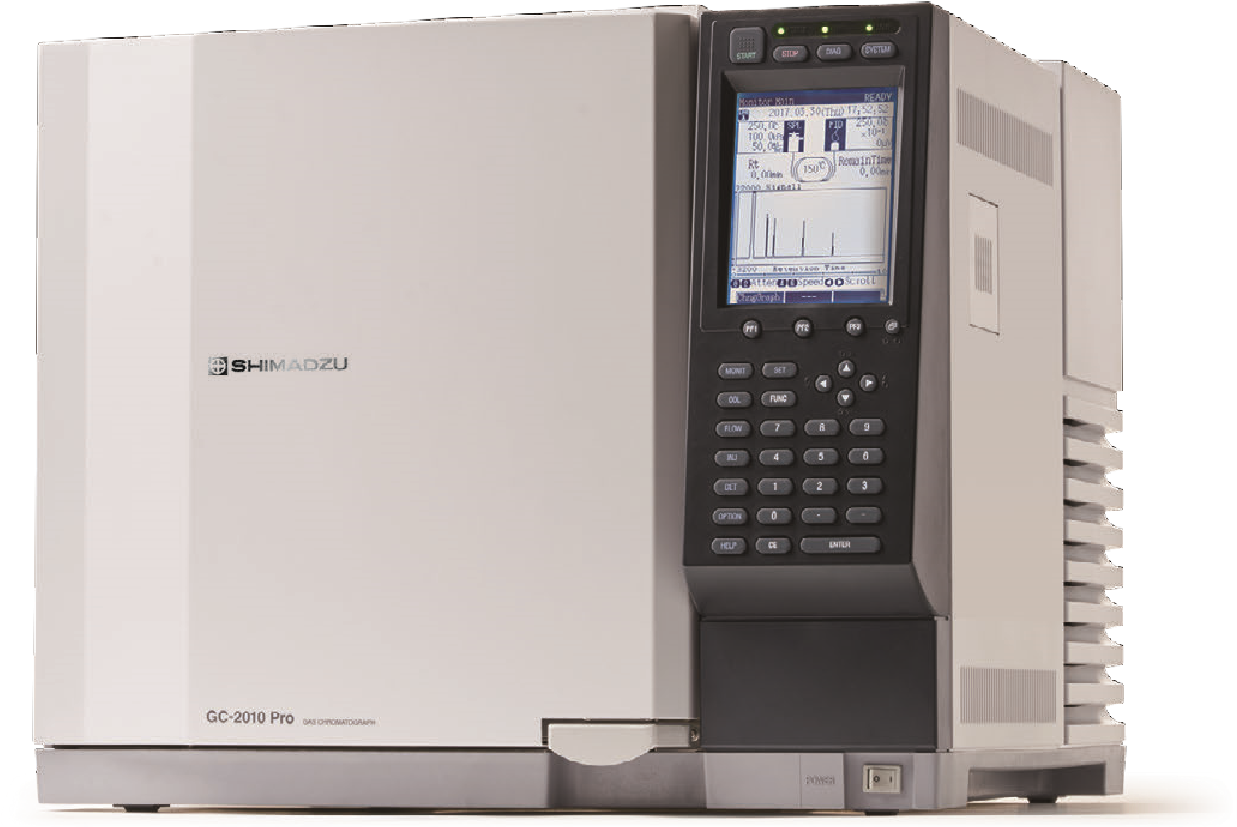
GC-2010 Pro


Vegetable oils typically contain many unsaturated fatty acids, which have relatively low melting points, and are liquids at ambient temperature. When products like margarine and shortening are manufactured, hydrogen is added to the unsaturated fatty acids, converting them to the corresponding saturated fatty acids. This process results in products that are solids at ambient temperature. However, some of the unsaturated fatty acid isomers are not completely saturated in this process, and residual trans-unsaturated fats (triglycerides of trans- unsaturated fatty acids) remain in the hydrogenated product; these trans-unsaturated fats are associated with adverse health effects. For this reason, analysis of fatty acid isomer compositions has become important. Separation of the isomers of fatty acid methyl esters (FAMEs) by gas chromatography, and specifically the cis- and trans-isomers, is conducted by gas chromatography using strongly polar cyanopropyl capillary columns. Here we present our investigation of the chromatography of C18 fatty acid isomers using two types of columns, the BPX-90 and Rtx-2560.
January 29, 2010 GMT