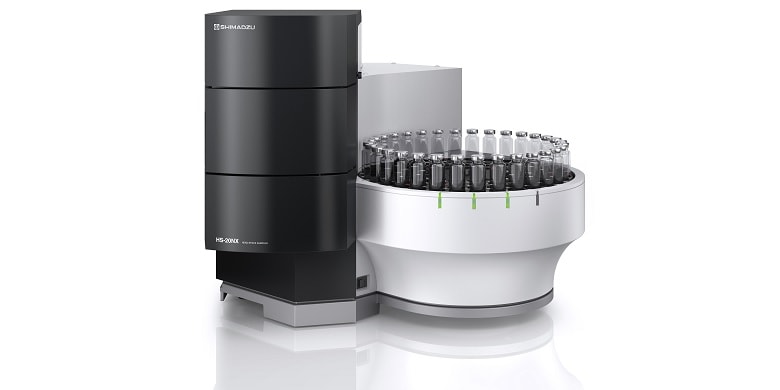
HS-20 NX series


There are two methods of analyzing residual solvents in pharmaceuticals: a method where the pharmaceutical is dissolved in a solvent and the solution is directly injected to GC, and a method where the solution is enclosed and heated in a vial and the evaporated gas phase is analyzed by GC. The latter method is called the headspace GC. In headspace GC, the sensitivity to the target solvent components largely depends upon the degree to which they evaporate into the gas phase by being heated in the vial. The amount of components evaporating into the gas phase differ depending on the type of solvent used to dissolve the pharmaceutical (dilution solvent in the case of standard solution), due to the difference in solubility of the target components in the solvent. Application News G209 introduced an example of analyzing Class 1 and 2 solvents to investigate the differences in sensitivity depending on the dilution solvent used for analysis. This Application News introduces analysis of some Class 3 solvents. The dilution solvents examined were water (stipulated in the USP and EP), DMSO (stipulated in the USP), and DMF (stipulated in the EP). These solvents were also used in Application News G209. For each component, a standard solution of 100ppm concentration was enclosed and heated in a vial. The heating conditions were: 80 ̊C and 60minutes for water and DMSO (specified in the USP, specified in the EP for water), and 105 ̊C and 45minutes for DMF (specified in the EP).
September 5, 2005 GMT
Some products may be updated to newer models