
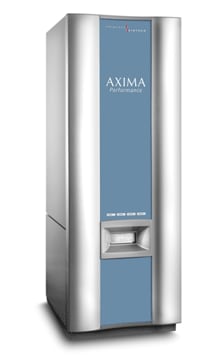
AXIMA Performance


Synthetic polymers may deteriorate as a result of various factors such as light, heat, mechanical stress, electrical stress, radiation, chemicals and moisture.Various additives such as antioxidants, UV absorbent, HALS (Hindered Amine Light Stabilizers) and thermal stabilizers have been developed to maintain the properties of polymers and prevent degradation. The amount of additive depends on the intended use of the polymer but, typically, it is less than 1% (w/w).The additive also depends on the grade or the manufacturer of the polymer, even if the type of polymer is the same. Analysis of additives in synthetic polymers is therefore important for the evaluation or improvement of polymer properties. Recently, MALDI-TOF MS has been used for the analysis of polymer additives.However, minor components such as additives may not be detected as a result of ion suppression by major components present in the sample. SEC (Size Exclusion Chromatography)-MALDI is an effective tool for detecting these minor components. In SEC-MALDI, a mixture of components is first separated by SEC and the resulting fractions are analyzed by MALDI-TOF MS. We have developed a spotting/ fraction collection robot (AccuSpot) which can be used for the automatic collection and preparation of fractions for MALDI analysis. Eluent from the SEC column is mixed with MALDI matrix and automatically deposited onto a MALDI target as discrete fractions.The AccuSpot used for this application has been modified so it is tolerant to the organic solvents typically used for SEC separation of synthetic polymers. Here, we present an example demonstrating the detection of an additive present in a commercial acrylic resin plate.
May 29, 2009 GMT