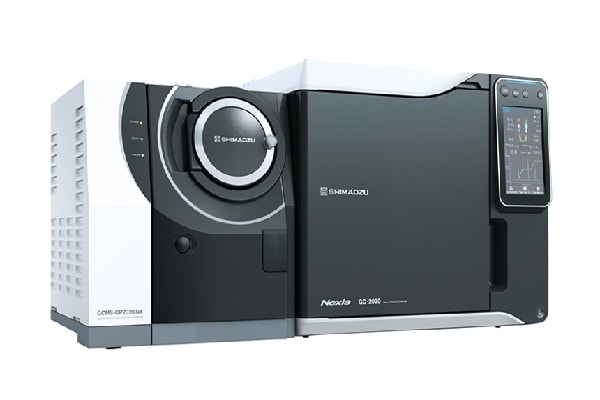
GCMS-QP2020 NX


Gas Chromatography Mass Spectrometry
The flavor and smell of food, together with its taste, are important factors in the sales of food products. With heightened interest in diet in recent years, food manufacturers are developing functional, high quality foods, increasing the need for evaluation of the aroma produced by foods in actual use situations such as cooking and eating. The aroma of foods consists of the intrinsic smell of the food itself and the smell produced by heating the food. Even foods that seem to have an unpleasant fishy smell before cooking lose that smell when heated, and the components responsible for its smell change to an aroma component, for example, giving a unique roast smell. The Maillard (aminocarbonyl) reaction plays a key role in the formation of this unique aroma during heating, and the products also include substances with distinctive smells. In this Application News, we evaluated the difference in the aroma components of soy sauce when cooked and when unheated. This article introduces the results of a search for the distinctive components of soy sauce when cooked and when unheated by comparing the aroma components detected under these respective conditions using Signpost MS (Reifycs Inc.), a multivariate analysis software program.
March 1, 2020 GMT