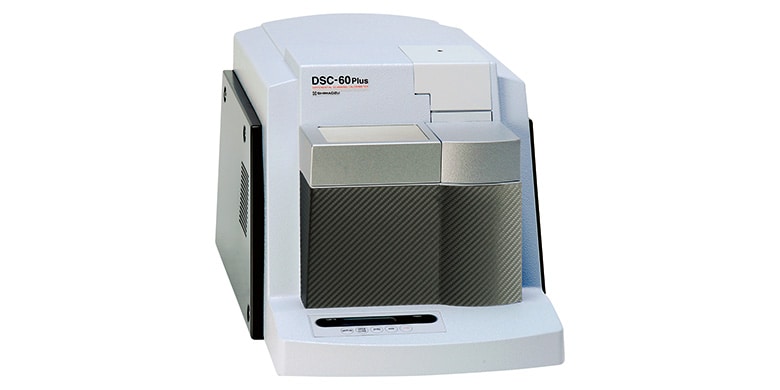
DSC-60 Plus Series


Thermal Analysis
Carbohydrates such as rice and bread invariably contain starch. When starch is heated in the presence of water, the starch granules swell and break down, and gelatinization occurs. The “sticky” or glutinous feel of cooked rice and baked bread are due to gelatinization. As a distinctive feature of gelatinization, gelatinization behavior differs depending on the type of starch and the environment in which gelatinization occurs. Moreover, if gelatinized starch is allowed to stand, the amylose and amylopectin which exist in swollen starch granules will release water due to aggregation and rearrangement, causing the granules themselves to harden. This phenomenon is called retrogradation of starch. Because drying due to this retrogradation phenomenon is a cause of hardening of bread and rice with time, food manufacturers may take measures to retard the retrogradation rate of commercial breads and retort-type rice products. In this article, the differences in the gelatinization characteristics of various types of starch using water and salt water and differences in the retrogradation rate of bread made with wheat starch with time were evaluated by measurement by differential scanning calorimetry (DSC).
August 1, 2020 GMT