
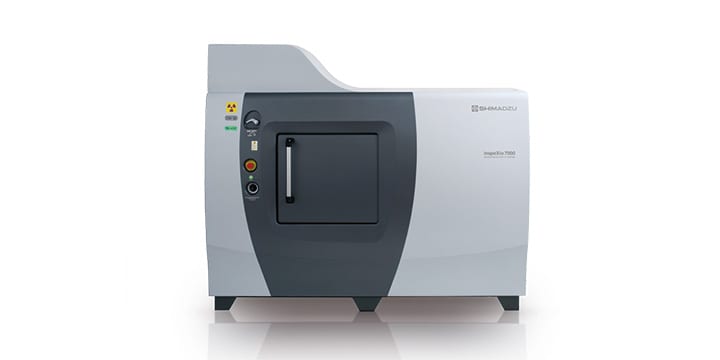
inspeXio™ 7000


Sponges form a reticulated porous structure in natural spongin fiber, rubber, and synthetic resins, and have excellent water absorbing and water holding properties, flexibility, and elasticity. The functions required in sponges differ depending on the intended application. For example, in sponges for dishwashing, the function of efficiently removing stains is enhanced by overlaying a demembraned urethane layer with high cleaning power on a urethane layer with excellent detergent holding power. In order to produce sponges with functions suited to the purpose, it is necessary to change their structure, that is, the size, shape, and distribution of the pores. Determining whether the internal structure of a sponge can demonstrate functions suited to the purpose of use is important for product development and quality control. Therefore, microfocus X-ray CT system is used as one technique for acquiring information about the internal structure of sponges. Microfocus X-ray CT systems are suitable for evaluating materials with complex reticulated porous structures like those of sponges because simple, nondestructive observation of the 3- dimensional internal structure of the target item is possible without special sample preparation. This article introduces an example of observation and analysis of the porous structure of a dishwashing sponge using a Shimadzu inspeXio SMX-225CT FPD HR Plus microfocus X-ray CT system.
October 27, 2020 GMT