
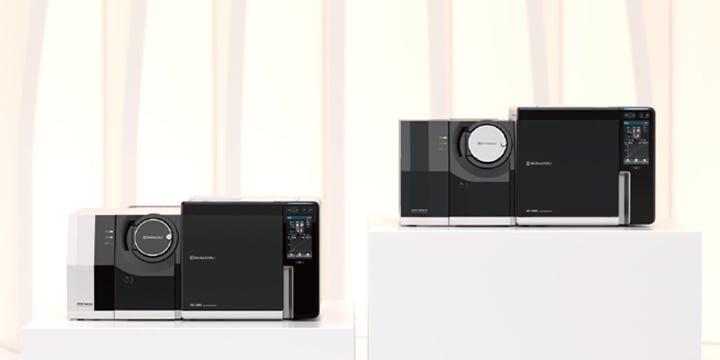
GCMS-TQ RX Series


Gas Chromatograph Mass Spectrometry
Persistent Organic Pollutants (POPs) in food and animal feed products are analyzed by a variety of methods. In particular, quantitative analysis of dioxins to low concentration levels is necessary because dioxins have high toxicity, even among POPs. Until now, magnetic sector-type (double focusing) GC-MS (GC- HRMS) had been used in analysis of dioxins, as this method provides high quantitation accuracy. However, because the quantitation performance of triple quadrupole GC-MS (hereinafter, GC-MS/MS) has improved remarkably in recent years, the EU issued Commission Regulations (EU) 589/2014 and 644/2017 establishing analysis methods using GC-MS/MS as official test methods with the same positioning as methods using GC-HRMS. For this reason, analysis of dioxins by GC-MS/MS has attracted interest. In ionization by the EI method, Boost Efficiency Ion Source (BEIS) is an ion source that maximizes ion efficiency by optimizing the focal point of the electron beam. BEIS realizes sensitivity approximately four times* higher than that of conventional ion sources. In this article, we analyzed dioxins in about 250 samples of approximately 40 types of food and animal feed products using a GC-MS/MS with BEIS. (However, the dioxins were limited to polychlorinated dibenzo-p-dioxin (PCDD) and polychlorinated dibenzofuran (PCDF).) Quantitation performance was evaluated by comparing the analysis results obtained by GC-HRMS and GC- MS/MS. We also evaluated the number of analyses possible while maintaining sensitivity at low concentrations in order to verify the durability of the GC-MS/MS instrument.
June 25, 2023 GMT