
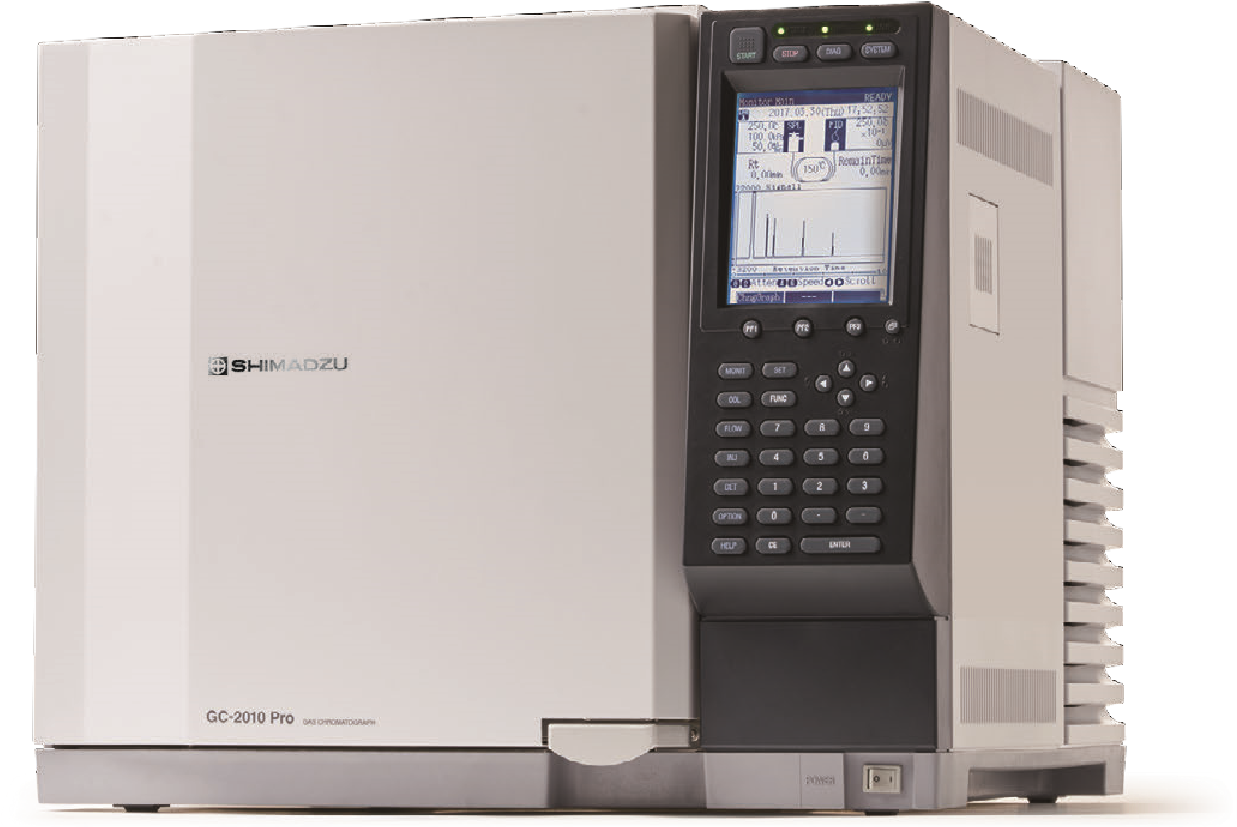
GC-2010 Pro


Gas Chromatograph-Mass Spectrometry
The Restriction of Hazardous Substances (RoHS) Directive controls six hazardous substances commonly used in electronic and electrical equipment. Two of the restricted substances are compound classes commonly used in flame retardants: polybrominated biphenyls (PBB) and polybrominated diphenyl ethers (PBDE), both known to cause serious health concerns due to their high halogen content. Beside brominated flame retardants, phthalate esters have also been controlled by a number of regulatory authorities. The United States congress has prohibited the use of six specified phthalate esters (DBP, DEHP, BBP, DINP, DIDP and DnOP) in children’s toys at concentrations higher than 0.1% under the Consumer Product Safety Improvement Act of 2008 (CPSIA). The European commission has identified DBP, DEHP and BBP as reproductive toxicants under directive 2005/84/EC . The Environmental Protection Agency (EPA) has proposed adding eight phthalates to the list of chemicals of concern under the Toxic Substances Control Act (TSCA), including DIBP, DBP, BBP, DEHP, DnOP, DINP, DnPP and DIDP. The Food and Drug Administration (FDA) Center for Drug Evaluation and Research (CDER) recommends avoiding the use of DBP and DEHP as excipients in CDER-regulated drug and biologic products, including prescription and nonprescription products. To quantitate these substances in a polymer matrix, the traditional approach involves solvent extraction of PBBs, PBDEs and phthalate esters from the sample matrix, followed by detection and quantitation by gas chromatography/mass spectrometry (GC/MS). This method is time consuming and poses the risk of exposure to multiple toxic solvents. Pyrolysis followed by GC/MS has been well established for detection of volatile and semi-volatile compounds in both natural and synthetic polymers. Using the pyrolysis technique described here, a temperature programed micro-furnace provides thermal desorption processes at two temperature ranges, releasing the PBBs, PBDEs and phthalate esters from the polymer matrix for subsequent analysis by GC/MS. In this application note, a PY-GC/MS method has been used to screen for seven phthalate esters and 11 brominated flame retardants. A commercially available method package was used, which includes phthalate ester and PBDE standards, pre-registered instrument methods with acquisition and data processing parameters, and calibration curves for semi-quantitative calculation of compound concentration. Quantitation results were generated with minimal sample preparation, requiring no organic solvents. A software program for efficient multi-analyte data confirmation and QAQC review is also discussed.
September 17, 2015 GMT