
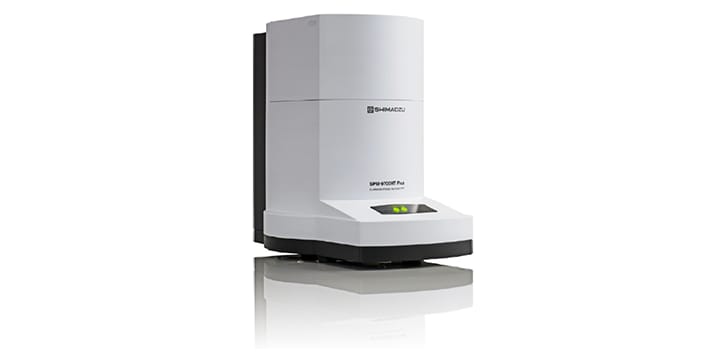
SPM-9700HT Plus


Progress in regenerative medicine using iPS cells has been remarkable in recent years, and clinical research has also been reported. Among the result of research on iPS cells, it has been reported that the colony shape, proliferation rate, and other features differ depending on the cell line derivation and culture method, and depending on the case, iPS cells may form cancer cells. Since it can be inferred that the differences in iPS cells referred to as “individuality” are one factor that controls differentiation into diverse types of cells, elucidation of iPS cell individuality may be a key to large advances in regenerative medicine. However, the origins of individuality are still largely unknown, and this has become an obstacle to the use of iPS cells. Therefore, in Application News No. S38, iPS cells and HeLa cells were observed with a scanning probe microscope (SPM), and as a result, it was found that the intercellular adhesion between iPS cells has a network structure. Focusing on the mechanical properties of the cells, hardness was analyzed in the following report. The results suggested that the hardness of HeLa cells is substantially uniform, as the difference between hard and soft parts is slight, whereas the intercellular adhesion area of iPS cells is hard, and the cell body itself is soft.
November 8, 2019 GMT
