
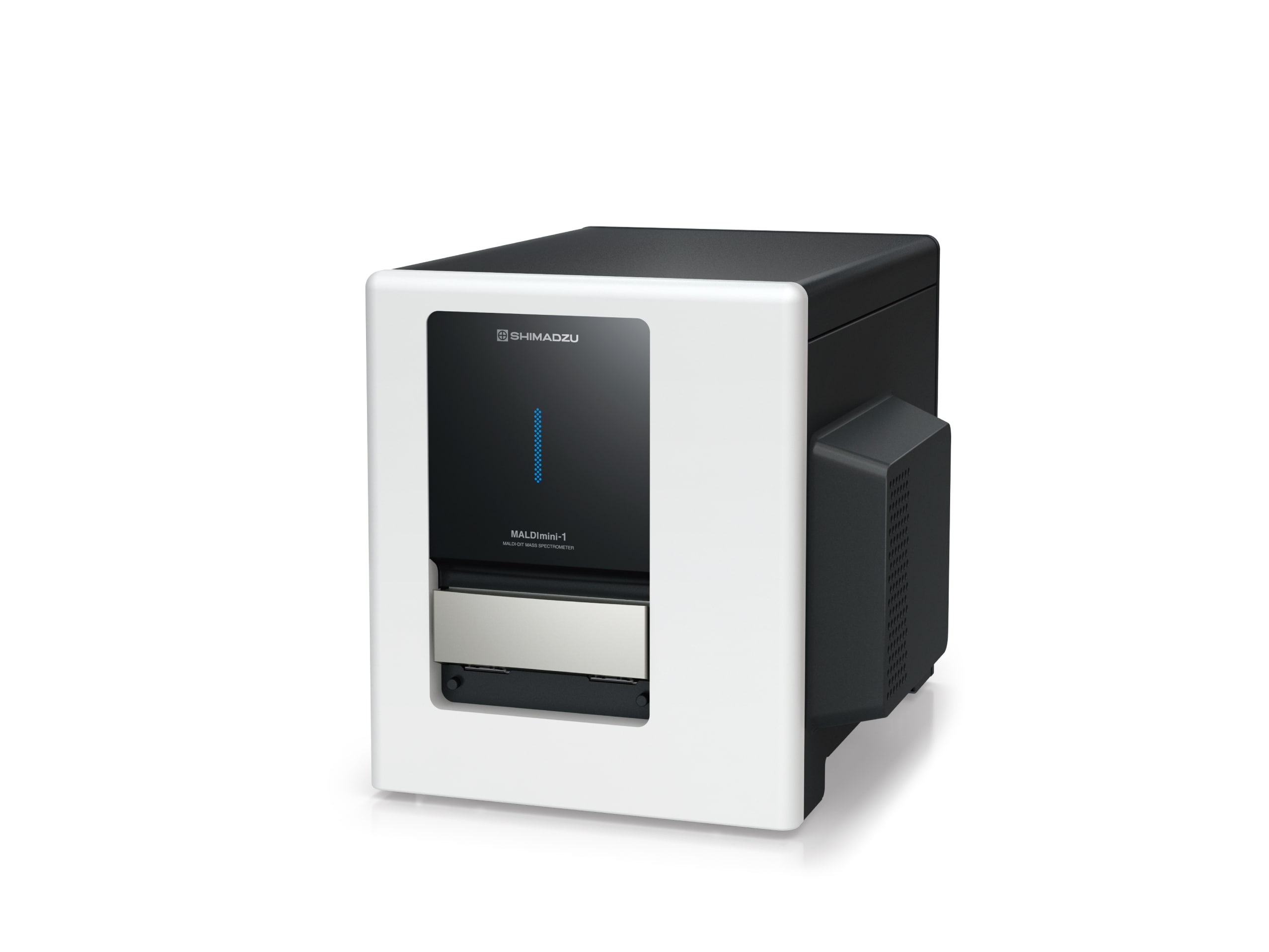
MALDImini-1


N-linked glycosylation to proteins plays an important role in various biological phenomena. In particular, sialic acids existing at sugar chain terminals and their linkage types are known to be key factors related to numerous diseases, such as antigenicity and viral infections. In recent years, mass spectroscopy (MS) has been widely used in glycan analysis. However, there were various problems related to sialic acid residues, in that they are unstable and thus easily lost while analysing, and furthermore, it is not possible to differentiate linkage isomers by MS. On the other hand, HPLC analysis is mainly used to identify the linkage type of sialic acids, but this method also has technical problems, for example, identification is difficult in the case of glycans with numerous sialic acids. Focusing on a blood serum-derived N-linked glycan, this article introduces an example in which sialic acid residue was stabilized by using the sialic acid linkage specific alkylamidation (SALSA) method, which was developed by Shimadzu Corporation, and detection and analysis were performed with a Shimadzu MALDImini-1 compact MALDI digital ion trap (MALDI-DIT) mass spectrometer.
June 14, 2019 GMT

