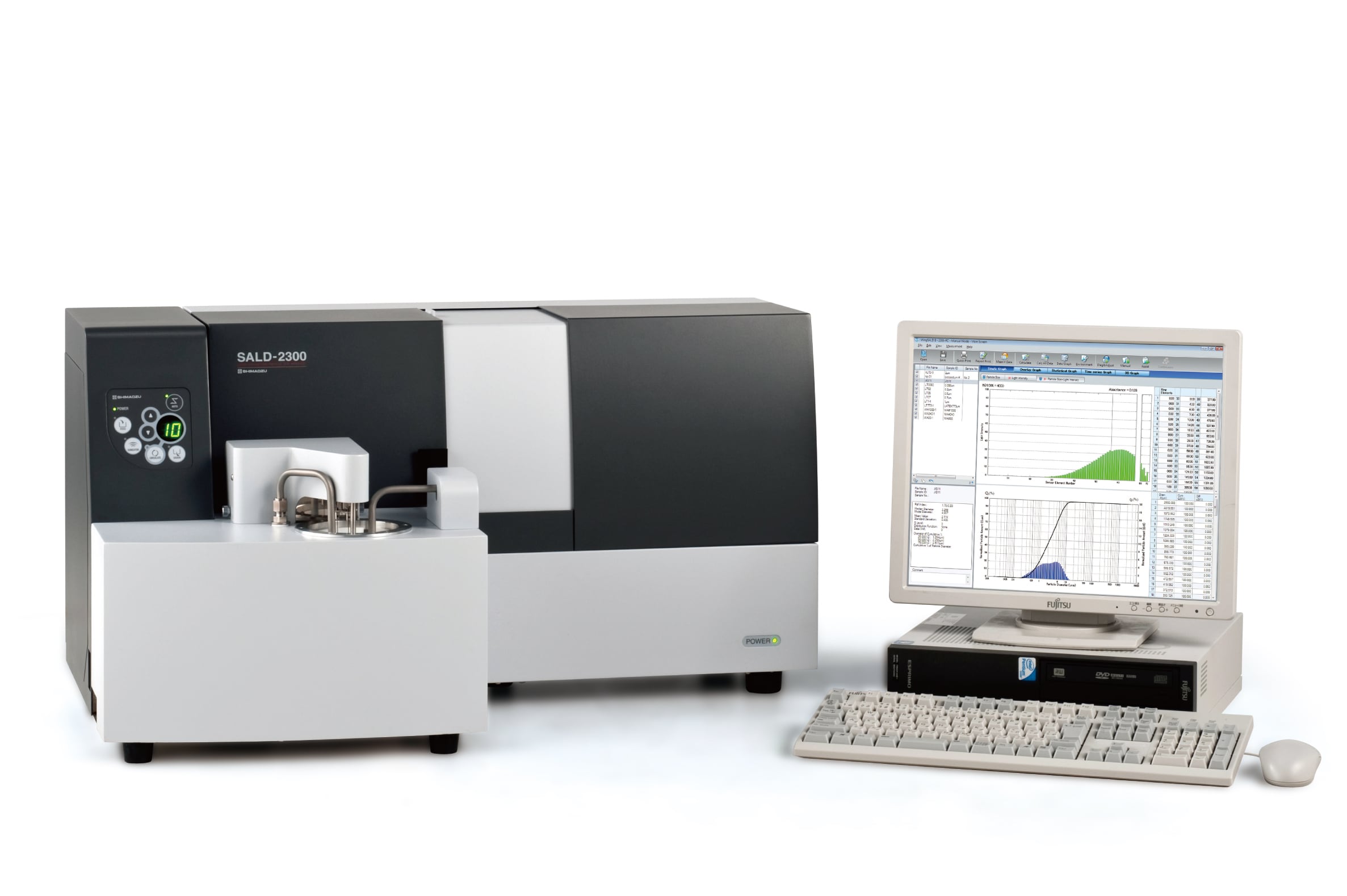
SALD-2300


Milk is a natural occurring oil-in-water emulsion, in which the fat globules are dispersed in a continuous phase of milk plasma containing lactose, protein, vitamins and minerals. The main structural components of milk are fat globules and casein micelles as shown in Figure 1. The fat globules are surrounded by the milk fat globule membrane which acts as an emulsifying agent that prevents aggregation and coalescence of milk fat . The particle size distribution of these fat globules ranges from 1 μm to 10 μm, depending on the cow breed and seasons. On the other hand, casein protein in the form of spherical micelle structure are mostly in the range of 40 nm to 300 nm in diameter. The size of fat globules can be altered through mechanical treatment such as homogenization process where milk is passed through a tiny orifice under high pressure. This would decrease the size of the fat globules to an average diameter of about 1 μm which improves the stability of emulsion and shelf life of the milk. The size of fat globules and casein micelles in milk is important as it contributes greatly to the texture, flavour and creaming stability of the milk. Therefore, it is important to monitor the particle size distribution of fat globule from homogenization process of milk to ensure the quality and consistency of the end product. One method to determine the particle size distribution in milk is by laser diffraction method. This application news introduces the particle size distribution measurement of milk using SALDTM-2300 particle size analyzer.
February 25, 2020 GMT