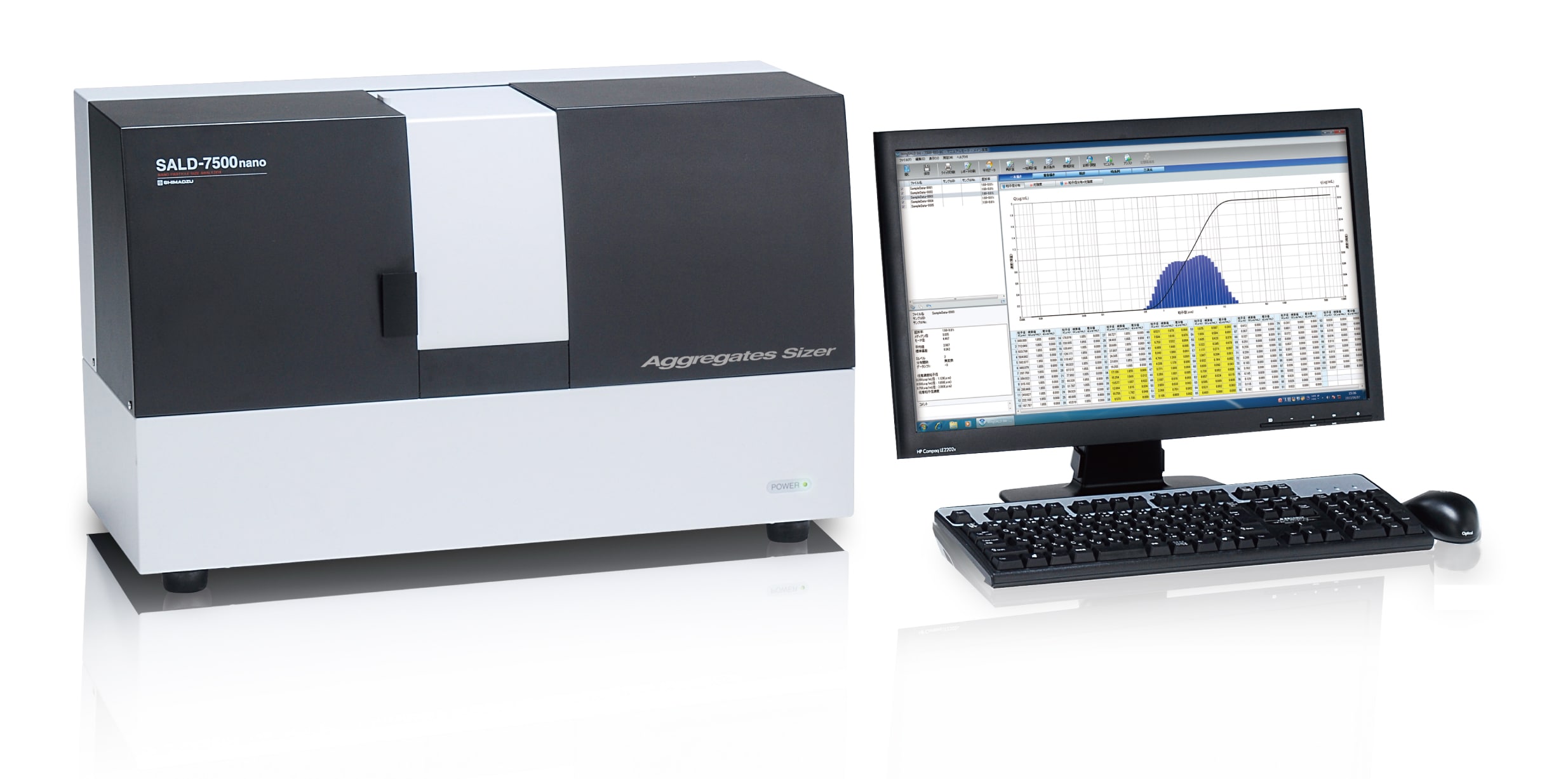
Aggregates Sizer


Because particulate substances in blood (e.g. erythrocytes, leucocytes, thrombocytes, apoptotic bodies, microvesicles, and exosomes) have diverse types of bioactivity in the body, information concerning their concentrations is important in disease risk prediction and judgment of health condition. Although automatic blood cell measurement devices and techniques such as the electrical sensing zone method, ELISA, and flow cytometry are used as quantification methods for particles in blood, there are problems affecting throughput when analyzing large numbers of samples, in that the antibody reaction requires time and the objects of measurement and target particle size range are limited. The Shimadzu Aggregates SizerTM is an analytical device which measures the size and concentration of particles in liquids by the quantitative laser diffraction (qLD) method. Since pretreatment by the antibody reaction is not necessary, and the particle size distribution is calculated from the total information obtained when the laser is irradiated once on a large number of particles, it is possible to acquire data with high reproducibility in one measurement requiring only a few seconds. Because the measurable particle size range is wide, from 0.1 μm to 10 μm, if the sizes of the particles are different, the concentrations of the respective particles can be obtained without separation. (However, quantification accuracy decreases in the case of mixed samples of unknown density and refractive index. This is not a problem in relative comparisons of the same types of particles.) This article introduces an example of measurement of blood with the Aggregates Sizer and quantitative evaluation of the particles in blood.
September 30, 2019 GMT