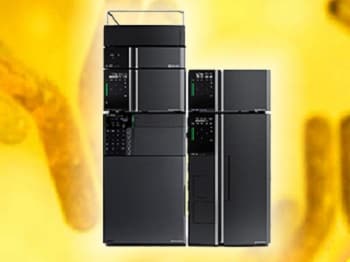
Nexera lite inert


- Separation of isopropyl methylphenol (IPMP) and butyl paraben is possible by reversed phase chromatography (resolution of 2 or more). - IPMP can be detected by both fluorescence and UV-visible absorption at the blending quantity restriction (0.1 to 0.5%) imposed by Japan’s Ministry of Health, Labour and Welfare. - High speed analysis makes it possible to reduce analysis time by approximately 50% and mobile phase consumption by approximately 40%.
The sale of antibacterial soaps containing triclosan was banned by the European Chemicals Agency (ECHA) in 2015 (1). Similarly, sale of antibacterial soaps containing 19 compounds including triclosan was also banned by the United States Food and Drug Administration (FDA) in 2017 (2). Following these measures, Japan’s Ministry of Health, Labour and Welfare (MHLW) issued a notification requiring replacement with alternative products (3). Isopropyl methylphenol (IPMP) is a typical compound adopted for an alternative product. Referring to the test methods for perfumery and cosmetics in Methods of Analysis in Health Science (The Pharmaceutical Society of Japan, 2015), in case a product contains butyl phydroxybenzoate (butyl paraben) as a preservative, normal phase chromatography (normal phase mode) should be adopted since there is a possibility of peak-overlapping of butyl paraben and IPMP in reversed phase chromatography (reversed phase mode) (4). However, it is known that handling is more difficult in the normal phase mode than in the reversed phase mode. This article introduces analyses in which these compounds were able to be separated with the resolution of 2 or more, even in the reversed phase mode by using a Shim-pack™ GIST C18 column.
February 28, 2021 GMT
Some products may be updated to newer models