
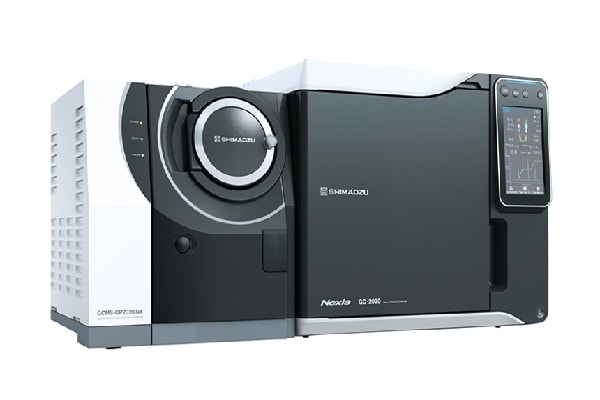
GCMS-QP2020 NX


The pineapple (Ananas comosus) is a non-climacteric fruit with high market value and production volume. Non- climacteric fruits do not ripen after harvest and therefore, the ripening stage at the time of harvest is an important factor that determines sensory quality and shelf life. The ripening stage of pineapple is divided into 5 stages, C0– C4, with the green-ripe fruit at C0 and the full-ripe fruit at C4 based on United Nations Economic Commission for Europe (UNECE) Standard for pineapple (FFV-49) as seen in Fig. 1. This classification is based on the peel color of pineapple, in which C0 stage contains 0 % yellow color, C1 stage contain 0 %–25 % yellow color, C2 stage contains 25 %–50 % yellow color, C3 stage contains 50 %–75 % yellow color, and C4 stage contains 75 %–100 % yellow color. Pineapple is usually exported in the C1 stage, while the fully ripe fruit (C4 stage) is mainly for domestic consumption. To date, there has been no study that analyzed different parts of pineapple including flesh, peel, and crown parts, and incorporating broad coverage of primary metabolites such as sugar, organic acid, amino acid, sugar alcohol, sugar acid, and amine compounds. Hence, this study aimed to investigate the metabolite changes that occurred during the course of ripening in pineapple. Orthogonal projection of latent structures (OPLS) model was constructed using metabolites annotated by GC-MS as an explanatory variable and ripening stages as a response variable. The constructed model from flesh and peel samples indicated several potentially important metabolites that were correlated with the pineapple ripening process.
February 28, 2021 GMT