
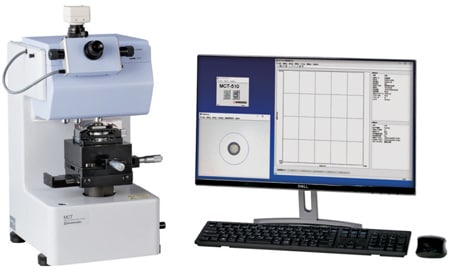
MCT Series


In recent years, various research institutes and companies have been actively researching the therapeutic applications of regenerative medicine. In regenerative medicine, injuries and illnesses are treated by culturing the desired cells and tissues in vitro and then transplanting them . There are high hopes for the potential of this approach to cure illnesses that are currently hard to treat. In 2014, retinal pigment epithelial cells were transplanted in the world’s first clinical study using human iPS cells. Since then, clinical studies have been conducted using cultured neurons, cultured chondrocytes, and cultured myocardial cell sheets, indicating that regenerative medicine is moving beyond the research stage to clinical applications. However, realizing such applications involves a number of issues. An important one is to establish quality control techniques for the cultured cells and tissues used for transplantation. At present, we rely on experienced researchers to make acceptability judgments. In addition, to achieve widespread use, quality control methods are needed to evaluate the characteristics of cultured cells and tissues quantitatively. As an example, this article introduces the measurement of deformation strength*1 as an equivalent to the hardness of cell aggregates, a model for cultured tissues. The Shimadzu MCT™ micro compression testing machine is suited to compression tests on microscopic samples and can handle even flexible cell aggregate samples. Generally, cells and tissues are fragile, and quantitative mechanical evaluations using testing machines are difficult. However, the MCT enables quantitative evaluations of deformation strength thanks to its high accuracy displacement detection and force measurement. We expect that quantitative evaluation using high accuracy testing machines will contribute to the spread of regenerative medicine.
March 31, 2021 GMT