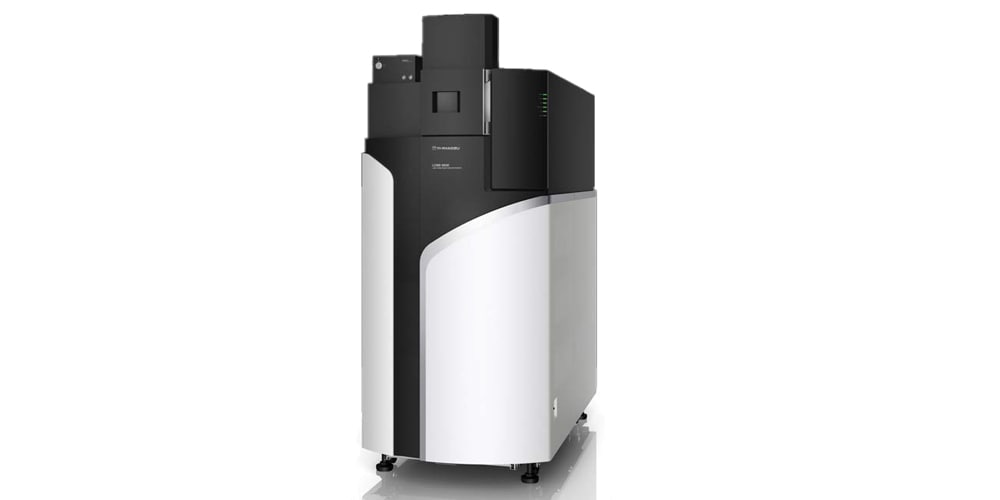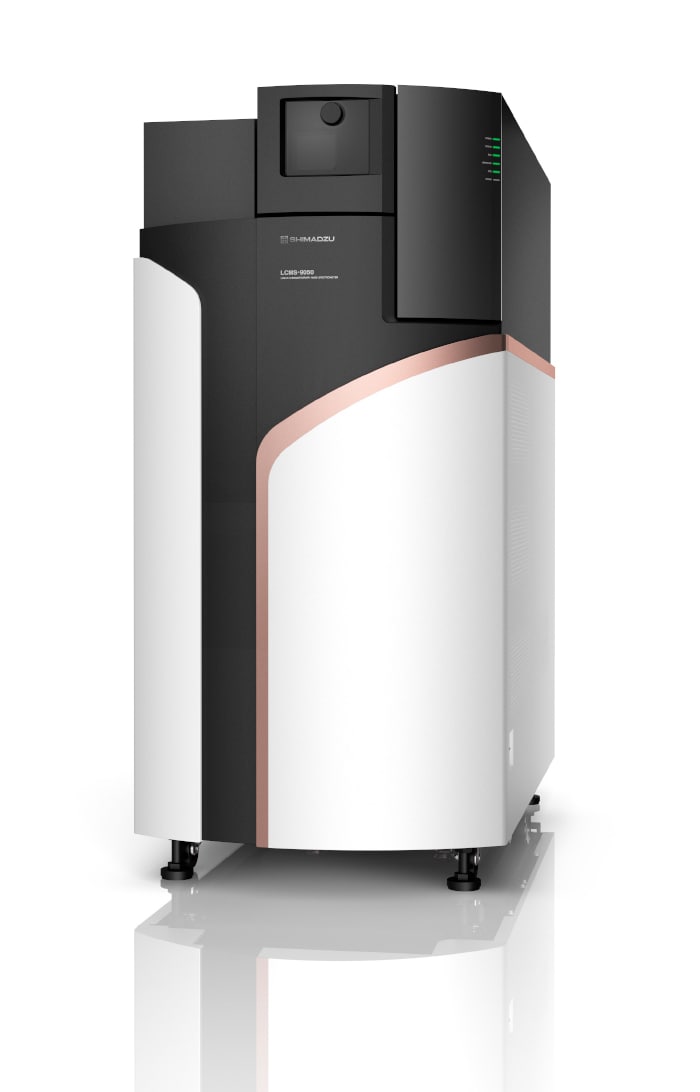
LCMS-9030


- Detection of target compounds in processed foods is possible with simple sample preparation. - Compounds can be measured quickly without column separation regardless of its polarity. - Samples can be measured with stable mass accuracy.
With the heightened health-consciousness of recent years, soybean isoflavones have attracted attention as functional components which are useful for health. However, with the global distribution of food products, it is necessary to verify that the components actually contained in food products are the same as the indicated contents. Here, the measurement targets were the soy isoflavones daidzein, genistein, and glycitein and their glycosides. An ODS column is generally used in simultaneous analyses of isoflavones and their glycosides by LC or LC/MS. It takes excessive time to separate these compounds completely, because isoflavones and their glycosides have different polarities. In addition, since this technique also includes a process for extraction of the isoflavones in foods, the development of an easy and fast analysis technique for all of the steps from sample preparation to measurement has been needed. This Application News introduces a new analysis technique using a DPiMS QT which is a probe kit of electrospray ionization unit and an LCMS-9030 quadrupole time-of-flight mass spectrometer. The DPiMS QT makes it possible to conduct direct analysis and minimize the time from sample preparation to analysis. The sample preparation procedure is as follows. First, 10 mg each of the tofu, boiled soybeans, soy milk, and soybean processed chocolate snack were weighed, and 1 mL of 50 % ethanol was added and mixed for 1 min. The mixtures were then centrifuged, and 10 μL of the supernatant was dripped on the sample plate and measured.
September 24, 2021 GMT