
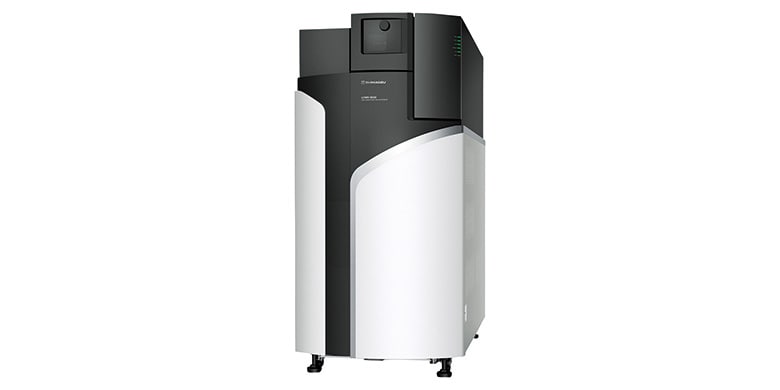
LCMS-9030


- In-depth peptide mapping and PTM analysis methodology is described for the analysis of control and stress induced samples of mAb which can be useful in identification of sites susceptible to oxidation and deamidation modifications - Excellent and stable mass accuracy, comprehensive fragmentation pattern and high sensitivity offered by LCMS-9030 helped obtain good sequence coverage, identification of PTMs and sites susceptible for modifications
Monoclonal antibodies (mAbs) are a major class of biopharmaceuticals covering a large panel of diseases, from cancer to asthma, including central nervous system disorders, infectious diseases and cardiovascular diseases1 . Throughout manufacturing, storage, transportation, and administration, mAbs are subjected to biophysical and biochemical stress from multiple sources, which may lead to their degradation via aggregation, fragmentation, and chemical modifications, such as oxidation, deamidation, or isomerization2 . Among these undesirable degradation products, oxidation and deamidation are the most commonly observed Post-Translational Modifications (PTMs). Early identification of these prone sites enables antibody engineering to eliminate liability of leading candidates to such modifications while maintaining binding activity. Bottom-up approach which is essentially peptide mapping helps in determination of primary amino acid sequence and identification of site–specific PTMs. In this application note, methodology for identification of sites susceptible to oxidation and deamidation is described by analyzing the control and artificial chemically stress induced (forced degradation) samples of mAb.
October 1, 2021 GMT