
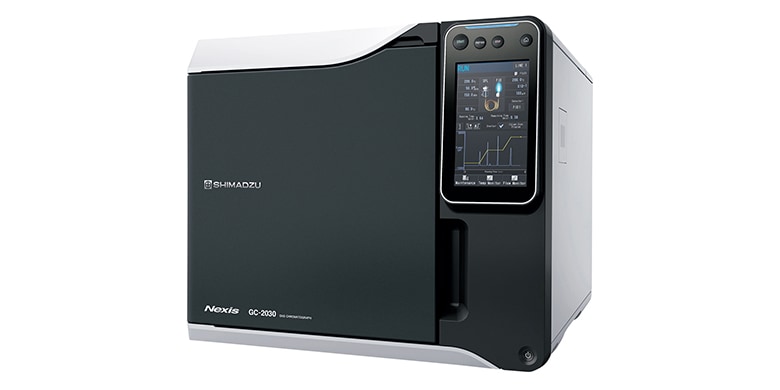
Nexis GC-2030


- Direct injection of samples without sample preparation - Sensitive and reproducible at 0.005 %(v/v)
Radiopharmaceuticals are a group of biological active drugs which consist of radioactive isotope compounds to aid in therapy and diagnostic imaging, such as positron emission tomography (PET). Solvents are used during the manufacturing of radiopharmaceuticals and may not be completely removed. As solvents could be harmful to human health, it is critical to control and regulate residual solvents amount in radiopharmaceuticals. In this study, GC-FID is utilized to quantitate acetonitrile, ethanol and isopropanol (IPA) residual solvents in radiopharmaceuticals, i.e. cold [18F]fluoro-deoxy-D-glucose (FDG) and cold prostate-specific membrane antigen (PSMA). The radioactive labelled compounds were left to fully decay (cold) at an appropriate facility before conducting experiment on it. According to United States Pharmacopeia, USP <467>, acetonitrile maximum daily dosage is 4.1 mg/day which is equivalent to a concentration of 400 ppm. Ethanol and IPA are recommended to be less than 50 mg/day (5000 ppm), but higher amount is still acceptable if they can be justified.
February 10, 2022 GMT