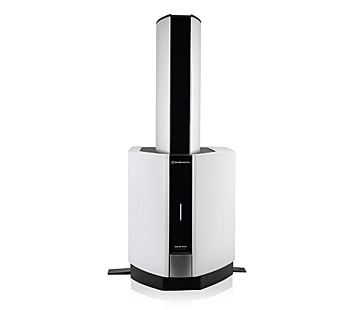
MALDI-8030


- Simple analysis of oligonucleotides, in negative ion mode to reduce adducts, on an affordable benchtop MALDI-TOF - Quality spectra with good mass accuracy offers MALDI-TOF as an alternative to gel-Ethidium bromide detection post PCR - Genotyping workflow useful for introducing mass spectrometry to students in teaching laboratories
Synthetic oligonucleotides are short DNA or RNA sequences which find different applications in molecular biology, such as primers used in DNA sequencing and amplification by the polymerase chain reaction (PCR). Recently, synthetic oligonucleotides have also been explored for therapeutic and diagnostic purposes, and DNA-based diagnostic test kits, in several conditions. Cystic fibrosis is an example of a condition which develops at the DNA level. It is the commonest autosomal recessive disorder among Caucasians and caused by mutation in the cystic fibrosis transmembrane conductance regulator (CFTR) gene, which is located on chromosomal region 7q31.2 and contains 27 exons. Mutations in the CFTR gene disrupts the normal maintenance of hydration of secretions within airways and ducts through the transport of chloride and inhibition of sodium uptake. This occurs mainly in epithelia of airways, the sweat glands, the gastrointestinal tract (comprising the pancreas and biliary system), and the genitourinary system - areas where the CFTR protein is largely expressed. Besides its clinical relevance, cystic fibrosis can be useful for demonstrating genotyping workflows in teaching laboratories because of the multiple mutations (>1500) identified, which may involve different molecular assays. These are typically PCR related assays, such as, amplification refractory mutation system (ARMS-PCR), which can be used for mutations Phe508del, Gly542X and Asn1303Lys; restriction fragment length polymorphism (PCR-RFLP), which can be used for mutations Arg1303Lys, Arg347Pro and Arg334Try; and heteroduplex analysis (HA), which can be used for mutations Phe508del, Ile507del, and 1677delTA. However, following PCR amplification in these assays, the products are typically detected by gel electrophoresis and read using ethidium bromide staining in a UV box, and this is where the workflow becomes labour intensive, slow and costly. An alternative detection using MALDI-TOF would be easier. MALDI-TOF mass spectrometry is a well-established and widely used technique for the analysis of oligonucleotides, as it is quick, simple and can provide information on the molecular identity as well as the sequence. One of the challenges in the detection of oligonucleotides by positive ion mode mass spectrometry is the formation of sodium or potassium adducts in solution, which could result in decreased sensitivity and peak resolution if a clean-up step is not performed. However with negative ion mode detection this is circumvented, as the salt adducts would not be detectable. Here, we present the dual polarity MALDI-8030 benchtop linear mass spectrometer for genotyping, using cystic fibrosis disease (Phe508del mutation) as an example. We demonstrate the benefits of negative ionisation mode to simplify the sample preparation and interpretation of the mass spectra through elimination of salt adduct interferences. We also show the separation and detection of oligonucleotides, which could be a useful alternative to gel electrophoresis/ ethidium bromide following PCR in the approaches described below.
April 5, 2022 GMT